

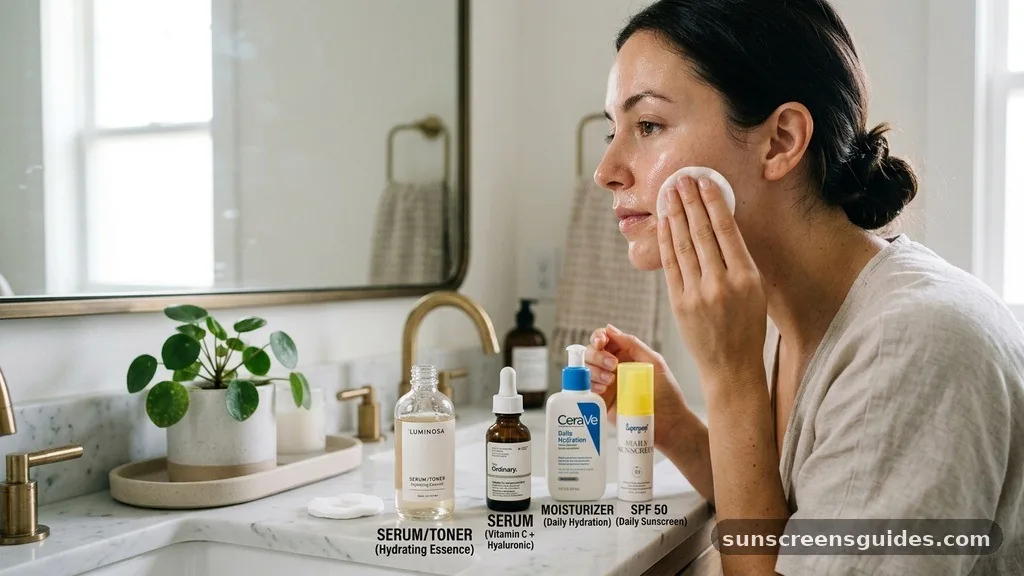
Deciding whether you should apply a serum or toner first in your daily regimen often feels like solving a complex chemistry puzzle. While both products play critical roles in a healthy routine, their placement depends entirely on their chemical composition and the specific goals you have for your complexion.
Understanding how to layer these treatments ensures that every expensive drop of product actually penetrates your skin instead of just sitting on the surface. By mastering this sequence, you’ll maximize the efficacy of your active ingredients and maintain the integrity of your skin barrier.
The Fundamental Rule of Skincare Layering
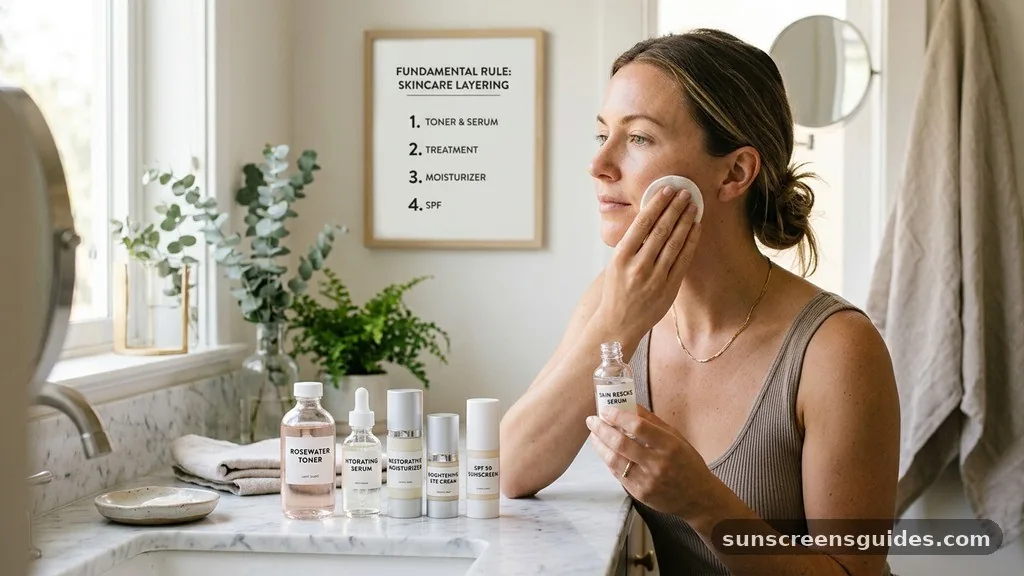
The most reliable rule to follow when layering skincare is to apply products in order of consistency, moving from thinnest to thickest. Toners are almost exclusively water-based products, designed to be watery and lightweight, whereas serums often possess a slightly higher viscosity due to their concentrated formulas.
Because your skin acts like a sponge, it absorbs lighter, liquid textures much more readily than heavier, oil-rich, or gel-like substances. If you apply a thicker serum first, it creates a physical barrier that prevents the toner from reaching your pores.
Consistency isn’t the only factor at play here; you must also consider the chemical purpose of each step. A toner is primarily responsible for pH balancing and removing lingering debris after cleansing, while a serum is designed to deliver high-performance molecules deep into the epidermis.
If you apply the serum before the toner, the toner may inadvertently wash away or dilute the potent actives you just applied. By letting the toner set the stage, you prepare the skin to better accept the more intensive treatments that follow.
Why Toner Comes Before Serum
Toner acts as the bridge between your cleansing routine and your targeted treatments. Its primary function is to rehydrate the skin and restore its natural pH levels, which can be disrupted by harsh cleansers. When your skin is slightly damp from a toner, it becomes more permeable, allowing active ingredients in your subsequent serum to travel more efficiently toward the dermis.
Beyond basic hydration, many modern toners provide specific benefits like pore tightening or gentle chemical exfoliation. If you were to skip this step, you would be applying your serums to a surface that is potentially still slightly alkaline or clogged with mineral deposits from tap water. By prioritizing the toner, you create an optimal environment for your skin-specific actives to perform their best work.
Comparing Product Functions and Application
Understanding the distinct roles these products play helps clarify why the order remains consistent across almost all skin types. While both provide hydration, they target different layers and concerns.
| Product Type | Primary Purpose | Texture |
|---|---|---|
| Toner | pH balancing and prep | Watery/Liquid |
| Serum | Targeted treatment | Gel/Lightweight liquid |
As shown in the table above, the disparity in texture dictates the application sequence. Applying a thick serum before a watery toner would be physically counterintuitive, as the serum would block the toner’s ability to hydrate the outer layers of the skin.
The Role of Molecular Weight in Penetration
Skin care science relies heavily on the concept of molecular weight. Smaller molecules penetrate the skin barrier faster and deeper than larger ones, which is why your most potent, lightweight treatments should go on first. Most serums are engineered to contain high concentrations of small-molecule ingredients like hyaluronic acid or vitamin C derivatives.
When you apply a toner, you are essentially increasing the moisture content of the stratum corneum. This hydration boost acts as a vehicle, helping those small molecules in your serum move through the lipid bilayer more effectively. If you neglect this moisture-priming step, your serum may struggle to absorb, leading to that sticky or tacky feeling on the skin surface that many people dislike.
Addressing Common Topical Gaps
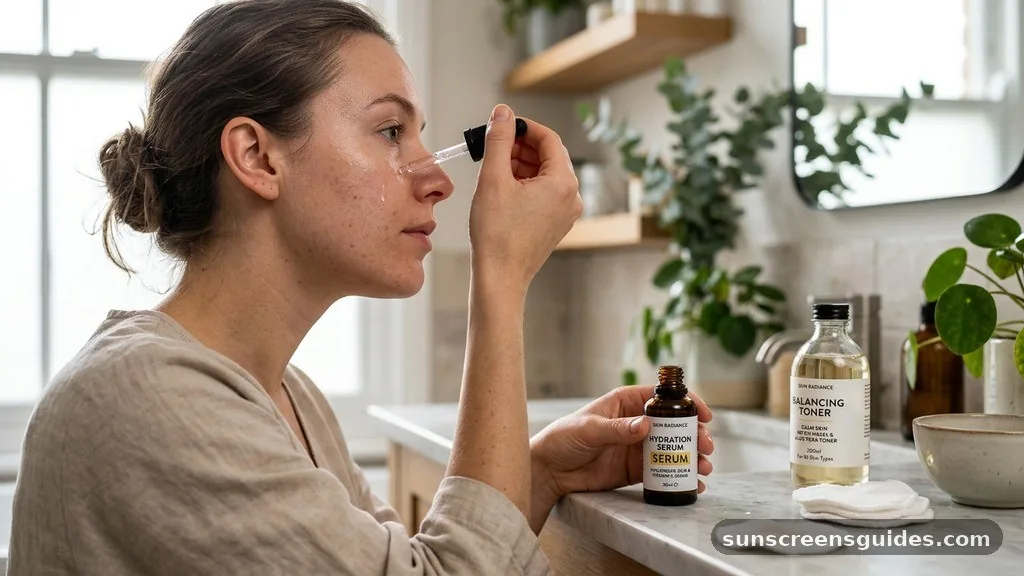
Many enthusiasts often wonder if there are exceptions to the “toner first” rule, particularly when using specialized treatments. A common gap in existing advice is how to handle high-potency actives like retinol or specialized niacinamide blends.
You should always apply these after your toner has fully absorbed, but before your moisturizer. Even if you use a serum that feels very thin, it should still follow your toner to ensure the toner’s humectants have properly hydrated the surface.
Another frequently asked question involves the use of acid-based toners for chemical exfoliation. Even if your toner contains AHAs or BHAs, it is still technically a toner and should be applied before your nourishing or corrective serums. The exfoliant needs direct contact with your skin to dissolve dead cells; once that process is underway, your subsequent serum will have a much easier time penetrating the freshly cleared surface.
Optimizing Your Routine for Maximum Absorption
To truly master your skincare sequence, consider the timing of your application. You don’t necessarily need to wait until your skin is bone-dry between steps.
In fact, many dermatologists suggest applying your serum while the skin is still slightly damp from your toner. This dampness helps the humectants in your serum pull more water into the skin, which can significantly enhance the plumping effect of ingredients like hyaluronic acid.
- Cleanse your face thoroughly to remove surface oils and environmental pollutants.
- Apply your toner using a cotton pad or by patting it directly into the skin with your palms.
- Wait roughly 30 to 60 seconds for the toner to absorb, leaving the skin slightly hydrated.
- Dispense 2-3 drops of your chosen serum and press it gently into the skin.
- Follow up with a moisturizer to lock in all the hydration and active ingredients.
This systematic approach minimizes product waste and ensures that your skin barrier function remains strong and resilient. When you respect the sequence, you allow each product to serve its intended purpose without interference from incompatible textures or pH levels.
Understanding the Impact of Ingredients
It’s helpful to look at how specific ingredients behave when they meet the skin. If you are using a serum rich in niacinamide, it works best when it can penetrate slightly beneath the surface level of the epidermis.
If you layer it over a thick cream, it won’t be as effective. Conversely, if you apply it after a toner, the barrier is already primed and receptive.
Many people fear that layering too many products will lead to pilling or irritation. However, when you use the “thinnest to thickest” rule, you avoid these common issues.
If you notice your products are pilling, it is often a sign that you are applying too much product or that the products aren’t being allowed to absorb fully between steps. Give your skin a moment to breathe after applying each layer to ensure a smooth, professional application.
When to Adjust Your Sequence
Are there ever times when you should flip the order? Generally, no. The only potential exception involves specific, heavy-duty medicated toners that might be formulated more like a serum.
If your product is viscous, opaque, or contains high concentrations of oils, it might function more like a treatment serum regardless of what the label says. In these rare cases, trust your tactile experience over the product name.
If you’re ever in doubt, check the label for the ingredient list. If the first few ingredients are water, glycerin, or botanical waters, it is a toner.
If the ingredient list is filled with oils, silicones, or high-percentage actives, it is likely a serum. Treating your skincare like a layering project rather than a collection of random bottles will inevitably lead to better results.
Common Questions About Skincare Order
Do I need a toner if I use a serum?
While not strictly mandatory for everyone, a toner helps optimize the skin’s pH, making your serum more effective.
Can I mix my serum and toner together?
It is generally better to apply them separately to ensure each product absorbs correctly into the skin’s layers.
Should I wait for toner to dry before applying serum?
You don’t need to let it dry completely; applying serum to slightly damp skin often improves ingredient absorption rates.
What if my toner contains exfoliating acids?
Always apply exfoliating toners first, as they need direct contact with the skin to effectively remove dead cells.
Does the order change for morning and evening routines?
The basic rule of thinnest to thickest remains the same regardless of the time of day you apply.
Can I skip toner if my cleanser is gentle?
You can, but a hydrating toner still provides an extra layer of moisture that helps serums penetrate much better.
Will applying toner after serum reduce the serum’s effectiveness?
Yes, applying a watery toner over a serum can dilute or wash away the active ingredients you just applied.
The debate over whether to use a serum or toner first is easily resolved by looking at the chemistry of your products. By consistently applying your lighter, water-based toners before your more concentrated, higher-viscosity serums, you ensure that your skin receives the full benefits of your routine. Always remember that your skin’s health depends on the order of operations as much as the quality of the products themselves.
By following these evidence-based steps, you provide your complexion with the best possible chance to thrive, stay hydrated, and remain protected from environmental stressors. Start adjusting your sequence tonight and observe how these small shifts in application order can lead to a more radiant, balanced appearance over time.



