


Deciding if you should wear sunscreen inside often feels like over-analyzing a simple skincare step, yet it remains a frequent point of debate among beauty enthusiasts and medical professionals. While most people associate UV exposure exclusively with sunny beach days or outdoor errands, the reality of light exposure within our homes and offices is more complex.
Understanding whether you need SPF protection while sitting at your desk or relaxing in your living room helps you better manage long-term skin health. This discussion clarifies the nuance of indoor light exposure so you can make an informed choice for your daily routine.
The Reality of Ultraviolet Rays Indoors
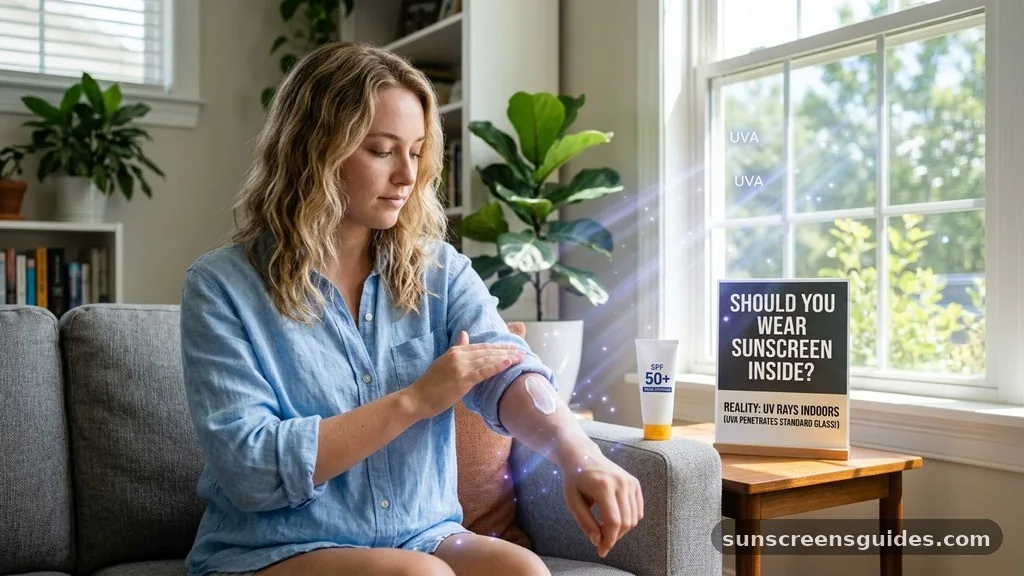
The short answer is that you generally do not need to worry about the same level of intensity indoors as you do outside, but certain factors change that equation. Most standard window glass is effective at blocking ultraviolet B (UVB) rays, which are the primary cause of sunburns.
However, this same glass often fails to filter out ultraviolet A (UVA) rays. These longer-wavelength rays penetrate deeper into the skin and contribute significantly to photoaging, fine lines, and long-term cellular damage.
If you spend your day sitting directly next to a large, unshaded window, you are receiving a consistent dose of UVA radiation. Over months and years, this cumulative exposure can lead to hyperpigmentation and the slow breakdown of skin structures.
While the risk of developing skin cancer from casual indoor window exposure is significantly lower than from direct sunbathing, it isn’t zero. If you have a history of skin sensitivity or are prone to sun-induced dark spots, taking precautions near glass surfaces becomes a valid health strategy.
Understanding Different Light Sources
Many people wonder if the light from their lamps or computer monitors is causing damage similar to the sun. The truth is that standard indoor lighting—like LEDs or fluorescent bulbs—emits negligible amounts of UV radiation.
You do not need to apply sunscreen to protect yourself from your overhead kitchen lights or your television. The primary concern remains natural sunlight entering your space.
Another emerging topic in skincare is HEV light, or blue light, which comes from smartphones, laptops, and tablets. While research is still ongoing regarding the skin-damaging effects of blue light, some studies suggest that high-energy visible light can exacerbate melanin production in those with darker skin tones. If you are specifically concerned about digital screen exposure, look for sunscreens that include iron oxides or antioxidants rather than just traditional chemical filters.
When Indoor Sunscreen Use Makes Sense
There are specific scenarios where wearing a broad-spectrum product while indoors is highly recommended by dermatologists. If you work in a high-rise office with floor-to-ceiling windows or drive frequently for your job, your cumulative UV exposure is much higher than the average person’s. Using a product with an appropriate SPF rating in these settings can act as a necessary insurance policy for your skin.
Common Indoor Exposure Scenarios
* Working at a desk situated within three feet of a sunny window.
* Driving long distances during your daily commute.
* Living in high-altitude environments where UV intensity is naturally higher.
* Using light-based therapy devices or certain clinical skincare treatments.
Comparing Exposure Levels
| Source | UV Type | Impact |
|---|---|---|
| Direct Sunlight | UVA and UVB | High risk of burn and damage |
| Window Glass | Mostly UVA | Long-term aging and pigment issues |
| Indoor Lighting | None | Negligible impact on skin |
Addressing Common Topical Gaps

A frequent question involves the necessity of wearing sunscreen at night or on cloudy days. Because UV levels drop to essentially zero after sunset, there is no physical reason to wear SPF during the evening. Similarly, while clouds filter some radiation, UVA rays can still penetrate heavy cloud cover, meaning the “should you wear sunscreen inside” debate remains relevant on overcast days if you are near a window.
Another gap involves the “reapplication” rule for indoor workers. If you apply a broad-spectrum sunscreen in the morning before work, you are generally protected for the typical eight-hour day spent indoors.
You do not need to constantly reapply unless you are sitting in direct, intense sunlight for several hours. The focus should be on the quality of the initial application rather than the frequency of reapplication while inside.
Long-Term Skin Health and Collagen Degradation
Consistent protection is less about preventing a sunburn and more about preventing collagen degradation. UVA rays reach the dermis, where they damage the fibers that keep skin firm and elastic. This process is silent and painless, which is why many people don’t notice the effects until they see premature wrinkling or sagging later in life.
By incorporating a light, daily SPF into your morning regimen, you are protecting your skin’s structural integrity. This is especially vital if you use active ingredients like retinoids or acids, which can make your skin more photosensitive. In those cases, the question of whether you should wear sunscreen inside shifts from a “maybe” to a professional recommendation to maintain your results and prevent irritation.
Choosing the Right Product for Daily Wear
If you decide to wear protection indoors, you don’t necessarily need a heavy-duty, water-resistant formula meant for the beach. Seek out lightweight, elegant formulas that feel like a moisturizer.
Products labeled as “day creams” with added SPF are often perfect for this purpose. They provide the necessary broad-spectrum defense without feeling greasy or heavy on the skin.
Always check the label for the term “broad-spectrum,” which ensures protection against both UVA and UVB rays. If you find that wearing sunscreen makes you breakout or feel congested, look for non-comedogenic options that are specifically designed for facial use. The best product is the one you are willing to wear comfortably every single day, regardless of whether you are heading out or staying in.
Conclusion
Whether you should wear sunscreen inside depends largely on your environment and specific skin goals. While you don’t need to fear your household lightbulbs, the UVA rays streaming through windows do contribute to long-term skin changes like aging and pigmentation. For those working near windows or living in high-exposure areas, a daily application of broad-spectrum SPF is a smart, preventative habit that supports your long-term skin health.
If your space is dim and windowless, you can safely skip it without worry. Focus on consistency rather than perfection, and choose a formula that fits seamlessly into your morning routine.
Taking these small steps today ensures your skin remains resilient and healthy for years to come. Feel free to reach out if you have more questions about building your personalized protection plan.
Frequently Asked Questions
Is it really necessary to wear sunscreen indoors?
It is only necessary if you sit near windows, as glass filters UVB but allows UVA penetration.
Does a dermatologist recommend wearing sunscreen indoors?
Dermatologists often recommend it for those near windows to prevent cumulative UVA damage and premature skin aging.
Do I need to use sunscreen even indoors at night?
No, there is no UV radiation from the sun at night, so sunscreen serves no protective purpose then.
What is the correct way to apply sunscreen?
Apply a nickel-sized amount to your face and neck, ensuring even coverage on all exposed skin surfaces.
Does indoor lighting cause skin damage?
Standard indoor lighting, such as LED or fluorescent bulbs, emits negligible UV rays and does not damage skin.
Should I wear sunscreen indoors during winter?
Yes, UVA rays are present year-round, so protection is still beneficial if you are near sunny windows.
Do I need sunscreen if I am behind a curtain?
If the curtains are sheer, some UV rays still penetrate; opaque curtains provide effective protection from light.



