


Many people wonder if do black people wear sunscreen is a necessary practice given the protective nature of darker skin tones. While it is a common misconception that deeper skin is immune to sun damage, the reality is that everyone, regardless of their ethnic background, faces risks from the sun.
Understanding how your skin interacts with solar rays helps in making informed decisions about daily protection. By breaking down the science of skin health, we can clear up common myths and help you build a routine that keeps your complexion healthy and resilient for years to come.
The Role of Melanin in Photoprotection
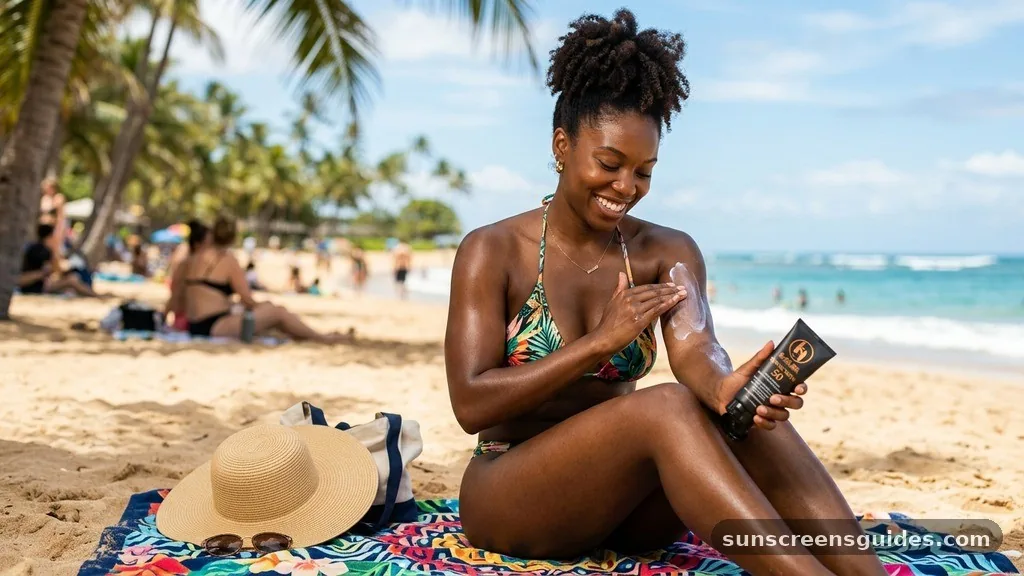
The primary reason for the confusion regarding whether do black people wear sunscreen is the presence of melanin. Melanin is a natural pigment that provides a level of photoprotection by absorbing and scattering harmful ultraviolet radiation. People with darker skin have higher concentrations of eumelanin, which acts as a built-in barrier against sun damage.
It is a common scientific fact that this natural pigment offers a natural SPF equivalent to roughly 13. However, this is significantly lower than the recommended level of protection needed to block the most aggressive rays.
Relying solely on your natural skin tone leaves you vulnerable to long-term issues. Even if you don’t burn easily, you are not immune to the cumulative effects of sun exposure.
Why Sunscreen Remains Essential for Everyone
Even with the inherent benefits of melanin, dermatologists agree that everyone should prioritize sun safety. The primary reason is that while dark skin resists burning, it does not fully block UVA and UVB rays. These rays penetrate the skin deeply and contribute to aging, wrinkles, and cellular damage over time.
Ignoring sun protection can lead to several dermatological concerns that are often overlooked in darker skin tones. Because these issues manifest differently than in lighter skin, they are frequently diagnosed at later stages, which is a significant health risk.
Addressing the Risk of Skin Cancer and Melanoma
One of the most persistent myths is that Black people cannot develop skin cancer. While the incidence rate of melanoma is statistically lower in Black populations, the mortality rate is often higher. This is largely due to late-stage detection, where cancers are found in areas not typically exposed to the sun, like the soles of the feet or palms.
Because many people assume they don’t need protection, they may skip annual skin checks or ignore suspicious moles. Early detection is vital for successful treatment. Wearing broad-spectrum protection is just one part of a comprehensive skin health strategy that includes regular monitoring of your skin’s appearance.
Managing Hyperpigmentation and Skin Evenness
A major reason many people of color incorporate daily sun protection is to manage hyperpigmentation. Sun exposure stimulates melanin production, which can darken existing dark spots, acne scars, or patches of discoloration. If you are struggling with post-inflammatory hyperpigmentation, the sun is your skin’s biggest adversary.
Using a high-quality product daily helps maintain an even skin tone. By preventing the sun from triggering further darkening of these spots, you allow your skin to heal more effectively. Many individuals find that their skincare treatments for acne or spots work much faster when they consistently apply a daily barrier.
Common Barriers: The White Cast Problem
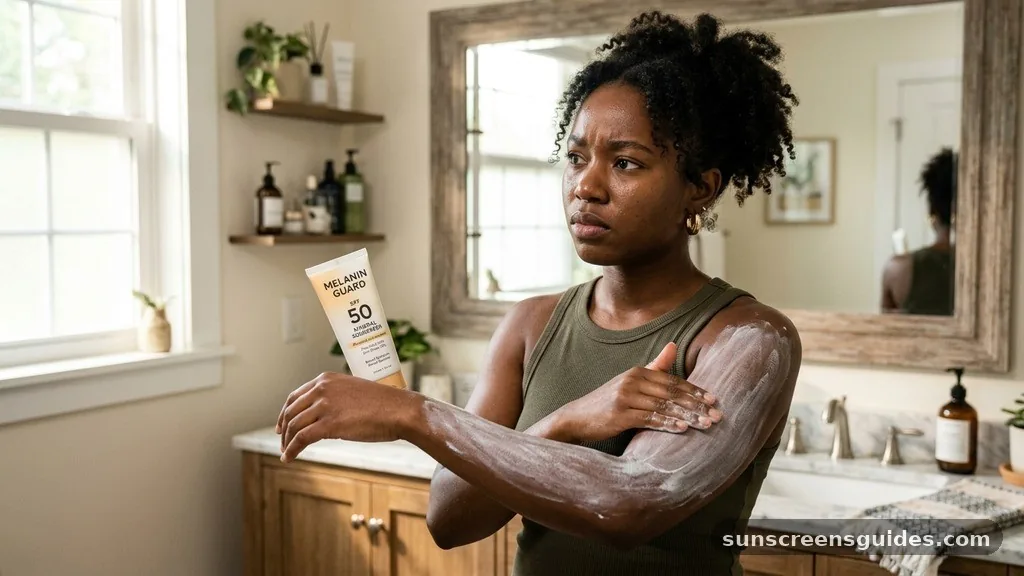
If you have ever asked yourself why so many people seem hesitant to use these products, the answer often comes down to the white cast. Historically, many physical sunscreen formulas relied on zinc oxide or titanium dioxide in high concentrations, which leaves a visible, chalky residue on deeper skin tones. This aesthetic frustration has discouraged many people from using protection regularly.
Modern formulations have improved significantly, moving away from these heavy residues. Today, you have more options than ever to find a product that blends seamlessly into your skin.
| Sunscreen Type | Key Benefit | Suitability for Darker Skin |
|---|---|---|
| Chemical Sunscreen | Invisible finish | Excellent; no white cast |
| Physical Sunscreen | Immediate protection | Requires tinted versions |
| Hybrid Formula | Balanced performance | Very good for daily wear |
How to Choose the Right Product
Finding the right protection depends on your specific skin type and lifestyle. You don’t have to settle for products that make your face look ashy or greasy. Here are a few tips to guide your search for the perfect match:
- Look for products labeled as “clear,” “invisible,” or “sheer” to avoid the white cast.
- Opt for chemical sunscreen ingredients like avobenzone or octisalate, as these absorb into the skin without leaving a residue.
- If you prefer physical blockers, look for tinted formulas that are color-matched to your skin tone.
- Ensure the label specifies broad-spectrum, which confirms it covers both UVA and UVB rays.
- Check the texture; gel-based or water-based formulas are usually lighter and better for daily use under makeup.
Vitamin D Synthesis and Sun Exposure
A common point of debate is whether wearing sun protection prevents vitamin D synthesis. It is true that your body needs sunlight to produce vitamin D, but you don’t need to skip protection entirely to get it. Most dermatologists suggest that incidental sun exposure—like walking to the car or sitting by a window—is often enough to support healthy levels.
If you are concerned about your levels, blood tests are the only accurate way to determine if you have a deficiency. Relying on prolonged, unprotected sun exposure to boost your vitamin D is not a safe strategy. It is far better to get your levels checked by a doctor and use supplements if needed, rather than risking your skin health.
Addressing Topical Gaps: Cultural Perspectives on Sun Care
A recurring gap in the discussion is the lack of inclusive messaging in the beauty industry. For decades, marketing campaigns for sun protection almost exclusively featured lighter-skinned models, creating a cultural narrative that sun care was not “for” Black people. This has created a psychological barrier where many feel that these products are only for beach vacations or people who burn.
We must change the conversation to recognize that protection is a standard part of skincare hygiene. By acknowledging that these products are designed for all human biology, we move past the idea that it is a niche concern. Education about the long-term benefits for skin health—rather than just burn prevention—is key to bridging this gap.
Frequently Asked Questions
Do Black people really need to wear sunscreen?
Yes, everyone needs protection to prevent skin cancer, signs of aging, and to manage hyperpigmentation issues.
Does dark skin provide enough natural protection?
While melanin offers some protection, it is insufficient to block all harmful UV rays or prevent damage.
How do I avoid the white cast on my skin?
Choose chemical formulas or tinted physical sunscreens designed specifically to blend into deeper skin tones seamlessly.
Is it necessary to wear sunscreen in the winter?
Yes, UV rays are present even on cloudy or cold days, so daily application is always recommended.
Can sunscreen help with my acne scars?
Absolutely, it prevents UV light from darkening your scars and helps them fade more quickly over time.
Will wearing sunscreen cause a vitamin D deficiency?
It is unlikely, as incidental exposure is usually enough, but consult a doctor to monitor your levels.
What is the difference between physical and chemical sunscreen?
Physical blockers sit on the skin to reflect rays, while chemical versions absorb them and convert heat.
Final Thoughts on Daily Skin Health
Prioritizing your skin’s health is a proactive step that pays off in the long run. Whether you are aiming to prevent premature aging or simply want to ensure your complexion stays clear and healthy, making sun protection a non-negotiable part of your morning routine is essential. You don’t need to overcomplicate things; a simple, daily application of a broad-spectrum product is enough to make a significant difference.
Remember, do black people wear sunscreen is a question that has a clear, evidence-based answer for everyone. The best way to maintain your skin’s natural glow is to protect it from the elements every single day. Start by testing a few different formulas to see which one feels best on your face, and commit to consistency.
Your future self will thank you for the care you take today. Feel free to reach out if you have more questions about building your personalized skincare routine.



