

Figuring out the rules for packing liquids often feels like a headache, especially when you are trying to decide if you can take aerosol sunscreen on a plane. Most travelers assume that pressurized cans are strictly prohibited due to potential safety concerns, but the reality is more nuanced than a simple yes or no.
Whether you are heading to a tropical getaway or a snowy mountain retreat, understanding how airport security views these items will help you avoid losing your expensive skincare at the checkpoint. By knowing the specific requirements for your carry-on versus your checked bags, you can pack with confidence and keep your vacation plans on track.
Understanding TSA Regulations for Pressurized Containers
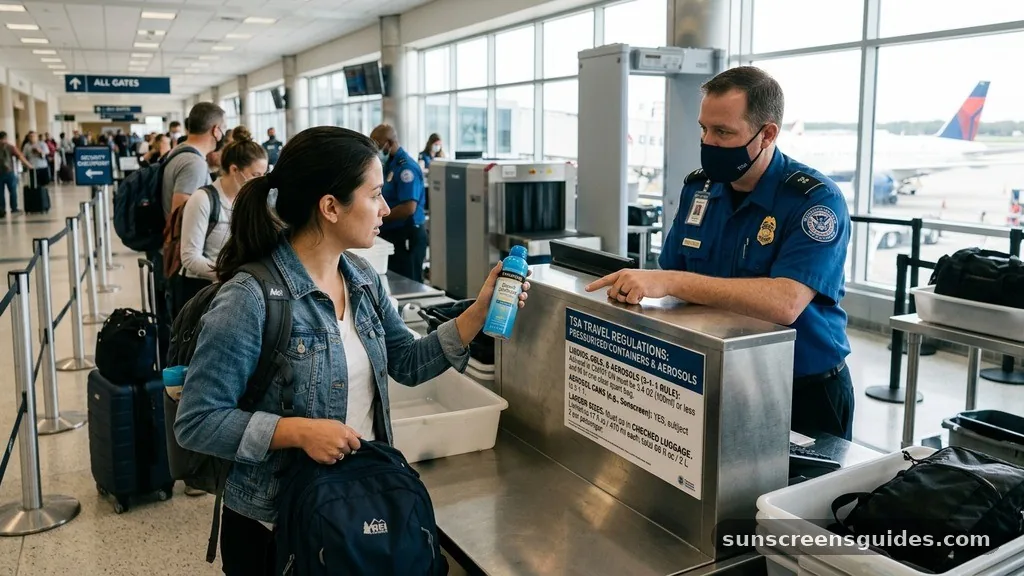
The Transportation Security Administration (TSA) maintains specific guidelines for pressurized containers to ensure flight safety and cabin integrity. Generally, you are allowed to bring aerosol sunscreen, but where you store it depends on the size of the container and the total volume of your liquids.
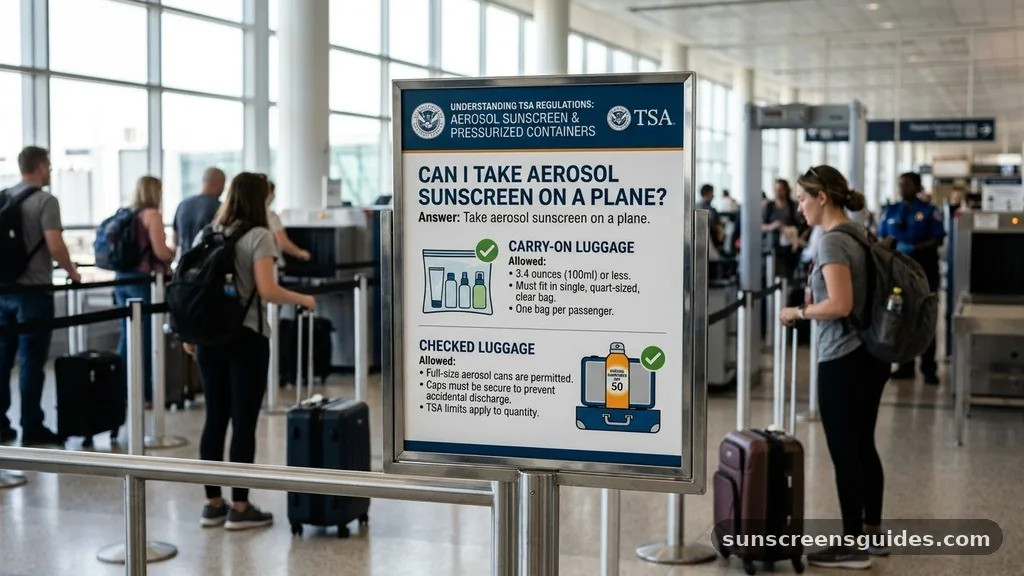
If you decide to pack these items in your carry-on luggage, you must adhere strictly to the TSA 3-1-1 rule. This rule dictates that all liquids, gels, and aerosols must be in containers of 3.4 ounces (100 milliliters) or less, and all those containers must fit into a single, transparent quart-sized bag.
Most standard aerosol sunscreen cans found in grocery stores are significantly larger than the 3.4-ounce threshold, which effectively disqualifies them from being carried through the security checkpoint. If you attempt to bring a full-sized aerosol can in your carry-on, security officers will almost certainly confiscate it.
It is not necessarily because the bottle is inherently dangerous to the flight, but because it violates the established liquid restrictions meant to standardize the screening process. To ensure your items make it to your destination, checking the volume before you head to the airport is the most important step you can take.
Packing Aerosol Sunscreen in Checked Baggage
You are generally permitted to pack larger cans of aerosol sunscreen in your checked baggage, provided they meet specific safety criteria regarding contents and quantity. The FAA regulations allow passengers to bring toiletries, including aerosols, in checked luggage if the total quantity of all such items does not exceed 2 kilograms or 2 liters per person.
Each individual container must not exceed 0.5 kilograms or 500 milliliters. This is a generous allowance compared to the tiny portions required for carry-ons, making checked bags the preferred choice for family-sized sunscreen cans.
To prevent accidental discharge during transit, you should always secure the nozzle cap firmly before placing the can in your suitcase. Wrapping the bottle in a plastic bag provides an extra layer of protection against potential leaks caused by pressure changes in the cargo hold.
While the cargo hold is pressurized, it is still exposed to temperature fluctuations that could affect the integrity of a poorly sealed container. Taking these simple precautions ensures that your belongings arrive safely without creating a mess inside your luggage.
| Category | Carry-On Allowance | Checked Bag Allowance |
|---|---|---|
| Container Size | 3.4 oz (100ml) or less | Up to 18 oz (500ml) per can |
| Placement | Quart-sized clear bag | Anywhere in suitcase |
| Safety Limit | Total volume under 1 liter | Total weight under 2kg/2L |
Dispelling Myths About Explosion Risks
Many travelers worry about whether spray sunscreen will explode due to cabin pressure or the aerosol flammability of the propellant. In reality, modern aerosol cans are engineered to withstand significant pressure changes that occur during flight.
The cabin and cargo compartments of commercial aircraft are climate-controlled and pressurized, which mitigates the risk of a spontaneous rupture. While the air pressure does change during takeoff and landing, it is rarely enough to compromise a standard, undamaged metal canister.
The real danger associated with aerosols is not an explosion caused by altitude, but rather the risk of leakage or ignition if a can is damaged or improperly stored. Because these products often contain alcohol or other flammable propellants, they are classified as hazardous materials if handled incorrectly.
However, when kept in their original, factory-sealed state, they are perfectly safe for air travel. You do not need to worry about your sunscreen turning your luggage into a hazard, provided you are following the volume limits set by the governing aviation authorities.
Alternatives for Air Travel
If you want to avoid the hassle of dealing with pressurized containers or worrying about liquid limits, there are several effective alternatives for air travel. Switching to non-aerosol products simplifies your packing process significantly. Consider these options for your next trip:
- Sunscreen lotion: Standard creams are easier to portion into travel-sized tubes and are not subject to the same stringent rules as aerosol sprays.
- Sunscreen sticks: These are excellent for facial application and do not count toward your liquid quota, making them ideal for carry-on convenience.
- Powdered sunscreens: These brushes or compacts provide UV protection without being classified as liquids, bypassing the TSA 3-1-1 rule entirely.
- Solid sunblock bars: Similar to soap or deodorant, these offer a mess-free way to protect your skin without worrying about leaks or pressure issues.
Using these alternatives can save you time at the security checkpoint and leave more room in your restricted liquid bag for other essential toiletries. Additionally, many travelers prefer these options because they are often more environmentally friendly and easier to apply evenly on windy beaches or during outdoor activities.
Addressing Common Topical Gaps
A frequent question that arises involves whether international flights have different rules regarding sunscreen. Generally, the 3.4-ounce rule for carry-ons is a global standard adopted by the International Civil Aviation Organization.
However, local security agents at foreign airports may have stricter interpretations of what constitutes a “dangerous” item. If you are traveling internationally, it is always safer to pack your larger sunscreen cans in your checked luggage to avoid any discrepancies in how local security staff enforce liquid restrictions.
Another gap in traveler knowledge concerns the age of the sunscreen. Expired aerosol cans can sometimes lose their propellant efficiency or develop corrosion on the valve mechanism. Before you fly, check the expiration date and the physical condition of the can.
If you notice rust on the bottom or the cap is loose, it is better to leave that specific can at home and purchase a fresh one upon arrival at your destination. This prevents the risk of the can failing to spray when you need it most or leaking into your clothing.
Preparing Your Sunscreen for the Journey
Before you head to the airport, spend a few minutes preparing your toiletries for the scan. If you are carrying small, travel-sized spray bottles, take them out of your carry-on and place them in a bin so the agents can clearly see the volume markings.
If you have any doubt about whether a bottle is under the 3.4-ounce limit, checking the label is essential. If the label is worn off, the officer will assume it exceeds the limit and will likely ask you to discard it.
For those choosing to check their bags, double-check that your sunscreen is not sitting in a position where the nozzle could be accidentally depressed by a heavy object in your suitcase. Placing the can inside a hard-sided toiletry case or wedging it between soft items like sweaters can provide the necessary buffer. These small, intentional actions ensure that your sunscreen survives the journey intact and ready to protect you from the sun as soon as you arrive.
Frequently Asked Questions
Can I bring full-sized aerosol sunscreen in my carry-on?
No, full-sized aerosol cans exceed the 3.4-ounce limit and must be placed in your checked luggage instead.
Does the TSA check the expiration date of my sunscreen?
The TSA does not check expiration dates, but expired cans are more prone to leaks and mechanical failure.
Will my aerosol sunscreen explode in the cargo hold?
Modern aerosol cans are designed to withstand cabin pressure, so they are safe to pack in checked baggage.
What is the maximum quantity of aerosols I can check?
You may pack up to 2 kilograms or 2 liters of total aerosol products per passenger in checked bags.
Do I need to put sunscreen in a plastic bag in my checked luggage?
It is highly recommended to wrap cans in a plastic bag to prevent leaks from damaging your clothing.
Are there specific brands of sunscreen that are banned?
No, the rules apply to the container type and volume, not the specific brand of the sunscreen product.
What happens if my sunscreen is over 3.4 ounces in carry-on?
Security officers will confiscate the item, and you will be required to dispose of it before proceeding through.
Final Travel Advice
Successfully bringing sunscreen on your flight comes down to knowing the difference between what belongs in your carry-on and what should be checked. By keeping your aerosol sunscreen in your checked bags, you bypass the liquid restrictions that often cause delays at the security checkpoint. Remember that while these items are generally safe, proper packaging is the best way to ensure they arrive in perfect condition.
If you ever find yourself uncertain, sticking to solid or lotion-based alternatives is a simple way to eliminate any stress during your travel day. Whether you are flying across the country or around the world, taking a moment to organize your liquids ensures that your focus remains on enjoying your trip, not on navigating airport security. Safe travels and enjoy your time in the sun!



