


When you look at a vial of blood drawn during a routine physical, it might all look like a uniform red liquid. However, once that sample undergoes processing in a lab, it separates into distinct components that provide different types of data for doctors. Understanding what is the difference between serum and plasma is essential for interpreting laboratory results correctly, as each fluid reveals unique insights about your health.
While they look similar to the naked eye, their chemical composition differs significantly due to how they are processed. Knowing these nuances helps you appreciate the precision required in modern clinical pathology.
Defining the Core Composition
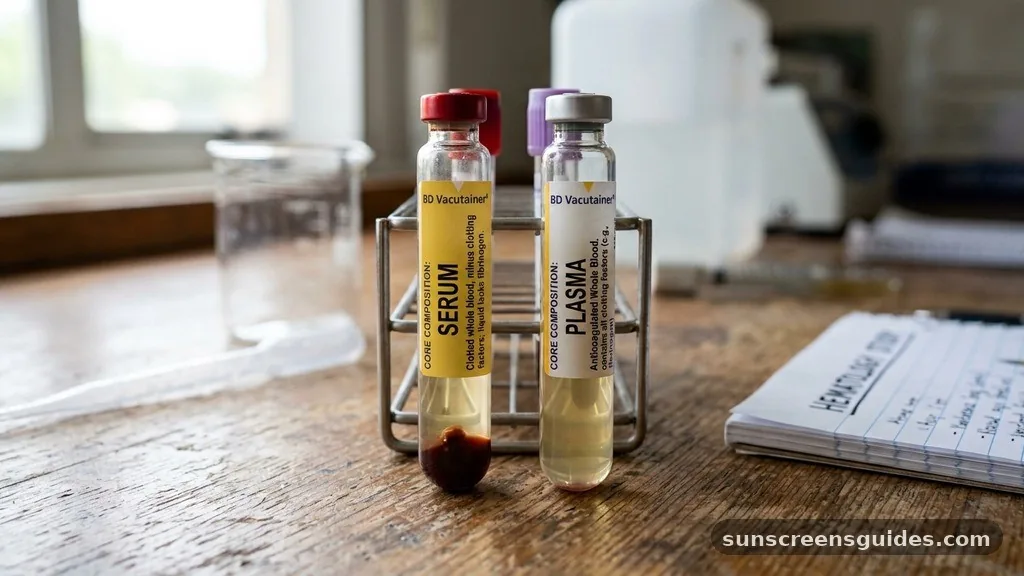
At its most basic level, the primary distinction lies in the presence or absence of clotting agents. Blood plasma is the pale, straw-colored liquid portion of blood that remains when cells are removed, while serum is the fluid left over after blood has been allowed to clot. Because plasma is obtained from unclotted blood, it retains all the coagulation factors that circulate in the bloodstream. In contrast, when blood clots to form serum, those proteins—specifically fibrinogen—are consumed during the formation of the clot.
This structural divergence is why scientists choose one over the other for specific types of diagnostic testing. If a clinician needs to evaluate the body’s ability to clot or measure the levels of specific clotting proteins, they must use plasma. If they are looking for markers that are not influenced by the coagulation process, serum often serves as the cleaner, more stable choice.
The Role of Blood Centrifugation and Anticoagulants
To produce these fluids, laboratory technicians rely on blood centrifugation, a process where high-speed spinning forces the heavier red and white blood cells to the bottom of the tube. The clear supernatant liquid that remains on top is what we analyze. However, the method of collection dictates the final identity of that liquid.
When collecting plasma, the phlebotomist must use anticoagulants inside the blood collection vessels. These chemicals prevent the blood from turning solid, ensuring that the liquid part stays in its natural, protein-rich state. Common additives include:
- EDTA: Frequently used for complete blood counts because it preserves cell morphology effectively.
- Heparin: Often chosen for chemistry panels because it interferes less with certain chemical assays.
- Sodium Citrate: Typically reserved for coagulation studies due to its ability to bind calcium reversibly.
Without these additives, the natural clotting cascade initiates as soon as the blood leaves the body. As the platelets and proteins work to form a mesh, they trap the fibrinogen. Once the clot forms and is spun down, the resulting liquid is serum.
Comparing Laboratory Properties
The decision to use one over the other often comes down to the specific chemistry of the test being run. Because blood plasma proteins remain intact in plasma, it is a more accurate reflection of the body’s state at the exact moment of the draw. However, some labs prefer serum because the lack of fibrinogen prevents potential interference in certain automated analyzers.
The following table summarizes the key physical and chemical differences:
| Feature | Blood Plasma | Serum |
|---|---|---|
| Clotting Factors | Present (e.g., Fibrinogen) | Absent |
| Collection Method | Requires Anticoagulants | Requires Clotting Time |
| Processing Time | Faster (no waiting for clot) | Slower (requires clotting) |
| Primary Use | Coagulation studies, emergency | Biochemistry, serology |
Why Clotting Matters in Hematology
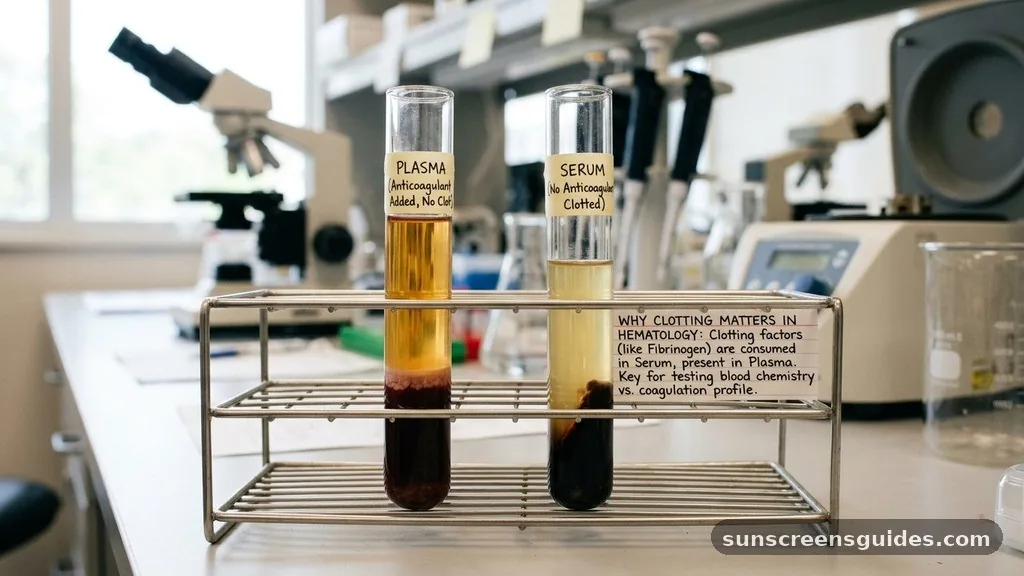
In the field of clinical pathology, the transition from liquid blood to a clot is a complex biochemical event. When a blood vessel is injured, or when blood touches the surface of a test tube, the body initiates a chain reaction. This is the clotting cascade.
During this process, soluble fibrinogen is converted into insoluble fibrin strands. These strands form the physical structure of the blood clot.
When you generate serum, you are essentially letting this process finish entirely. By waiting for the blood to solidify—often using serum separator tubes that contain gel to help pull the serum away from the clot—you ensure that all the “debris” of the clotting process is removed. This yields a liquid that is chemically stable and free from the proteins that would otherwise interfere with specific antibody or antigen tests.
Addressing Common Misconceptions
A frequent point of confusion involves the visual appearance of the samples. People often assume that because both liquids appear yellow or straw-colored, they are interchangeable.
This is a dangerous assumption in a clinical setting. For instance, if you measure the concentration of certain hormones, the presence of clotting factors in plasma might mask the true levels, or the additives used to prevent clotting might chemically react with the test reagents.
Another common question relates to whether one is “purer” than the other. Purity is a subjective term here; plasma is “closer” to the original state of circulating blood, while serum is a “processed” derivative that has been stripped of its clotting potential.
Neither is superior; they are simply tools tailored to different diagnostic requirements. Using the wrong medium can lead to inaccurate results, which is why lab protocols are strictly defined.
Practical Applications in Diagnostics
When a doctor orders a metabolic panel or a screening for infectious diseases, they usually opt for serum. This is because the serum is less likely to contain proteins that might interfere with the highly sensitive reactions used to detect viruses or antibodies. The stability of serum makes it ideal for long-term storage in biobanks, where samples might need to be thawed and re-tested months or years later.
Conversely, in an emergency trauma setting, plasma is the preferred specimen. Because you do not need to wait for the blood to sit and clot, you can spin it down immediately and obtain results within minutes.
This speed is vital when assessing a patient’s electrolyte balance or blood gas levels. The use of anticoagulants like heparin allows for this rapid turnaround, which can be the difference between life and death in a critical care environment.
Technological Advances in Sample Processing
The evolution of serum separator tubes has significantly streamlined laboratory workflows. These tubes contain a specialized thixotropic gel that sits between the clot and the serum after centrifugation. Because the gel has a density between that of the serum and the clot, it creates a physical barrier that prevents the serum from re-mixing with the cells.
This innovation has reduced the rate of analytical errors caused by hemolysis or the degradation of metabolites. As diagnostic technology continues to improve, the precision of these tubes allows for even smaller sample volumes. This is particularly beneficial for pediatric patients or individuals who require frequent blood draws, as it minimizes the volume of blood needed for a full battery of tests.
Conclusion
The distinction between these two components is rooted in the presence of clotting factors and the specific collection techniques used in clinical settings. By choosing between plasma and serum, medical professionals ensure the accuracy and reliability of diagnostic data, whether they are checking for immediate clotting issues or running routine chemistry panels.
Understanding these laboratory fundamentals helps clarify why your doctor chooses specific collection tubes for different tests. If you find yourself curious about the results on your next lab report, you now have the background to appreciate the sophisticated process that happens behind the scenes to keep your healthcare data precise and actionable.
Frequently Asked Questions
What is the main difference between serum and plasma?
Serum is blood plasma without clotting factors like fibrinogen, while plasma contains all natural blood clotting proteins.
Why do labs use anticoagulants for plasma?
Anticoagulants prevent the blood from clotting, allowing the technician to separate plasma while retaining all coagulation factors.
Which is better for testing, serum or plasma?
Neither is inherently better; serum is preferred for biochemistry, while plasma is essential for testing coagulation and emergencies.
Can you turn plasma into serum?
No, you cannot turn plasma into serum because the anticoagulants added to plasma prevent the natural clotting process.
What happens to fibrinogen in serum?
Fibrinogen is consumed during the natural clotting process, meaning it is entirely absent from the final serum sample.
How do serum separator tubes work?
They use a specialized gel that creates a physical barrier between the liquid and the clot during centrifugation.
Is there a color difference between the two?
Both are typically pale yellow or straw-colored, though the specific shade can vary based on individual health factors.