

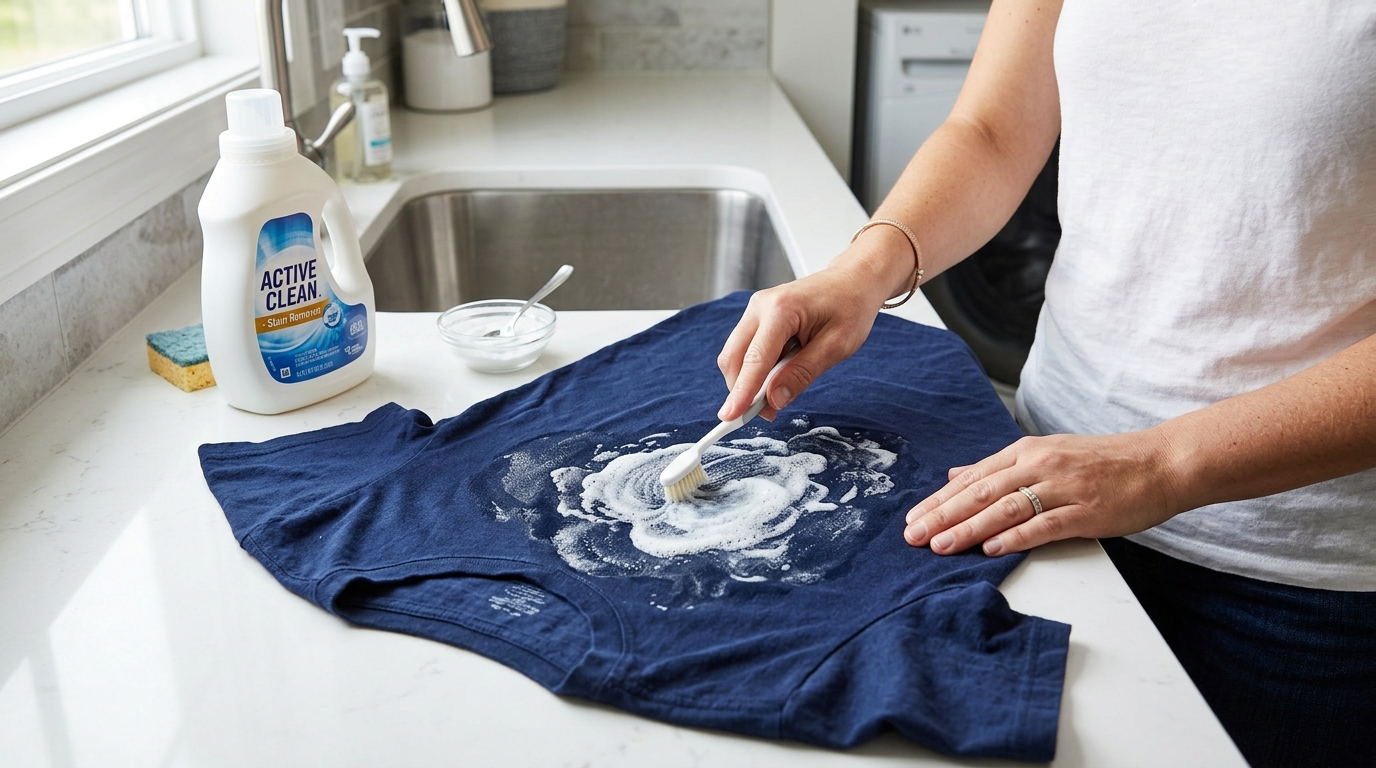
So you just noticed that white, chalky smear on your favorite navy shirt and you’re wondering how to get mineral sunscreen out of clothes before it turns into a permanent souvenir of beach day. Yeah, that stain isn’t going anywhere on its own, and honestly the longer you stare at it hoping it’ll fade, the worse your odds get. Mineral sunscreens are wonderful for your skin, but they are absolutely brutal on fabric, and there’s a very specific reason why, which we’re gonna get into in a sec.
Why Mineral Sunscreen Stains Are So Stubborn
Most people assume sunscreen stains behave like any old grease spot, but mineral formulas play by different rules entirely. The active ingredients, usually zinc oxide and titanium dioxide, are literal minerals, tiny particles that sit on top of fibers instead of soaking into them the way a liquid would. That’s actually what makes them good at blocking UV rays in the first place, they physically reflect sunlight rather than absorbing it chemically. But that same physical, particle-based nature means they can lodge themselves stubbornly into the weave of a shirt, especially anything with texture like cotton blends or linen.
There’s also the oil issue. Nearly all mineral sunscreens are suspended in some kind of oil or silicone base to make them spreadable on skin, and that oily carrier is what actually oxidizes over time, turning a stain from off-white to yellowish-orange if it’s left untreated for too long. Dermatologist and skincare researcher Dr. Ranella Hirsch has noted in interviews that mineral sunscreen residue is “notoriously difficult” to remove precisely because of this combination of mineral particles and oil, and that pretreatment matters enormously.
What You’ll Need Before You Start
Before diving in, gather these things, it saves you running back and forth mid-treatment which honestly is annoying:
- Dish soap (something degreasing, like the blue Dawn kind works surprisingly well)
- Rubbing alcohol or a stain remover spray
- A soft-bristled brush or an old toothbrush
- White vinegar
- Baking soda
- Liquid laundry detergent, preferably enzyme-based
- Cold water, never hot, we’ll get to why
Step-by-Step: Removing Fresh Mineral Sunscreen Stains
Fresh stains are way easier to deal with than ones that’ve had time to set, so acting fast genuinely matters here, don’t put it off till laundry day next weekend.
- Scrape off excess residue. Using a dull knife edge or even a spoon, gently lift away any thick sunscreen still sitting on the surface of the fabric. Don’t rub it in further, that’s a mistake a lot of people make instinctively.
- Apply dish soap directly to the stain. Work it in with your fingers or the toothbrush, focusing on breaking up the oily base rather than the mineral particles themselves.
- Let it sit for 10 to 15 minutes. This gives the soap time to actually emulsify the oils.
- Rinse with cold water, running it through the back of the fabric so you’re pushing the stain out rather than deeper in.
- Wash as usual, but skip the dryer until you’ve confirmed the stain is gone. Heat sets stains permanently, and once that happens there’s genuinely not much left to do.
Treating Set-In or Old Sunscreen Stains
Okay so what if the stain already went through the dryer, or it’s been sitting there for a week because you forgot about it (we’ve all done this). It’s not hopeless, but it takes more elbow grease.
Mix one part white vinegar with two parts cold water, and soak the garment for about thirty minutes. Vinegar’s mild acidity helps break down mineral buildup without damaging most fabric types, though you’ll want to avoid it on silk or anything delicate since it can weaken those fibers over repeated use. After soaking, sprinkle baking soda directly onto the stain and scrub gently in circular motions with your brush, this creates a mild abrasive action combined with a chemical reaction that lifts residue that soap alone couldn’t touch.
A 2019 survey conducted by the American Cleaning Institute found that nearly 68 percent of consumers admitted they treat clothing stains incorrectly at least once a month, often by using hot water or harsh scrubbing that sets the stain further rather than removing it. That statistic alone should tell you why patience and the right order of steps actually matters more than brute force.
Fabric-Specific Tips
Not every fabric reacts the same way, and treating a delicate blouse like you’d treat a cotton beach towel is a recipe for disaster.
| Fabric Type | Best Treatment Method | Things to Avoid |
|---|---|---|
| Cotton | Dish soap plus vinegar soak | Hot water, bleach on colors |
| Linen | Gentle dish soap, air dry only | Harsh scrubbing, dryer heat |
| Polyester/Synthetic Blends | Enzyme detergent pretreat | Vinegar (can weaken synthetic fibers over time) |
| Silk | Mild soap only, spot test first | Baking soda scrub, vinegar |
| Swimwear/Spandex | Cold rinse immediately after wear | Any heat exposure, sun-drying stained spot |
Preventing Mineral Sunscreen Stains in the First Place
Honestly, prevention beats treatment nine times outta ten, and there’s a few simple habits that make a real difference here. Letting sunscreen fully absorb into skin before putting on clothes, waiting a solid ten to fifteen minutes, drastically cuts down on transfer. Wearing darker or patterned clothing to the beach also just hides residue better than pale solid colors do, which show every little smudge.
Some people also swear by applying a thin layer of baby powder over freshly applied sunscreen right before dressing, since it absorbs some of the excess oil before it ever touches fabric. It’s a bit of an old wives’ trick honestly, but a lot of parents dealing with kids’ beachwear say it genuinely helps.
When to Call in Professional Help
If you’ve tried everything above and the stain’s still sitting there stubborn as ever, especially on something expensive or sentimental, it might be worth taking it to a dry cleaner who specializes in oil-based stains. Explain specifically that it’s mineral sunscreen residue, not just a general “sunscreen stain,” because the treatment approach genuinely differs, mineral formulas need different pretreatment than chemical sunscreens which absorb rather than sit on the surface.
Final Thoughts
Dealing with sunscreen stains is one of those small annoying realities of summer that nobody warns you about until you’re standing in your bathroom scrubbing at a shirt at eleven at night. The good news is that with the right combination of dish soap, vinegar, cold water, and a little patience, most mineral sunscreen stains can be lifted, even the stubborn old ones that’ve already been through the wash once or twice. Just remember, heat is your enemy here, and acting quick always beats acting perfect. Next beach trip, maybe give that ten-minute absorption window a shot before throwing on your clothes, future you doing laundry will thank you for it.