

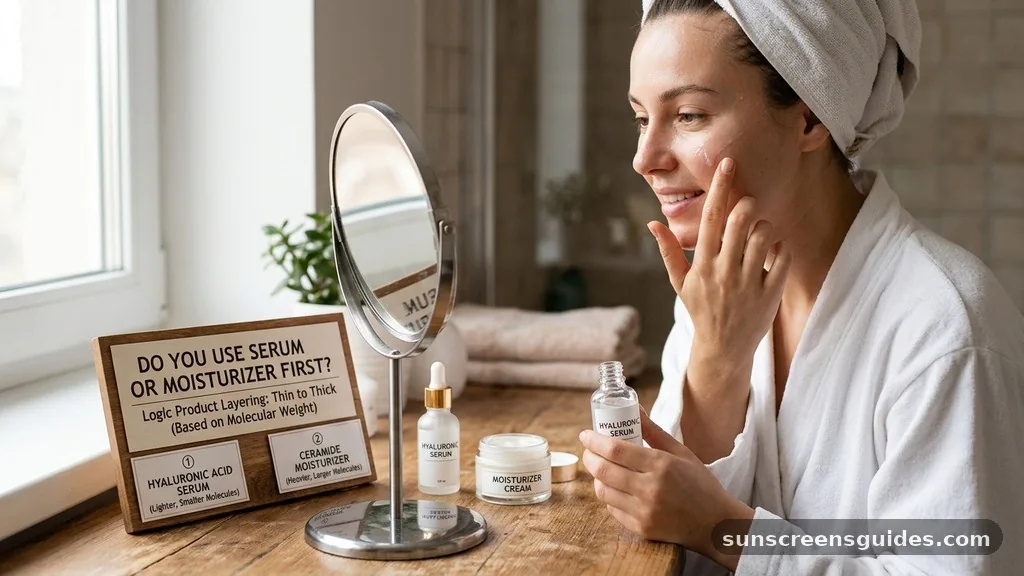
Figuring out if you should use serum or moisturizer first is one of the most common hurdles in building an effective daily regimen. Getting the sequence right ensures your products actually penetrate the skin rather than sitting uselessly on the surface. Because serums are designed to deliver concentrated active ingredients into the deeper layers of the epidermis, applying them before a heavier cream is the standard professional approach.
While the beauty industry often complicates things with expensive marketing, the science of skincare routine order is rooted in physics and chemistry. Once you understand the basic logic of layering, you’ll stop wasting money on products that aren’t reaching their full potential.
The Logic of Product Layering Based on Molecular Weight
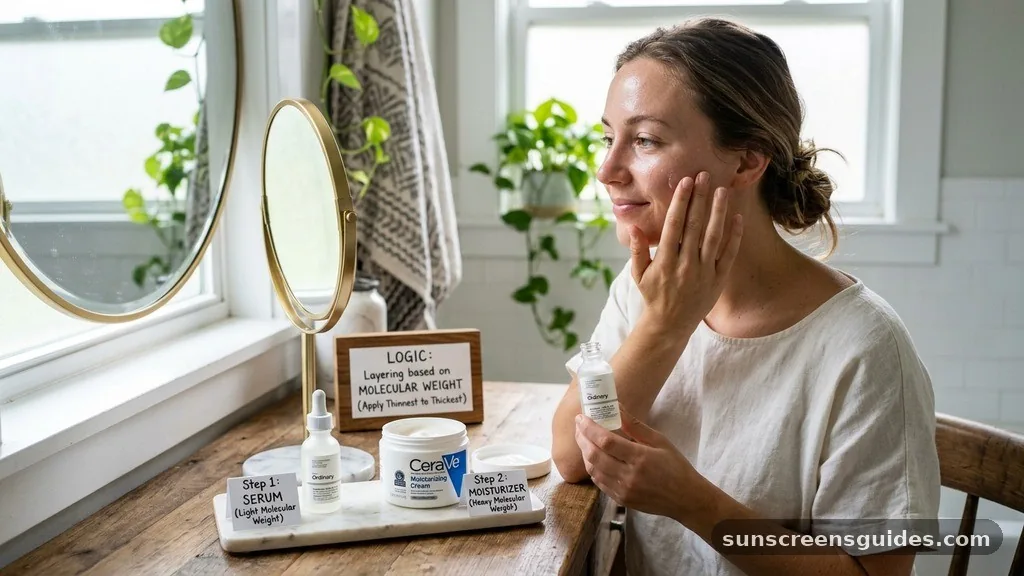
The golden rule for layering skincare is to apply products from the thinnest consistency to the thickest. This is primarily because of molecular weight. Serums are formulated with smaller molecules designed for deep penetration, while moisturizers contain larger molecules meant to sit on the surface.
If you apply a thick, creamy lotion first, you create a physical barrier that prevents your lightweight serum from reaching the skin cells that need it most. By starting with the serum, you allow the active ingredients to initiate their work before the heavier product seals everything in.
Think of your skin like a sponge. If you coat a sponge in wax first, water simply beads off the surface without soaking in. A serum is like the water, full of nutrients and hydration, while the moisturizer is the protective layer.
When you get the order wrong, you significantly compromise the absorption rate of your most expensive treatments, such as targeted anti-aging serums or brightening agents. Always reach for the bottle with the most liquid, watery texture before moving on to creams, balms, or heavy oils. This simple adjustment often leads to faster, more visible results from your existing product stash.
How Serum and Moisturizer Function Together
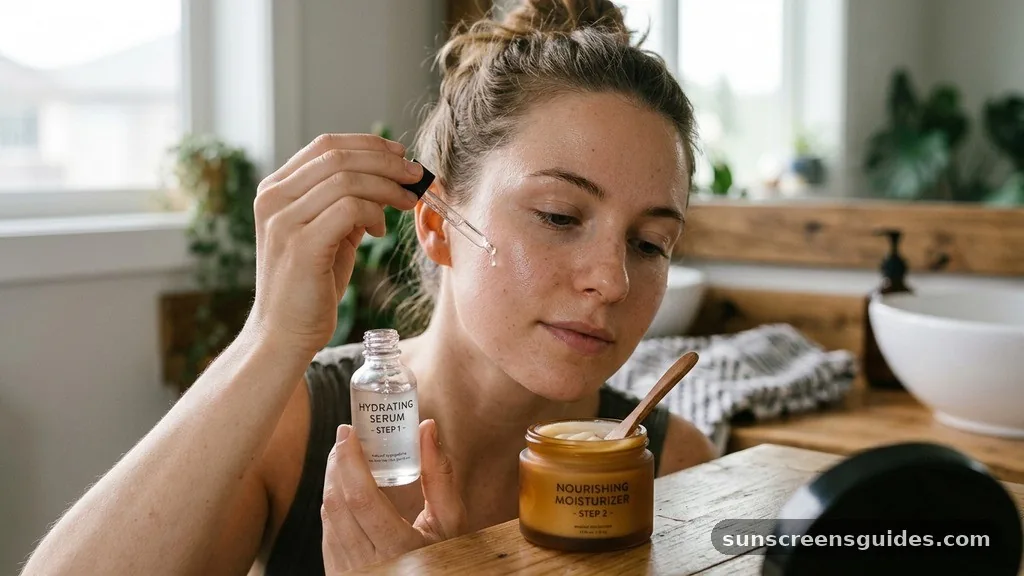
Understanding the roles of these products helps clarify why the order is non-negotiable. Serums are typically packed with high concentrations of potent ingredients like hyaluronic acid, vitamin C, or retinol. They are designed to treat specific issues—think dark spots, fine lines, or dullness.
Moisturizers, conversely, have a different primary job: to act as a seal. They often contain occlusives, which are ingredients that physically block moisture from escaping. If you put your moisturizer on first, you are effectively locking out the very ingredients you are trying to introduce with your serum.
Maintaining a healthy skin barrier depends on this balance of providing active treatment and locking in essential moisture. By allowing the serum to sink in for about sixty seconds before applying your moisturizer, you ensure the serum has time to do its job. Some people find that their skin feels tacky after a serum; this is a sign that it is working, not that it is failing.
The hydration provided by the serum needs a follow-up layer to prevent evaporation. Without the moisturizer, your serum might actually contribute to dryness, especially in low-humidity environments where the air pulls moisture out of your skin.
| Product Type | Primary Function | Typical Texture | Application Timing |
|---|---|---|---|
| Serum | Targeted treatment | Thin, watery, or gel-like | First (after cleansing) |
| Moisturizer | Seal and protect | Creamy, lotion, or balm | Second |
Managing Ingredients and pH Balance
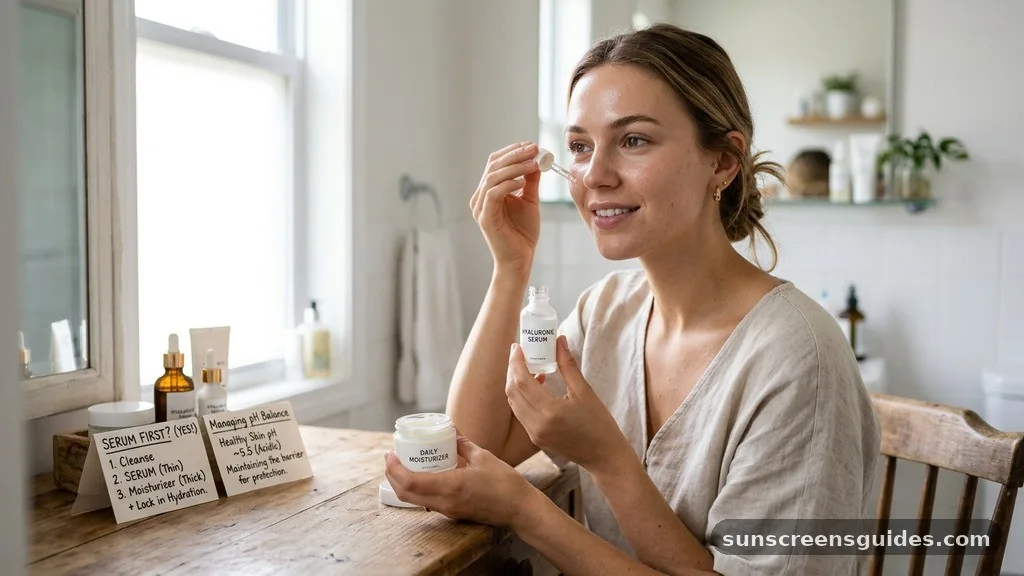
When you question do you use serum or moisturizer first, you must also consider the pH balance of your products. Many active treatments, particularly those containing acids or specific vitamins, rely on a particular pH level to function effectively. Applying a heavy moisturizer immediately after cleansing can alter the environment of your skin, potentially neutralizing or diluting the efficacy of your serum.
By applying the serum directly to clean, slightly damp skin, you bypass potential interference from other cosmetic agents. This ensures that the pH of the serum remains stable as it penetrates the lipid barrier.
There is also the matter of humectants versus occlusives. Humectants, which are abundant in many high-quality serums, pull water into the skin. If you apply a heavy, oil-based moisturizer over a humectant-rich serum, you create an environment where the skin stays plump and hydrated throughout the day.
If you flip this order, the humectant may struggle to pull in the water it needs, or it may simply sit on top of the occlusive layer, doing nothing for your skin’s health. Understanding the chemical composition of your products allows you to tailor your routine to maximize the benefits of every bottle on your vanity.
- Cleanse your face thoroughly to remove debris and oils.
- Apply water-based serums while the skin is still slightly damp to boost penetration.
- Wait at least one minute to allow the serum to absorb fully.
- Apply your moisturizer to lock in the active ingredients you just applied.
- Always finish with SPF during the day to protect the skin barrier.
Addressing Common Topical Gaps
A common point of confusion arises when dealing with oil-based products. Many people wonder if an oil-based serum should follow the same rules. Generally, oil-based serums are thicker than water-based ones, so they should be applied later in the routine.
If you are using multiple serums, always go from the most watery to the most viscous. A common gap in advice is the treatment of transepidermal water loss, which is the process where water evaporates from the skin. If you skip the moisturizer, even the best serum will fail to prevent this loss, leaving your skin feeling tight or dehydrated by the afternoon.
Another frequent oversight is the assumption that every serum needs a moisturizer. While it is standard practice to layer them, some people with extremely oily skin may find that certain hydrating serums provide enough moisture on their own. However, for most skin types, the moisturizer is the essential final step to prevent transepidermal water loss.
If you feel your skin is getting “too much” product, try using less of each rather than skipping the moisturizer entirely. Adjusting the quantity is a much more effective strategy than skipping a vital step in the layering process, as your skin needs both the treatment and the protection.
Frequently Asked Questions
Should I wait for my serum to dry completely before applying moisturizer?
You should let the serum absorb for about one minute until it feels tacky but not wet.
Does the order change if I am using a retinol serum?
No, always apply retinol after cleansing and before your moisturizer to ensure maximum efficacy and skin penetration.
Can I mix my serum and moisturizer together in my palm?
While tempting, it is better to apply them separately to ensure each product functions correctly as intended.
What happens if I apply moisturizer before serum?
The moisturizer creates a barrier that prevents the active ingredients in your serum from penetrating the skin.
Do I need to change my order based on the time of day?
The layering order remains the same, though you should always ensure your daytime routine includes an SPF.
Are there exceptions for oil-based serums?
Yes, apply oil-based serums after any water-based treatments but before your heavy cream or occlusive moisturizer.
Why does my skin feel sticky after applying serum?
Stickiness is often a sign of humectants working; a moisturizer applied afterward will smooth out that feeling.
Determining if you should use serum or moisturizer first is about respecting the science of your skin’s needs. By layering from the thinnest to the thickest consistency, you guarantee that your potent active ingredients can perform their functions without being blocked by heavier creams. This simple, systematic approach to skincare routine order helps minimize issues like transepidermal water loss while maximizing the benefits of your investments.
Remember that consistency is more important than having a dozen different products. Stick to a simple, effective sequence, and your skin will likely reflect the care you put into it. If you have questions about your specific products, try checking the packaging for recommended usage instructions or consult with a dermatologist to tailor these steps to your unique skin type.



