


Figuring out the ideal sequence for your daily skincare regimen can feel like a chemistry experiment, especially when you are staring at a shelf full of bottles. Many people frequently ask if serum comes before or after moisturizer because getting the layering wrong can actually prevent your expensive products from performing their best.
To maintain a healthy complexion, you generally want to apply products from the thinnest consistency to the thickest. By mastering this layering technique, you ensure that high-performance ingredients penetrate effectively while your heavier creams provide the necessary seal to keep your skin hydrated throughout the day.
Why the Layering Order Matters for Skin Health
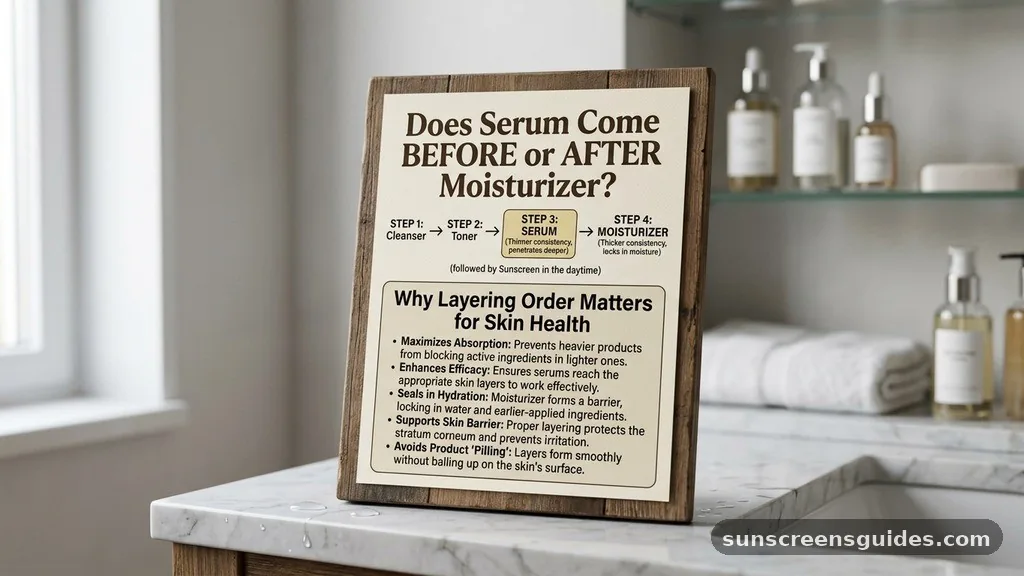
The primary reason we care about whether serum comes before or after moisturizer is the skin absorption rate. Your skin is a highly efficient barrier designed to keep external substances out, which means it can be quite selective about what it lets in.
If you apply a heavy, occlusive cream first, you essentially create a physical shield that blocks the smaller, more potent molecules in your serum from reaching your deeper skin layers. By applying serums first, you allow those concentrated active ingredients to touch the skin directly, where they can work their magic without being hindered by heavier waxes or silicones.
Think of your face like a sponge. If the sponge is already coated in a thick layer of oil or wax, water-based treatments will simply sit on the surface, eventually evaporating before they provide any real benefit. Serums are typically formulated with a lower molecular weight, allowing them to sink in rapidly.
When you reverse the order, you aren’t just wasting product; you are potentially limiting the efficacy of your entire regimen. Understanding this hierarchy is the foundation of a professional-grade approach to home beauty care.
Distinguishing Between Serums and Moisturizers
To understand the order, you must first recognize the fundamental difference in the formulation of these products. A serum is a lightweight, concentrated delivery system designed to target specific concerns like hyperpigmentation, fine lines, or dehydration.
These formulas often contain high concentrations of potent agents like vitamin c or retinol. Because they lack the heavy thickening agents found in creams, they are designed to be “the worker” of your routine, delivering deep treatment.
Moisturizers, on the other hand, are designed to hydrate and protect. They usually contain occlusives—ingredients that form a film over the skin to prevent moisture from escaping. This process is essential for preventing transepidermal water loss, a condition where your skin loses its natural moisture to the environment.
While a serum provides the fuel, the moisturizer acts as the lock. Without the lock, the fuel evaporates quickly. It is this functional distinction that dictates why you should always prioritize the serum as your first treatment step after cleansing and toning.
The Science of Molecular Weight and Absorption

The concept of molecular weight is the most reliable rule of thumb in dermatology. Smaller molecules are able to pass through the outer layers of the epidermis more easily than larger ones.
Most serums are designed with a water-based structure, which has a very small molecular size. Conversely, moisturizers are often emulsions containing lipids, oils, and larger molecules that stay closer to the surface to provide a protective barrier.
If you are using multiple serums, you should even layer those by consistency, starting with the thinnest and moving to the thicker options. For example, a light hyaluronic acid serum should go on before a thicker, more viscous treatment.
Once these are absorbed—usually waiting about 60 seconds is sufficient—you apply your moisturizer to seal everything in. This methodical approach respects the physical properties of the ingredients and ensures that your skincare routine order is optimized for maximum results.
| Product Type | Primary Function | Typical Texture |
|---|---|---|
| Serum | Targeted treatment | Thin, liquid, or gel |
| Moisturizer | Hydration and seal | Creamy, lotion, or balm |
| Facial Oil | Sealing and nourishment | Viscous, oily |
Addressing Common Misconceptions and Routine Gaps
A common point of confusion arises when people introduce facial oils or specialized treatments into their routine. Many users assume that because an oil feels “thicker,” it should be the final step, but they often struggle with where to place it relative to their cream.
The general rule is that facial oils are often the final step because they are highly occlusive; they lock in everything beneath them. However, if your skin is extremely dry, you might mix a drop of oil into your moisturizer instead.
Another gap in knowledge concerns the pH balance of your products. Some active ingredients require a specific pH to remain stable and effective. For instance, L-ascorbic acid (a common form of Vitamin C) works best at a low, acidic pH.
If you use a high-pH cleanser or a toner that neutralizes your skin immediately before applying your serum, you might accidentally deactivate the ingredients. Always check the instructions on your specific products, as high-performance brands often design their systems to work in a specific sequence to maintain the chemical integrity of the active components.
- Cleanse your face to remove debris and oils.
- Apply a toner to reset your pH balance.
- Layer water-based serums starting from lightest to heaviest.
- Apply your moisturizer to lock in the treatment layers.
- Finish with sunscreen during the day or a facial oil at night.
Conclusion
Getting the order right transforms your daily ritual from a guessing game into a structured, effective process. Remember that the goal is always to apply products from the thinnest, most targeted consistency to the thickest, most protective layer. By ensuring that your serum comes before your moisturizer, you provide your skin with the best possible opportunity to absorb the concentrated ingredients it needs to thrive.
If you follow this rule of thumb, you will minimize the risk of product pilling and maximize the long-term health of your skin barrier. Experimenting with your specific product lineup is normal, but keeping this basic hierarchy in mind will ensure you are always on the right track toward your skincare goals.
Does serum always come before moisturizer?
Yes, as a general rule, you should apply serums first because they are lighter and more concentrated.
What if my moisturizer is very lightweight?
Even if your moisturizer is thin, it likely contains occlusives that should seal in the treatment-focused serum.
Should I wait for my serum to dry before applying moisturizer?
Yes, waiting about 30 to 60 seconds allows the serum to absorb, preventing the products from pilling together.
Can I use multiple serums at the same time?
Yes, apply them from the thinnest consistency to the thickest, then follow with your moisturizer to seal everything.
Do facial oils follow the same rule as moisturizers?
Facial oils are generally the final step in a routine because they are highly occlusive and seal everything.
Does the order change for nighttime routines?
The layering logic remains the same: apply the thinnest treatment first, regardless of whether it is day or night.
What happens if I apply moisturizer first?
The heavy ingredients in the moisturizer create a barrier that prevents the active ingredients in your serum from penetrating.



