
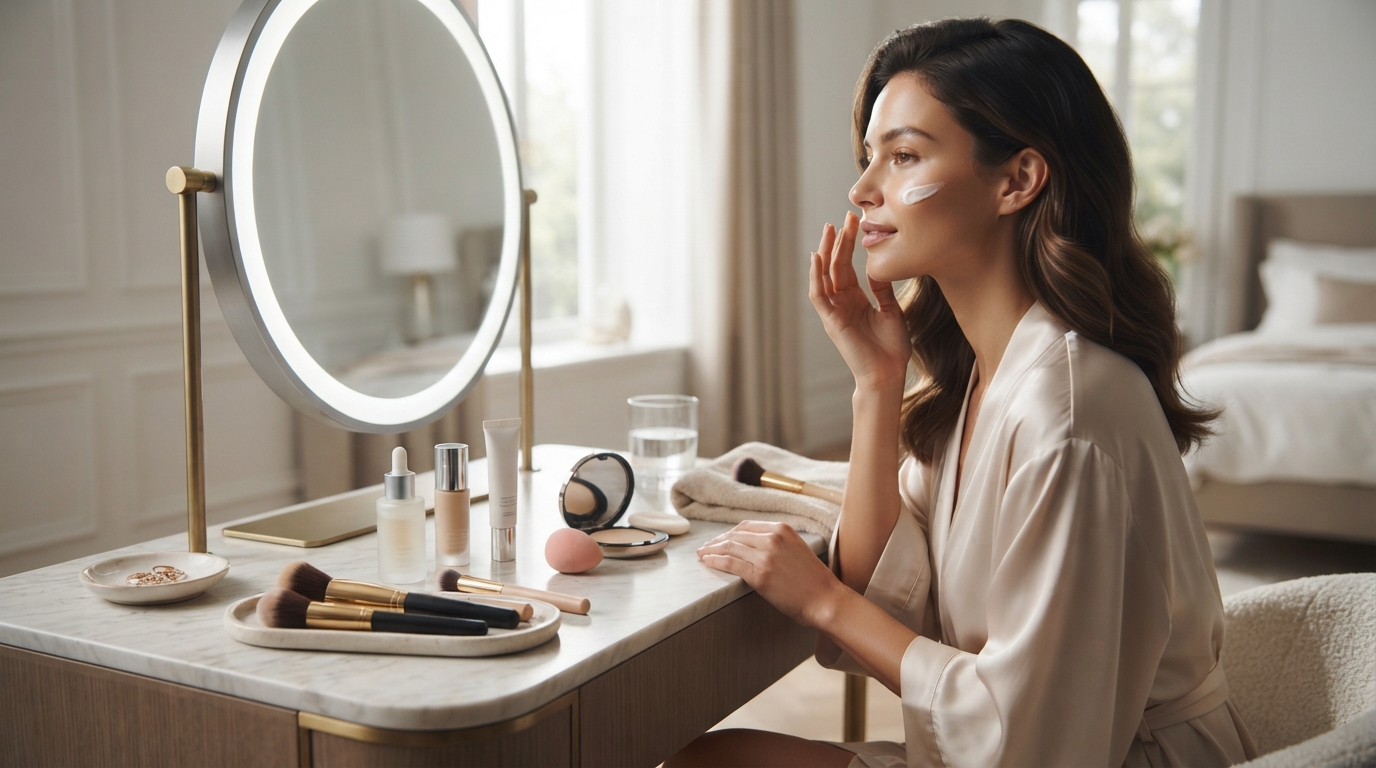
If you’ve ever stood in front of the mirror wondering do you put sunscreen on before or after makeup, you’re honestly not alone, and yeah, it gets weirdly confusing fast. One person says sunscreen first, another swears by SPF setting spray, and then someone on social media blends foundation straight into sunscreen like it’s some secret formula. You end up holding three products in your hands, not really sure which one deserves to touch your face first. Been there? Probably.
The truth is simpler than the internet sometimes makes it sound, but there are a few details that matter more than people realize. A sunscreen that isn’t applied properly can lose much of its protection, even if it has a high SPF number printed on the bottle. At the same time, nobody wants their makeup sliding around because of a greasy sunscreen underneath. So there has to be a balance, and luckily there is.
This guide explains exactly where sunscreen belongs in your routine, why dermatologists recommend applying it before makeup, how to reapply it during the day without ruining your look, and which common mistakes quietly reduce your sun protection. Some of it sounds obvious after you hear it, though maybe it isnt as obvious when you’re rushing out the door.
The Short Answer: Sunscreen Goes Before Makeup
For nearly every skincare routine, sunscreen should be the final skincare step and the first makeup step.
That means your morning routine usually looks like this:
| Step | Product |
|---|---|
| 1 | Cleanser |
| 2 | Toner (optional) |
| 3 | Serum |
| 4 | Moisturizer (if needed) |
| 5 | Sunscreen |
| 6 | Primer (optional) |
| 7 | Foundation and makeup |
This order allows sunscreen to form an even protective film directly on your skin. Makeup should sit on top of that protective layer, not underneath it.
The American Academy of Dermatology recommends applying a broad-spectrum sunscreen with SPF 30 or higher every day on exposed skin, regardless of whether it’s sunny or cloudy.
“Sunscreen works best when it forms an even layer directly on the skin.”
That single idea explains almost everything about the sunscreen-before-makeup debate.
Why Sunscreen Should Always Come Before Makeup
Think of sunscreen less like makeup and more like a tiny invisible shield. It can’t really do its job if another product is blocking it from reaching your skin.
Modern sunscreens contain ingredients that either absorb ultraviolet radiation or reflect and scatter portions of it. Those ingredients need direct contact with your skin to create consistent protection.
If foundation goes on first, several problems happen:
- Parts of your skin receive little or no sunscreen.
- Coverage becomes uneven.
- SPF protection becomes unpredictable.
- You may unknowingly leave exposed patches around the nose, cheeks, or forehead.
It’s kinda like painting a raincoat after you’ve already walked into the storm. The timing just isn’t helping much.
What Happens If You Apply Makeup Before Sunscreen?
Applying makeup before sunscreen isn’t dangerous, but it makes your sun protection far less reliable.
Foundation isn’t designed to replace sunscreen. Even products that advertise SPF protection rarely provide enough coverage because people simply don’t apply nearly enough makeup.
Researchers have found that most people use only a fraction of the amount needed to achieve the SPF printed on cosmetic products.
That means:
- SPF foundation alone usually isn’t enough.
- SPF powder provides only limited protection.
- SPF setting sprays are helpful but should not replace sunscreen.
Your regular sunscreen should still be doing most of the work.
How Long Should You Wait Between Sunscreen and Makeup?
This is probably one of the most overlooked steps.
Instead of applying foundation immediately after sunscreen, wait around 3 to 5 minutes if possible. Some mineral sunscreens may benefit from waiting closer to 10 minutes, depending on the formula.
During that short wait:
- Sunscreen settles evenly.
- Film-forming ingredients bond to your skin.
- Makeup applies more smoothly.
- Pilling becomes less likely.
You don’t necessarily need a timer. By the time you’ve brushed your hair, picked earrings, or argued with yourself about which lipstick to wear, you’re usually good to go.
Does Primer Go Before or After Sunscreen?
Primer comes after sunscreen.
The correct order is:
- Moisturizer
- Sunscreen
- Primer
- Foundation
- Concealer
- Powder
- Setting spray
Putting primer underneath sunscreen creates another barrier between your skin and the SPF layer, which isn’t ideal.
Thankfully, many modern sunscreens already double as excellent makeup primers, so you may not even need a separate primer at all. Kinda nice when one bottle does two jobs.
Can Moisturizer and Sunscreen Be Switched?
Usually, no.
Moisturizer belongs underneath sunscreen because sunscreen needs to remain the outermost skincare layer.
However, many modern moisturizers already contain SPF.
Even then, dermatologists generally recommend using a dedicated sunscreen because people rarely apply moisturizer thickly enough to receive the advertised SPF level.
What About Sunscreen With Makeup Already Mixed In?
Products combining foundation and sunscreen can be convenient, but they shouldn’t replace traditional sunscreen.
Here’s why.
To reach SPF 30 using foundation alone, you’d often need far more product than most people would ever wear naturally. It would look heavy long before it reached proper protection.
Instead:
- Apply sunscreen first.
- Allow it to settle.
- Apply SPF makeup if desired.
Now both products work together instead of asking one product to do everything.
How Much Sunscreen Should You Actually Apply?
This surprises almost everybody.
Most adults need approximately:
- 1/4 teaspoon for the face.
- Another 1/4 teaspoon for the neck.
- Around one ounce (about a shot glass) for the entire body.
A popular visual guide is the two-finger rule, where sunscreen is squeezed along the length of the index and middle fingers.
While not scientifically perfect for every face size, it’s generally a useful reminder that most people use way too little.
A tiny dab isn’t enough, even if the bottle says SPF 50.
Does Makeup Reduce Sunscreen Effectiveness?
It can—but mostly if makeup disturbs the sunscreen layer.
Dabbing makeup gently with a sponge usually preserves sunscreen better than aggressively rubbing products across your face.
For smoother results:
- Let sunscreen dry first.
- Use pressing motions instead of rubbing.
- Build foundation in thin layers.
- Avoid excessive blending once makeup is set.
Small adjustments like these can help maintain more even SPF coverage.
How Do You Reapply Sunscreen Over Makeup?
This is where things get interesting because sunscreen doesn’t last all day.
Most dermatologists recommend reapplying every two hours during continuous outdoor exposure.
You obviously don’t want to remove a full face of makeup every afternoon.
Fortunately, there are several options.
SPF Setting Spray
Easy and convenient.
Pros:
- Doesn’t disturb makeup much.
- Quick application.
- Good for touch-ups.
Cons:
- Coverage can be uneven.
SPF Powder
Popular for oily skin.
Pros:
- Controls shine.
- Portable.
- Easy to carry.
Cons:
- Difficult to apply enough for full SPF protection.
Sunscreen Stick
Many people now prefer sunscreen sticks.
Pros:
- More consistent coverage.
- Easy to target specific areas.
- Less messy.
Cons:
- Requires careful application over makeup.
Sponge Technique
Some people gently pat liquid sunscreen using a damp makeup sponge.
It takes patience, honestly, but it can preserve surprisingly much of your makeup.
Mineral vs Chemical Sunscreen Under Makeup
Both types can work beautifully.
Mineral Sunscreen
Advantages:
- Starts protecting immediately.
- Often preferred for sensitive skin.
- Less likely to sting eyes.
Possible downsides:
- Can leave a white cast.
- Some formulas feel thicker.
Chemical Sunscreen
Advantages:
- Usually invisible.
- Lightweight texture.
- Excellent under foundation.
Possible downsides:
- May irritate sensitive skin.
- Some formulas require about 15 minutes before sun exposure.
The best sunscreen is ultimately the one you’ll actually wear every day. Sounds boring, but it’s true.
Common Mistakes People Make
Even experienced skincare lovers slip into habits that quietly reduce protection.
Some common mistakes include:
- Applying sunscreen after foundation.
- Using too little sunscreen.
- Skipping ears and neck.
- Forgetting eyelids.
- Never reapplying.
- Rubbing foundation aggressively.
- Assuming SPF makeup is enough.
- Applying sunscreen unevenly.
None of these mistakes usually feel dramatic in the moment, yet they add up over months and years of sun exposure.
What Dermatologists Generally Recommend
Skin cancer remains the most commonly diagnosed cancer in many countries, and cumulative ultraviolet exposure is one of its major risk factors.
Organizations including the American Academy of Dermatology and the Skin Cancer Foundation consistently recommend:
- Broad-spectrum sunscreen.
- SPF 30 or higher.
- Daily application.
- Reapplication every two hours outdoors.
- Additional protective clothing and shade when possible.
These recommendations are supported by decades of clinical research rather than passing skincare trends.
Does Sunscreen Affect How Makeup Looks?
Older sunscreens sometimes earned a reputation for making foundation separate or slide around.
Today’s formulas are much different.
Many modern sunscreens are designed specifically for cosmetic compatibility.
Some finishes include:
- Matte
- Satin
- Natural
- Velvet
- Dewy
Finding the right finish for your skin type often makes more difference than choosing the highest SPF alone.
Oily skin may prefer lightweight gel sunscreens, while dry skin often benefits from hydrating cream formulas.
A little trial and error is normal, so dont worry if the first one isn’t your forever favorite.
Final Thoughts
When people ask, do you put sunscreen on before or after makeup, the answer is refreshingly straightforward: sunscreen belongs before makeup, every single day. It should be the last step of your skincare routine and the first layer before cosmetics. That order allows sunscreen to create an even protective barrier directly against your skin, giving you the best chance of receiving the SPF protection printed on the label.
Good sunscreen habits don’t have to complicate your morning. Apply enough product, give it a few minutes to settle, then layer your makeup gently on top. If you’ll be outdoors for long periods, remember that reapplication matters just as much as the first application. In the long run, consistent sunscreen use helps reduce premature aging, sunburn, and the cumulative effects of ultraviolet exposure. Funny enough, the few extra minutes you spend now can quietly save your skin years later.
Frequently Asked Questions
Do you put sunscreen on before or after makeup every day?
Yes. Apply sunscreen after skincare and before makeup. Let it settle for several minutes so it forms an even protective layer before foundation or primer.
Can I skip sunscreen if my foundation contains SPF?
No. SPF foundation alone rarely provides enough protection because most people apply much less makeup than required to reach the labeled SPF value.
How long should sunscreen dry before applying makeup?
Waiting three to five minutes is usually enough. Some mineral sunscreens may benefit from a slightly longer drying time for smoother makeup application.
Can I reapply sunscreen without removing my makeup?
Yes. Sunscreen sticks, SPF powders, and SPF setting sprays can help refresh protection over makeup, though careful application gives the most even coverage.
Does primer go before or after sunscreen?
Primer should always go after sunscreen. Sunscreen needs direct contact with your skin, while primer prepares the sunscreen layer for smoother makeup application.