


Knowing exactly when to use niacinamide serum in your daily regimen can transform the health and appearance of your skin. This versatile form of vitamin B3 acts as a powerhouse for multiple concerns, yet its effectiveness often depends on where it sits within your sequence of products. By understanding how to layer this ingredient alongside other actives, you can maximize absorption while minimizing the risk of irritation.
Whether you are targeting excess oil, uneven tone, or a compromised moisture barrier, placing this serum correctly ensures you get the most out of your investment. Let’s look at how to optimize your application strategy for visible, lasting results.
Determining the Best Time for Application
You can effectively use niacinamide serum in both your morning routine and evening routine because it is remarkably stable. Unlike some light-sensitive or highly reactive compounds, this water-soluble vitamin remains potent throughout the day. Many dermatologists suggest applying it twice daily if your skin tolerates it well, as consistent exposure helps maintain steady levels of the nutrient in your cells.
If you are dealing with midday oiliness, a morning application is particularly beneficial. Niacinamide excels at sebum regulation, helping to keep your T-zone matte and pores looking refined before you head out the door.
Conversely, using it at night allows the ingredient to work in tandem with your body’s natural repair processes. It supports the skin barrier function while you sleep, making it an excellent partner for recovery-focused ingredients like ceramides or peptides.
Strategic Layering with Other Actives
The order of operations is critical when managing skincare layering. Because niacinamide is generally formulated as a water-based serum, it should be applied after cleansing and toning but before heavier oils or occlusive moisturizers. This allows the molecules to penetrate the skin surface without being blocked by thicker, emollient-rich creams.
Mixing Niacinamide with Vitamin C

There is a long-standing myth that you cannot combine these two ingredients, but modern formulations have largely debunked this concern. While older studies suggested potential flushing when using high-concentration, low-pH vitamin C alongside niacinamide, today’s stable derivatives make this less of an issue. If you have sensitive skin, you might still prefer to separate them by alternating morning and evening applications. If your skin is resilient, applying them together—or one right after the other—is perfectly acceptable.
Using Niacinamide with Retinol
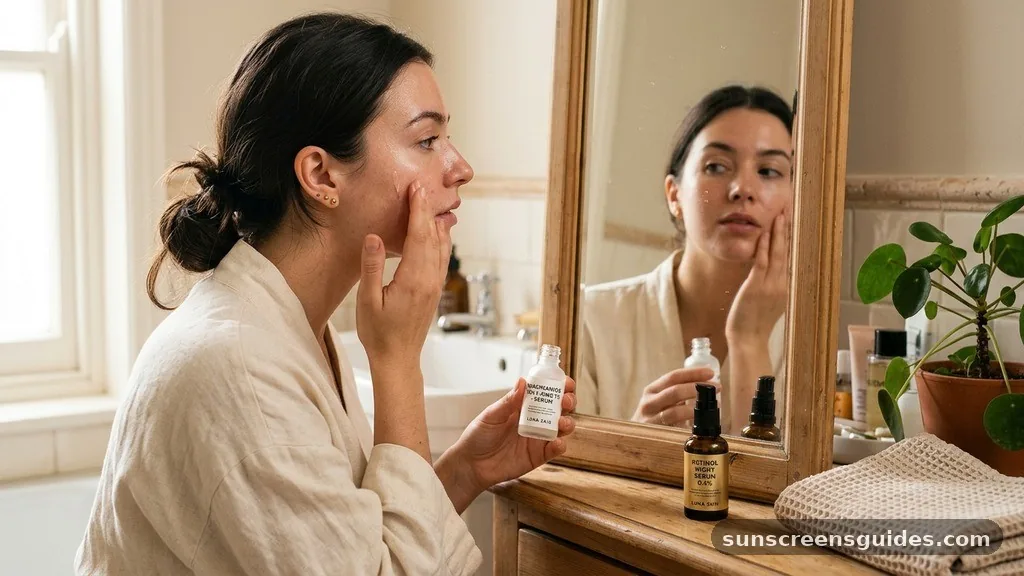
Pairing niacinamide with retinol is often considered a pro-level move for those seeking anti-aging benefits without the typical dryness. Niacinamide acts as a soothing agent, buffering the potential irritation caused by potent retinoids. Apply your niacinamide first to create a calm base, let it dry for a minute, and then follow up with your retinoid treatment. This layering technique helps keep your skin balanced while allowing the retinol to address fine lines and texture.
Partnering with Salicylic Acid
When you are treating breakouts, you might wonder about the timing of salicylic acid. Since this is a form of chemical exfoliation, it works by clearing out pores, while niacinamide helps soothe the inflammation that often accompanies acne. Apply your salicylic acid treatment first, wait until it is fully absorbed, and then apply your niacinamide serum. This combination is highly effective for congested skin types, as it treats the cause of the clog while strengthening the skin’s defenses.
Addressing Topical Gaps and Common Misconceptions
Many users worry about the pH sensitivity of their products. Niacinamide is most stable at a neutral pH, which is why it plays so nicely with a wide variety of other serums.
If you are using an acidic product, such as an AHA or a strong BHA, waiting about five to ten minutes before applying your niacinamide ensures that the pH of your skin has returned to its natural, slightly acidic state. This simple buffer period prevents any potential “pilling” or product degradation.
Another gap in common knowledge involves the concentration of the serum. You will often see products ranging from 2% to 10% niacinamide.
Higher does not always mean better; in fact, concentrations above 10% can actually trigger redness or stinging in sensitive individuals. Start with a lower percentage to see how your skin reacts before moving to a more potent formula.
Comparing Common Skincare Pairings
To help you visualize where this ingredient fits, the following table breaks down common combinations and their primary effects.
| Ingredient Pairing | Primary Benefit | Application Tip |
|---|---|---|
| Niacinamide + Hyaluronic Acid | Hydration & Plumping | Layer together for maximum moisture retention. |
| Niacinamide + Retinol | Anti-aging & Soothing | Use niacinamide as a base to buffer irritation. |
| Niacinamide + Vitamin C | Brightening & Protection | Wait 5 minutes between layers if skin is sensitive. |
| Niacinamide + Salicylic Acid | Acne Control | Apply the exfoliant first to clear pores. |
Managing Hyperpigmentation and Uneven Tone
If you are using this ingredient to target hyperpigmentation, consistency is your greatest ally. Niacinamide works by inhibiting the transfer of melanosomes to the skin’s surface, which helps fade dark spots over time. This process is slow and steady, so do not expect overnight miracles.
To see real results, you must commit to a routine where you use niacinamide serum daily for at least eight to twelve weeks. When combined with a broad-spectrum sunscreen during the day, it creates a formidable defense against UV-induced pigment changes. Apply it specifically to the areas affected by discoloration before moving on to your moisturizer.
Essential Tips for Success
* Always perform a patch test on your forearm before applying a new serum to your face.
* Allow each layer of your skincare to dry slightly to prevent the products from rolling or pilling.
* Store your bottles in a cool, dark place to maintain the integrity of the active molecules.
* Focus on application areas that need the most attention, such as the T-zone or pigmented spots.
* Consider the total concentration of niacinamide if you are layering multiple products that contain it.
* Listen to your skin; if you notice stinging, reduce the frequency of application immediately.
FAQ
Can I use niacinamide serum every day?
Yes, it is gentle enough for daily use in both morning and evening routines for most people.
Should I apply niacinamide before or after moisturizer?
Apply it before your moisturizer to ensure the active ingredients penetrate the skin without being blocked.
Does niacinamide help with active breakouts?
It helps soothe redness and regulates oil, which can support the healing process of active breakouts effectively.
Can I use niacinamide with hyaluronic acid?
Yes, they work perfectly together to hydrate the skin while improving the overall barrier and texture.
Is it okay to use niacinamide around the eyes?
Most formulas are safe for the eye area, but avoid direct contact to prevent potential stinging sensations.
Will niacinamide make me purge?
No, niacinamide does not increase cell turnover, so it typically does not cause a purging phase.
Can I mix niacinamide with chemical exfoliants?
Yes, but apply the exfoliant first and wait a few minutes before layering the niacinamide serum on.
When you incorporate this ingredient into your routine, you are investing in long-term skin health. By choosing to use niacinamide serum with intention—paying attention to the order of application and the compatibility of your other products—you can effectively address concerns ranging from oiliness to uneven texture. Start slowly, monitor how your skin responds, and adjust your frequency as needed to find your ideal balance.
Remember that the best results come from a consistent, thoughtful approach rather than rushing through your steps. If you have any specific concerns about your skin type or how these products interact with your current routine, consider consulting with a dermatologist for personalized advice. Consistency is the key to achieving the clear, balanced complexion you are after, so stick with it and enjoy the process of perfecting your daily ritual.



