


Mastering the art of applying face serum is a small change that yields big results for your complexion. Most people treat serums like standard lotions, but these potent formulations require a specific approach to deliver their active ingredients where they are needed most.
By understanding the optimal timing and physical application methods, you can significantly enhance how your skin absorbs nutrients and recovers from environmental stress. Whether you are dealing with dry patches, fine lines, or uneven texture, learning the precise technique for layering your products will transform the efficiency of your daily routine and leave your skin looking noticeably more vibrant.
Understanding the Role of Face Serum
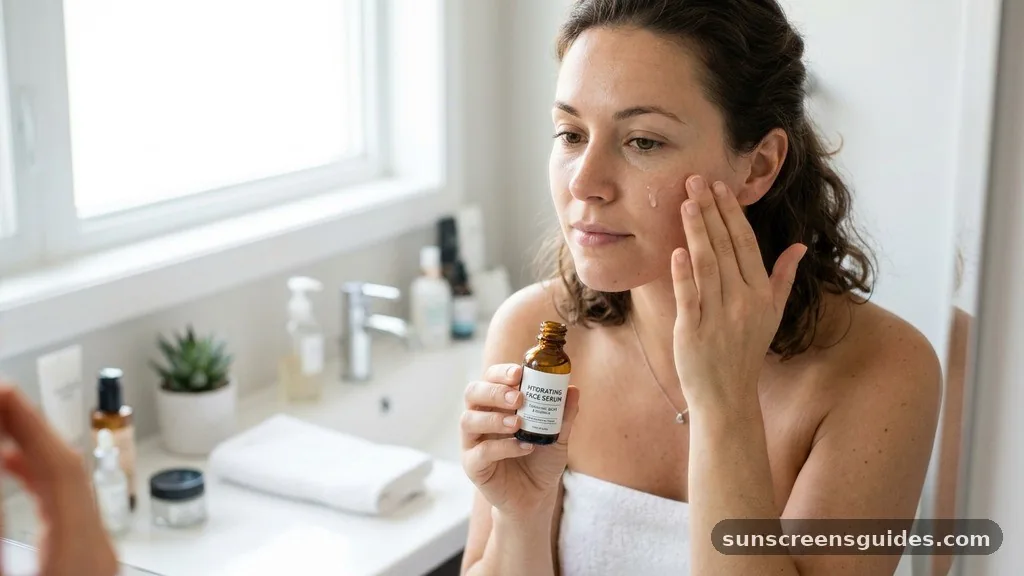
Face serums are concentrated treatments designed to deliver high-potency active ingredients directly into the deeper layers of the epidermis. Unlike a traditional moisturizer, which focuses on surface-level hydration, a serum targets specific concerns like hyperpigmentation, collagen loss, or chronic dehydration. Because they contain a smaller molecular structure than creams, they can penetrate the skin barrier effectively.
These products act as the heavy lifters of any regimen. When you incorporate a serum into your skincare routine order, you are essentially providing your cells with a concentrated dose of vitamins, peptides, or acids. Using them correctly ensures that these expensive, high-quality formulas don’t just sit on the surface, evaporating before they can perform their intended function.
Step-by-Step Guide to Optimal Application
The secret to seeing real change in your skin lies in the preparation of your face before the serum touches it. Following a systematic process ensures that your pores are ready to receive the treatment and that your skin barrier remains protected throughout the day.
- Start with a gentle facial cleanser to remove dirt, oil, and makeup buildup.
- Apply a toner to balance your skin’s pH levels, which creates a prime environment for absorption.
- Ensure your skin is slightly damp skin before moving to the serum step, as moisture helps pull active ingredients deeper.
- Dispense the product using a dropper application directly onto your palms or fingertips rather than touching the dropper to your face.
- Use a gentle patting technique to press the serum into the skin, avoiding harsh rubbing or dragging motions.
- Wait 60 to 90 seconds for the serum to fully absorb before applying your next product.
Strategic Layering for Maximum Efficacy
Layering is about physics and chemistry. You must always apply your products from the lightest consistency to the heaviest to ensure that every layer reaches your skin. If you apply a thick cream before your serum, you create a barrier that prevents the serum from ever reaching your pores.
The Importance of Occlusion
Think of your moisturizer as an occlusion layer. Once you have applied your serum and allowed it to sink in, the moisturizer acts as a seal.
It traps the hydration and the active ingredients inside, preventing them from evaporating into the air. Without this final step, your serum might lose half its effectiveness by midday.
| Product Type | Consistency | Order of Application |
|---|---|---|
| Cleanser | Varies | First |
| Toner | Liquid/Watery | Second |
| Serum | Gel/Light Fluid | Third |
| Moisturizer | Cream/Lotion | Fourth |
| Sunscreen | Cream/Fluid | Last (Daytime) |
Managing Different Serum Types
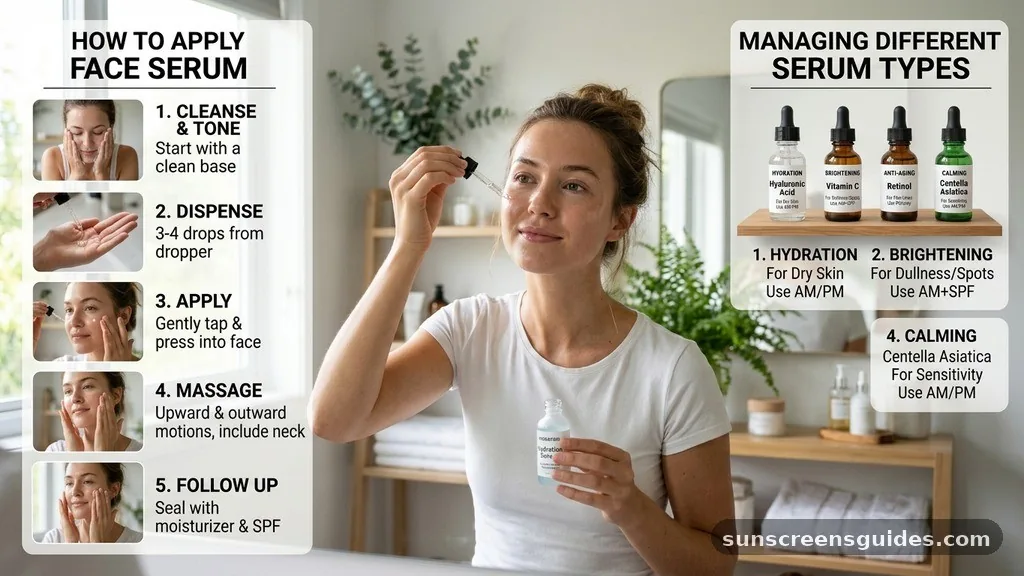
Not all serums are created equal, and some require specific handling to avoid irritation. For instance, vitamin c is highly unstable and works best in the morning to protect against oxidative stress. Conversely, retinol is light-sensitive and should strictly be part of your nighttime ritual.
When dealing with chemical exfoliation serums—such as AHAs or BHAs—never layer them with other harsh actives. These products work by loosening the “glue” between dead skin cells. If you rush the application or use too many layers at once, you risk damaging your moisture barrier, leading to redness, flaking, or increased sensitivity to sunlight.
Addressing Common Application Mistakes
Many users struggle with pore congestion because they overuse their products. More is not better when it comes to concentrated actives.
A pea-sized amount is usually sufficient to cover the entire face and neck. Applying excessive product simply leaves a sticky residue that can attract dirt and clog pores throughout the day.
Another frequent error is skipping the neck. Your neck and décolletage are often the first areas to show signs of aging because the skin there is thinner and contains fewer oil glands. Whenever you apply serum to your face, extend the application downward to ensure consistent results across your entire profile.
Filling the Gaps: Advanced Serum Techniques
While most people understand the basic sequence, there are nuances that dictate how well a serum performs. One critical, often overlooked step is the temperature of the skin.
If you have just stepped out of a hot shower, your skin is more permeable. Applying serums immediately after patting your face dry—while it is still warm and slightly moist—significantly boosts penetration.
Furthermore, consider the “tackiness” test. If your serum feels sticky after two minutes, you have likely applied too much. A well-formulated serum should absorb cleanly.
If you find yourself struggling with a heavy, tacky residue, try mixing two drops of serum with a small amount of your toner in your palm before applying. This thins the consistency and makes the distribution more even across your face.
Maintaining Your Skin Barrier During Treatment
Your skin barrier is a complex system of lipids and proteins. When you introduce powerful ingredients like hyaluronic acid for hydration or high-strength acids for renewal, you are asking your skin to adapt. If you experience stinging or persistent redness, you are likely applying your serum too aggressively or layering it with incompatible products.
Always listen to your skin. If you feel a burning sensation, wash the product off immediately and stick to a simple, fragrance-free moisturizer for 48 hours.
The goal is to improve your skin’s health, not to stress it out. Consistency over time will always yield better, safer results than an intense, one-time application of every serum in your cabinet.
Conclusion
Learning how to apply face serum correctly is a foundational skill that elevates your entire approach to skin health. By focusing on gentle application, correct product order, and the essential role of moisture, you ensure that every drop of your skincare investment works to its full potential. Remember to keep your skin slightly damp, prioritize the right ingredients for your specific time of day, and always finish with an occlusive moisturizer to lock everything in.
Small, intentional adjustments in your daily routine will compound over time, leading to a clearer, more resilient complexion. Start by simplifying your process tonight, and you will quickly notice a difference in how your skin feels and performs.
FAQ
Is it necessary to use a moisturizer after applying face serum?
Yes, a moisturizer is essential to provide an occlusion layer that seals in the serum’s active ingredients.
Can I apply serum to completely dry skin?
You can, but applying it to damp skin significantly improves the absorption rate of many water-based serums.
Should I use a dropper application directly on my face?
It is better to dispense the serum onto your fingertips to avoid contaminating the bottle with bacteria.
How long should I wait between applying serum and moisturizer?
Wait approximately 60 to 90 seconds, allowing the serum to fully absorb before applying your next layer.
Can I use multiple face serums in one routine?
Yes, but layer them from the thinnest consistency to the thickest, and limit actives to avoid irritation.
Why does my serum feel sticky after I apply it?
Stickiness usually indicates you have applied too much product or the serum contains high levels of humectants.
Should I avoid the eye area when applying face serum?
Most facial serums are too potent for the delicate eye area; use a dedicated eye cream instead.



