
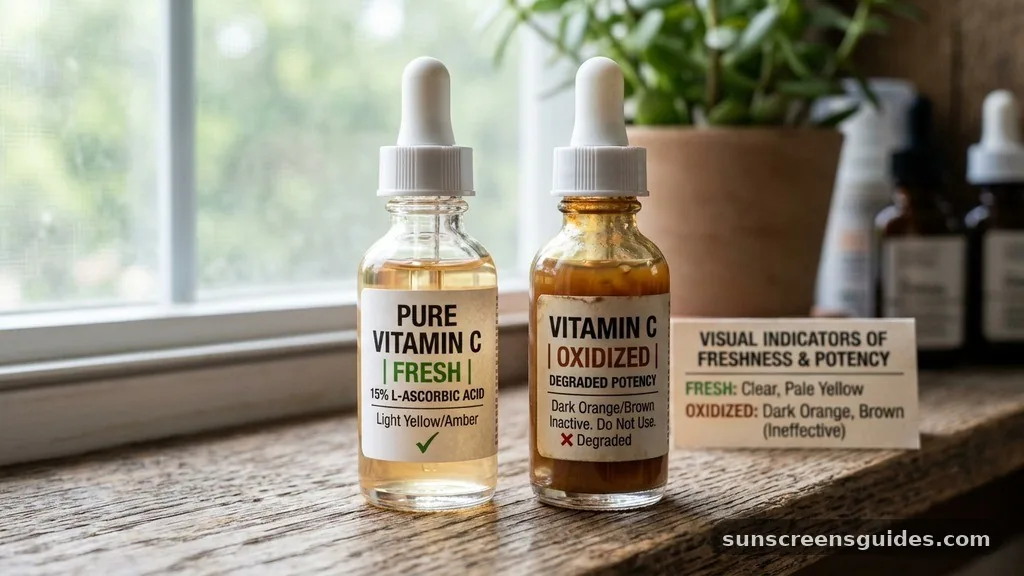
Determining what color should vitamin C serum be acts as a primary indicator of its potency and freshness. Many consumers worry when their favorite bottle shifts from a crystal-clear liquid to a deeper hue, yet this change often signals that the product is no longer as effective as when you first opened it.
Understanding these visual cues allows you to manage your skincare routine more effectively while avoiding the application of degraded ingredients. By recognizing the physical signs of serum oxidation, you can protect your complexion and ensure that your investment in topical antioxidants actually delivers the brightening and protective results you expect.
Visual Indicators of Freshness and Potency

A high-quality, fresh L-ascorbic acid serum should ideally be clear or possess a very faint, straw-like tint. When you first unbox a stable formulation, it should look like water or perhaps have a pale, translucent shimmer. If you notice a shift toward a yellowish tint, it often means that the formula has begun to interact with its environment.
While a light yellow might still be acceptable for some skin types, any deviation from the original clarity is a warning sign. The most critical aspect of this transition is that it signifies the molecule is losing its chemical integrity, which directly impacts how well it can neutralize free radical damage on your skin.
You should pay close attention to the following color spectrums in your bottle:
- Clear or water-like: This is the gold standard for a fresh, potent product.
- Pale yellow: Often indicates mild exposure to air, usually still usable but slightly less effective.
- Deep amber or orange: This level of orange discoloration suggests significant degradation has occurred.
- Dark brown: This indicates the serum has fully oxidized and should be discarded immediately.
The Science of Serum Oxidation and Instability
The reason serums change color involves the inherent instability of L-ascorbic acid, which is highly reactive. Once you break the seal of your dropper bottle, you introduce oxygen into the container, triggering a chain reaction known as serum oxidation. As the pure vitamin C molecules react with oxygen, they transform into dehydroascorbic acid and eventually diketogulonic acid.
These byproducts lack the skin-brightening properties of the original ingredient and can even contribute to potential irritation or clogged pores. This process is accelerated by external factors, making skin care stability a constant battle between formulation technology and the laws of physics.
Beyond oxygen, your serum is also sensitive to heat and UV radiation. Light sensitivity is a major factor in why these products are almost always packaged in dark glass or opaque containers. When light photons hit the serum, they provide the energy required to speed up the molecular breakdown, turning a clear liquid into a dark, ineffective sludge. Even if your serum hasn’t turned brown yet, consistent exposure to sunlight on your bathroom counter will significantly shorten the shelf life of the active ingredients, rendering your morning routine much less beneficial than it should be.
Proper Skincare Storage to Prolong Efficacy
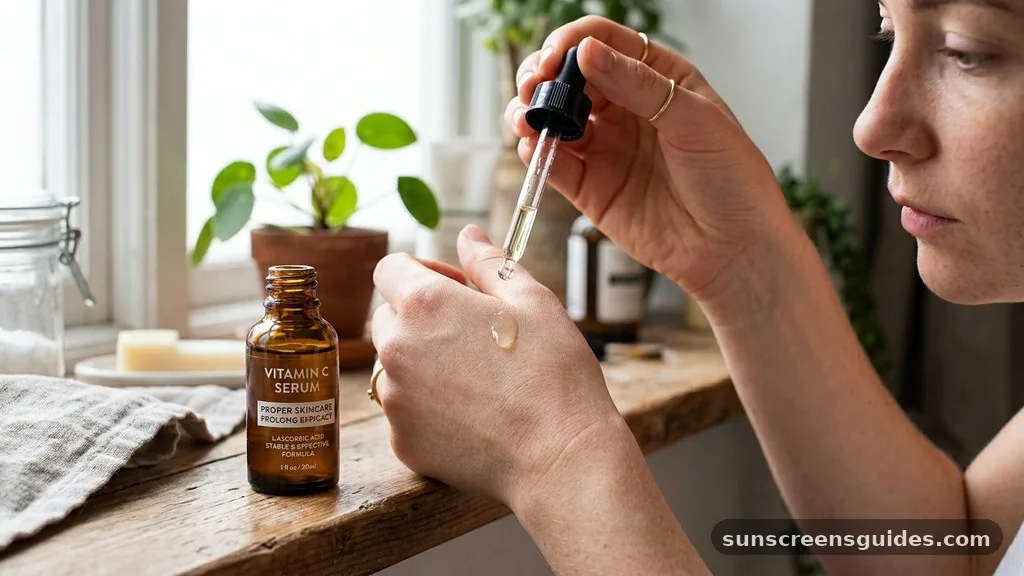
To prevent your product from turning colors prematurely, you must prioritize skincare storage habits that shield the formula from its primary enemies: air, light, and heat. Many people keep their serums in the bathroom, which is arguably the worst environment due to the fluctuating humidity and temperature from steamboats and showers.
Instead, store your bottles in a cool, dark place, such as a drawer or even a dedicated skincare fridge. By minimizing the time the bottle spends open and ensuring the cap is tightened immediately after use, you significantly slow down the rate of chemical decay.
Impact of pH Levels on Product Integrity
The pH level of your serum plays a massive role in how quickly it degrades. For L-ascorbic acid to be effective, it typically requires a low pH, often below 3.5. While this acidic environment is necessary for deep penetration into the skin, it also makes the molecule more prone to instability. If the formula is not buffered correctly, the color will shift much faster. When selecting a product, look for brands that include secondary antioxidants like Ferulic acid or Vitamin E, as these act as stabilizers that help the Vitamin C maintain its clear state for a longer period.
| Condition | Effect on Serum Color | Potency Status |
|---|---|---|
| Fresh/New | Clear or Pale Straw | Optimal |
| Moderate Air Exposure | Yellowish Tint | Reduced |
| Advanced Oxidation | Orange/Amber | Minimal |
| Complete Degradation | Dark Brown | Zero |
Addressing Topical Gaps and Common Misconceptions
Many users wonder if they can still use a serum that has turned a slightly darker shade. The reality is that applying oxidized serum is unlikely to cause a severe medical emergency, but it is certainly not ideal for your dermal application goals. Oxidized vitamin C can act as a pro-oxidant rather than an antioxidant, meaning it could potentially contribute to stress on the skin rather than relieving it.
If you notice your serum has turned a dark orange or brown, it is safer to discard it. Do not attempt to “dilute” it or use it on your body, as the altered chemical structure no longer provides the benefits you paid for.
Does Color Change Equal Ineffectiveness?
It is a common myth that all vitamin C serums are supposed to be orange. Some synthetic, non-L-ascorbic derivatives are naturally colored, so always check the product label first. However, if your label lists L-ascorbic acid as the primary active, color change is almost certainly a sign of aging. If you want to ensure you are getting the most out of your purchase, try buying smaller bottles that you can finish within three months. This strategy helps you avoid the disappointment of having to throw away half a bottle of expensive product simply because it sat on your shelf too long.
Frequently Asked Questions
Is it safe to use a vitamin C serum that has turned yellow?
It is generally safe but ineffective, as the active L-ascorbic acid has likely oxidized and lost potency.
Why does my vitamin C serum smell like hot dogs?
That specific scent indicates the product has severely oxidized and the chemical structure has completely broken down.
Can storing my serum in the fridge prevent color change?
Yes, cold temperatures significantly slow down the chemical reaction that causes oxidation and extends product shelf life.
What should I look for when buying a new bottle?
Choose airless pump packaging or dark glass bottles to minimize light and air exposure from the start.
Does a yellow tint mean I should stop using it immediately?
A light yellow tint is often acceptable, but a deep orange or brown color means it is expired.
Are there different types of vitamin C that don’t oxidize?
Yes, derivatives like Sodium Ascorbyl Phosphate are more stable and less prone to shifting color than L-ascorbic acid.
How long does a typical vitamin C serum last once opened?
Most high-quality L-ascorbic acid serums are best used within three to six months after being opened.
Keeping an eye on your bottle’s appearance is a simple yet vital habit for anyone serious about their skincare results. By paying attention to whether the liquid remains clear or begins to shift into that dreaded orange hue, you ensure that you are always applying fresh, active ingredients to your face. Remember that the color of your serum serves as a biological clock; once it changes, the benefits of the product are effectively ticking away.
If you find your products turning brown too quickly, reassess your storage environment and consider switching to smaller, more frequent purchases to keep your routine at its peak performance. Feel free to reach out if you have more questions about maintaining your skincare collection.