

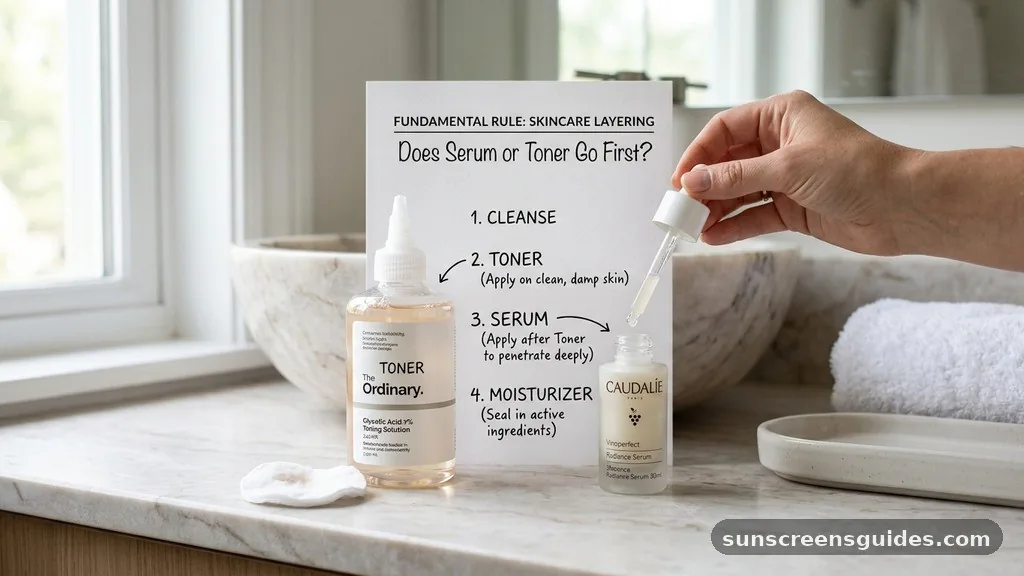
Determining whether your skincare routine requires a specific order can feel like a complex puzzle, especially when you are balancing multiple potent treatments. Many people frequently ask does serum or toner go first because they want to ensure their expensive products actually penetrate the skin effectively.
The golden rule of layering is to move from the thinnest consistency to the thickest, which almost always means your liquid-based prep steps happen long before your heavier creams. Getting this sequence right is essential for maximizing skin absorption and ensuring that each layer serves its intended purpose without pilling or interference.
The Fundamental Rule of Skincare Layering
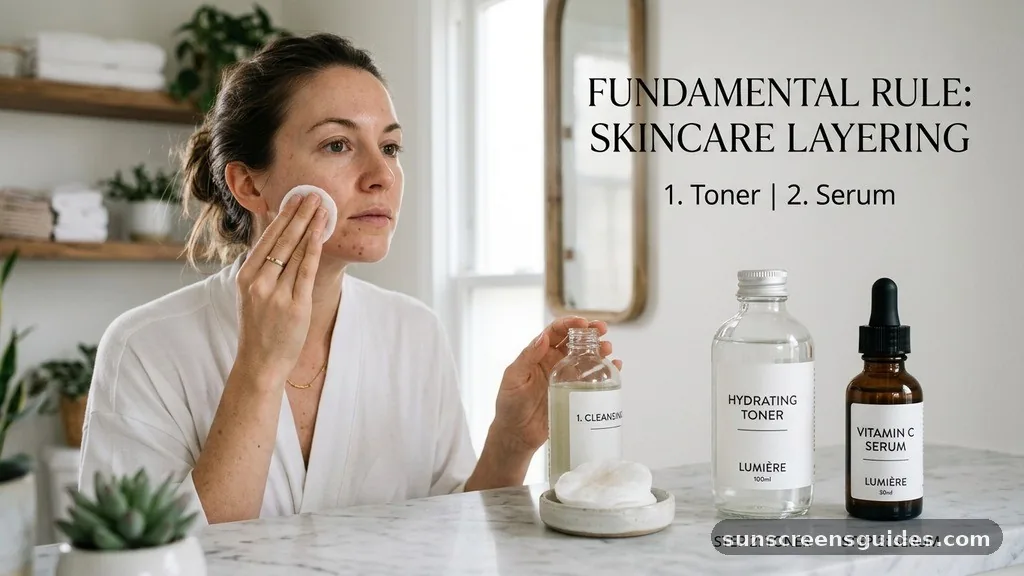
When you are deciding does serum or toner go first, you should always look at the viscosity of the product. Skincare layering follows a simple logical progression: you start with the most lightweight, watery formulas and finish with the heaviest, occlusive balms.
A toner is typically designed to be the very first step after cleansing, acting as a bridge between a damp, freshly washed face and your subsequent treatments. Because toners are almost entirely water-based products, they evaporate quickly and are formulated to shift the surface of the skin into a receptive state.
If you were to apply a thicker serum before your toner, the toner would struggle to penetrate the layer of concentrated actives and humectants sitting on your skin. By applying the toner first, you effectively prep the canvas, ensuring that the next, more expensive layers can sink in deeply. This hierarchy is not just about convenience; it is about physics.
Thicker, oil-rich products create a barrier that keeps moisture in, but they also prevent anything applied on top of them from reaching the deeper layers of the epidermis. Always respect the weight of the formula if you want to see actual results.
How Toner Functions in Your Daily Regimen
A facial cleanser can sometimes leave your skin feeling tight or stripped of its natural oils, which is where the toner steps in to restore pH balance. Modern toners have evolved far beyond the harsh, alcohol-laden astringents of the past.
Today, they often serve as the primary source of initial hydration, delivering soothing botanicals or mild exfoliants directly to the skin’s surface. Think of the toner as a liquid primer that ensures your face is sufficiently hydrated before you introduce the heavy-hitting active ingredients found in your serums.
Beyond simple hydration, many toners focus on pore refinement and surface smoothing. When your skin is slightly damp from a toner, it acts like a sponge. It is significantly more porous and ready to drink up whatever follows.
If you skip this step or swap the order, you risk wasting the potent ingredients in your serums, as they may simply sit on top of the skin rather than being pulled into the dermis. This is why consistency matters; if you establish a reliable sequence, you allow your skin barrier to function optimally throughout the day.
The Role of Serums and Active Ingredients
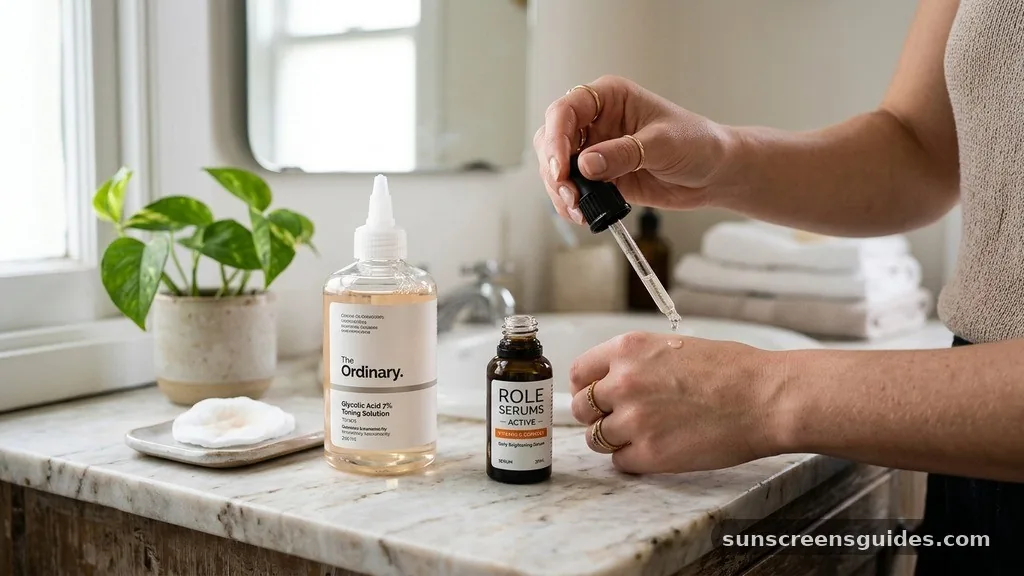
Once the toner has been absorbed, you are ready to apply your serum, which contains a higher concentration of active ingredients than almost any other product in your cabinet. Because serums are formulated with a smaller molecular weight, they are designed to travel deeper into the skin to address specific concerns like hyperpigmentation, fine lines, or dehydration.
When you wonder does serum or toner go first, keep in mind that the serum is the “treatment” phase of your regimen. It needs to be as close to the skin as possible to work its magic.
The following table highlights the recommended order of operations for a standard morning or evening routine to keep your products organized:
| Step Number | Product Category | Primary Function |
|---|---|---|
| 1 | Facial Cleanser | Removes debris and oil |
| 2 | Toner | Balances pH and preps skin |
| 3 | Serum | Delivers targeted active ingredients |
| 4 | Moisturizer | Seals in hydration |
| 5 | Sun Protection | Shields against UV damage |
By placing your serum after the toner, you ensure that the ingredients are not being diluted or blocked by a layer of thick cream. If you use multiple serums, always apply them from the thinnest to the thickest consistency.
This prevents the “pilling” effect where products clump up on the skin’s surface because they cannot be absorbed properly. Your goal is to create a smooth, invisible layer of treatment that disappears into the skin.
Addressing Common Misconceptions and Topical Gaps
A frequent point of confusion involves where an essence fits into the mix, as it often sits somewhere between a toner and a serum in terms of weight. Many users worry about where to place it when they are already trying to figure out does serum or toner go first. An essence is generally thinner than a serum but richer than a typical toner.
If you incorporate an essence, treat it as the “middle step” between your toner and your serum. The rule remains consistent: if it feels more like water, it goes earlier; if it feels more like a gel or oil, it goes later.
Another common gap in knowledge is whether you should wait for the toner to dry completely. Many experts recommend applying your serum while the skin is still slightly damp from the toner. This technique, often called “damp application,” can actually enhance the absorption of your products.
Because your skin barrier is already hydrated, the serum can glide across the surface more easily and penetrate more effectively. You don’t need to wait for your face to feel bone-dry before moving to the next step, as a little residual moisture is actually quite beneficial for the efficacy of your active ingredients.
- Always cleanse your face thoroughly to remove surface impurities before applying any treatments.
- Apply your toner while the skin is still slightly moist to maximize hydration levels.
- Layer serums based on their thickness—apply the most liquid-like ones first.
- Wait roughly 30 to 60 seconds between layers to allow for proper absorption.
- Finish with a moisturizer to lock everything in and protect your skin barrier.
- Never skip your morning sun protection, even if you have applied multiple serums.
Frequently Asked Questions
Does serum or toner go first in a morning routine?
Toner always goes first to balance the skin and provide a damp base for your serum.
Can I apply serum immediately after toner?
Yes, applying serum while your skin is slightly damp from toner can actually improve overall product absorption.
What happens if I apply serum before toner?
Applying a thicker serum first may prevent the toner from reaching your skin, potentially reducing its effectiveness.
Do all toners serve the same purpose?
No, some toners focus on exfoliation, while others prioritize hydration or pH balancing for your skin barrier.
Should I use an essence if I already use toner and serum?
You can, but apply the essence after your toner and before your serum for the best results.
Does the order change for nighttime skincare?
The fundamental rule of thinnest to thickest remains the same regardless of the time of day.
Is it necessary to use both toner and serum?
It is not mandatory, but using both can enhance hydration and deliver more targeted ingredients to your skin.
In summary, the best way to approach your daily routine is to prioritize the weight and texture of your products. By placing your toner first, you prep the skin, and by following it with a serum, you deliver concentrated benefits where they are needed most. Remember that consistency and patience are far more important than buying dozens of expensive products.
Stick to a simple order, observe how your skin reacts, and adjust if you notice any irritation. By mastering the sequence of your skincare routine, you are setting yourself up for healthier, more radiant skin over the long term. If you found these tips helpful, try adjusting your order tonight and see if you notice a difference in how your products feel on your face.



