


Determining the correct order for your daily skincare routine often leads to confusion, particularly when deciding whether to apply sunscreen before or after moisturizer. To ensure your skin receives maximum defense against harmful UV rays, you should always apply your moisturizer first, followed by a generous layer of sun protection.
This sequence allows your hydrating products to penetrate the surface effectively while creating a stable, protective film for your SPF. Mastering this simple layering technique is the most reliable way to maintain a healthy skin barrier and prevent long-term sun damage.
The Science of Skincare Layering
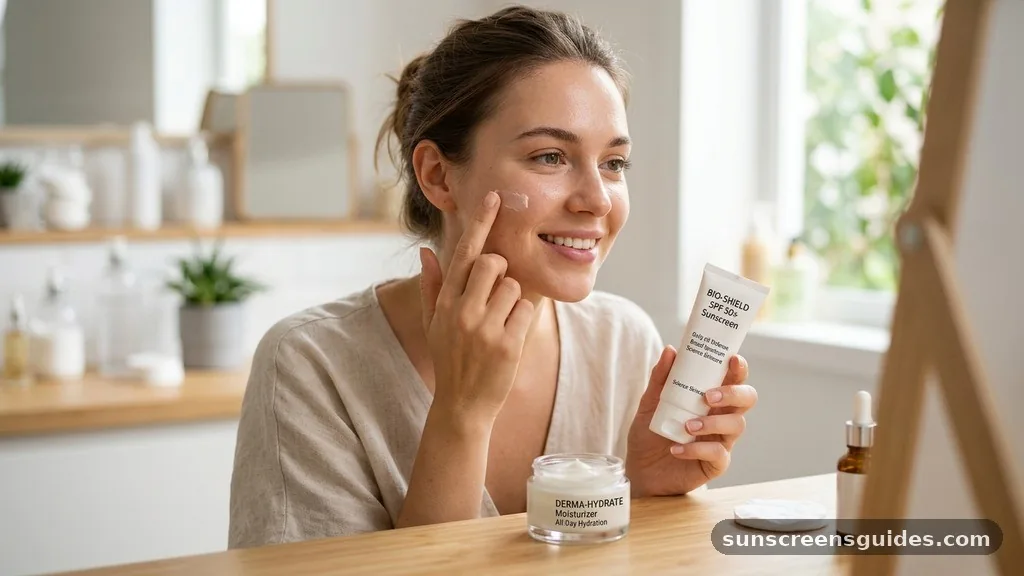
When building a daily regimen, the general rule is to apply products from the lightest consistency to the heaviest. Moisturizers typically contain humectants and emollients designed to hydrate and soften the skin, which work best when applied directly to clean, slightly damp skin.
If you were to apply a thick layer of sun protection underneath, you might create a barrier that prevents these essential ingredients from reaching the dermis. By placing your moisturizer on first, you allow those active ingredients to sink in, leaving your skin plump and ready for the final step.
Think of your skin as a canvas. You need a smooth, hydrated base before you apply the protective topcoat of your sunscreen.
If your moisturizer contains occlusives, it helps lock in moisture, creating an environment where the skin remains supple throughout the day. Once that layer has absorbed for a minute or two, your sunscreen can sit evenly on top, providing that essential broad-spectrum protection without being diluted or disrupted by other products.
Why Order Matters for UV Protection
Effective sun protection relies on the formation of a uniform film across the surface of the skin. If you mix products or apply them in the wrong sequence, you risk creating gaps in this film, which leaves your face vulnerable to damaging UV rays.
Chemical sunscreen, for example, needs to interact with the top layers of your skin to convert radiation into heat. If you apply a heavy barrier of cream over the top, you might interfere with the chemical reaction required for the filter to activate correctly.
Conversely, mineral-based sunblock, which uses physical ingredients like zinc oxide or titanium dioxide, acts as a reflective shield. These particles perform best when they aren’t disturbed by rubbing or excessive blending.
Applying your moisturizer first ensures that the base layer is settled and dry, allowing the mineral particles to form a stable, opaque layer on the surface. When you get the order right, you aren’t just following a habit; you’re actively ensuring your chosen product performs at its advertised SPF rating.
Distinguishing Between Sunscreen Types
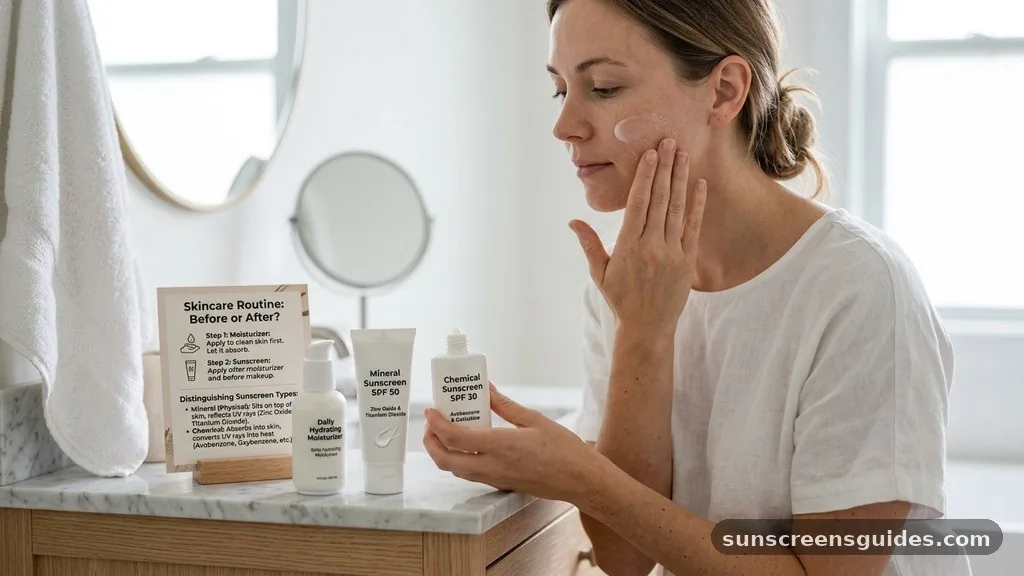
While the general rule is to apply SPF last, the specific formulation of your product can influence how it interacts with other layers. Understanding the difference between chemical and physical options helps you tailor your approach to your specific skin type and needs.
| Sunscreen Type | Primary Mechanism | Application Tip |
|---|---|---|
| Chemical | Absorbs UV radiation | Apply 15-20 minutes before sun exposure |
| Physical (Mineral) | Reflects/scatters UV light | Apply as a final, even layer |
Chemical sunscreens are often lighter and absorb quickly, making them popular for daily wear. Because they need to absorb into the skin to function, people often wonder if a moisturizer blocks that process.
However, modern formulations are designed to work well over standard lotions. As long as you give your moisturizer a moment to set, you won’t hinder the efficacy of your SPF.
Common Mistakes in Daily Skincare
Many people inadvertently degrade their sun protection by being too aggressive with their application. Rubbing your moisturizer and SPF together into a single “cocktail” before applying is a common mistake that leads to uneven coverage.
By doing this, you dilute the SPF formulation and break down the protective agents before they even reach your face. You essentially compromise the integrity of the product, often resulting in a lower level of protection than what is listed on the bottle.
Another frequent error is waiting too long between steps or, conversely, not waiting at all. You don’t need to wait twenty minutes for a moisturizer to dry, but giving it 60 seconds ensures that the two products don’t pill or streak.
If you notice white flakes or a pilled texture on your skin after applying your products, it’s a sign that your moisturizer and sunscreen aren’t playing well together. In such cases, switching to a lighter moisturizer or a different SPF base can often resolve the issue.
Addressing Topical Gaps in Sunscreen Application
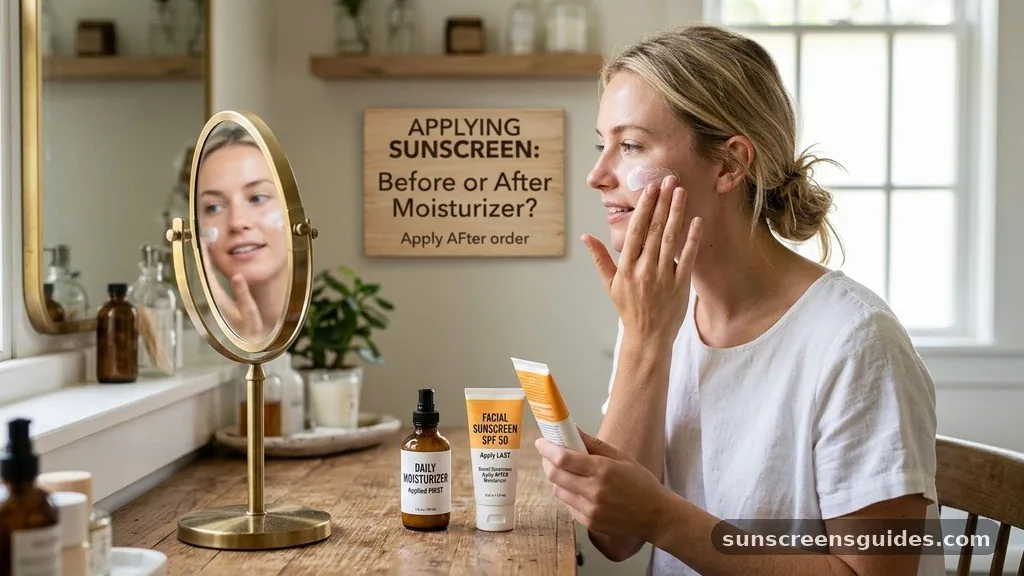
A frequent point of confusion involves the use of hybrid products. If your moisturizer already contains SPF, do you still need a dedicated sunscreen?
While these combination products are convenient, they often fall short because users rarely apply them in the amounts required to reach the labeled SPF protection. A standard moisturizer is usually applied in a thinner layer than a dedicated sunscreen, meaning you likely aren’t getting the broad-spectrum coverage you need for adequate UV defense.
- Apply a dedicated sunscreen separately, even if your moisturizer has an SPF rating.
- Use the “two-finger rule” to ensure you are applying enough product to your face and neck.
- Reapply your SPF every two hours if you are spending significant time outdoors, regardless of your morning routine.
- Consider the finish of your products; if you have oily skin, a matte-finish sunscreen can act as a natural primer.
- Don’t forget the ears, hairline, and back of the neck, as these are often missed during the morning rush.
Addressing these gaps means moving away from the “all-in-one” mindset. Think of your moisturizer as a source of hydration for your skin barrier, and your sunscreen as a separate, non-negotiable tool for longevity and health. Keeping these roles distinct ensures you never accidentally under-apply your protection in favor of comfort.
Optimizing for Your Skin Type
Your skin type dictates which textures and formulations will provide the best results. Those with dry skin often prefer richer, cream-based moisturizers that contain ceramides or hyaluronic acid.
If you fall into this category, let the cream absorb until your skin feels slightly tacky but not wet. Then, layer a moisturizing sunscreen on top to seal everything in without causing irritation.
If you have oily or acne-prone skin, you might be tempted to skip the moisturizer entirely. However, even oily skin needs hydration to prevent the overproduction of sebum.
Opt for a gel-based moisturizer that absorbs almost instantly, followed by a lightweight, oil-free, or mattifying sunscreen. This combination provides the protection you need without clogging pores or leaving a greasy residue that might attract dirt throughout the day.
The Role of the Skin Barrier
A healthy skin barrier is your first line of defense against environmental pollutants and UV radiation. When your barrier is compromised, your skin loses hydration and becomes more susceptible to inflammation.
Applying your moisturizer serves to fortify this barrier, making it more resilient to the drying effects of certain sunscreen ingredients. By consistently using a high-quality moisturizer first, you maintain the structural integrity of your skin, which in turn makes your sunscreen sit more comfortably.
It is helpful to view your skincare routine as a system rather than a collection of random steps. Every item you apply has a purpose, from the humectants that draw moisture into the skin to the SPF that guards against premature aging. By prioritizing the order of application, you ensure that every product functions at its highest potential.
Conclusion
Following the correct order of application is a simple yet vital adjustment for anyone serious about their skin health. Because you now know that you must apply sunscreen after your moisturizer, you can rest assured that your hydrating products are doing their job while your SPF provides the necessary shield against the sun. Always allow your lotion to sink in, use the proper amount of product, and prioritize consistency in your daily routine.
By keeping these steps in mind, you protect your skin barrier and ensure long-term health. If you have any specific concerns about your current products, don’t hesitate to consult a dermatologist to refine your routine further.
Frequently Asked Questions
Does my moisturizer render sunscreen ineffective?
No, applying moisturizer underneath does not make sunscreen ineffective, provided you let the moisturizer set first.
Should I wait for my moisturizer to dry completely?
You don’t need to wait for it to dry bone-dry, but waiting about one minute prevents product pilling.
Can I mix my sunscreen into my moisturizer?
Avoid mixing them, as this can dilute the SPF and lead to uneven, unreliable coverage on your skin.
Does SPF count as a moisturizer for my skin?
While some sunscreens contain hydrating ingredients, a dedicated moisturizer is usually better for maintaining long-term skin hydration.
What is the best order for a morning skincare routine?
Always apply products from thinnest to thickest, ending with your sunscreen as the final step before makeup.
Does the skin type change the order of application?
No, the order remains the same regardless of your skin type to ensure optimal UV protection and hydration.
Is it okay to use a moisturizer with built-in SPF?
It is acceptable, but you must apply a generous amount to achieve the protection listed on the label.



