

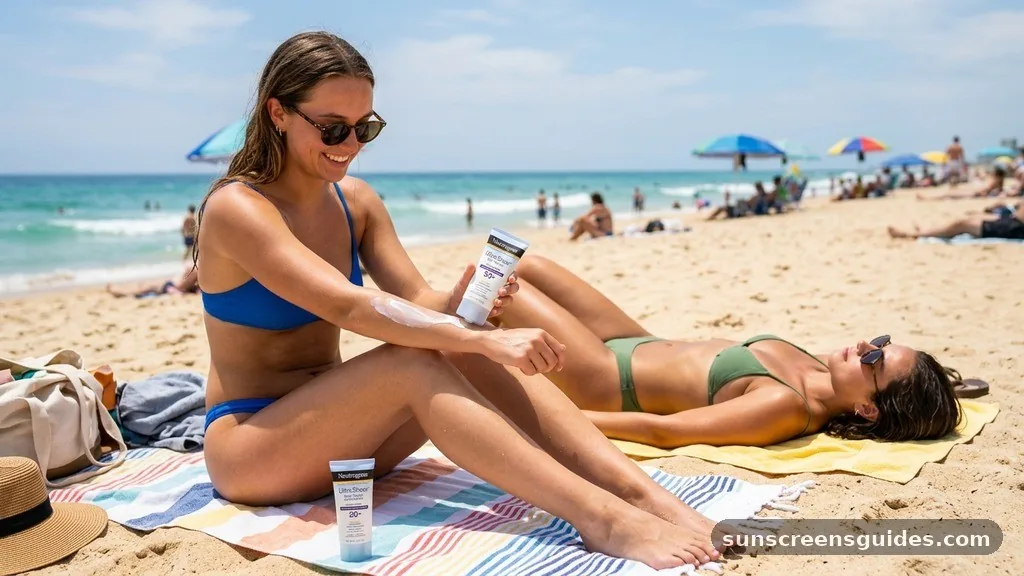
Many people wonder if does sunscreen keep you from tanning effectively, often hoping for a golden glow without the risks of sun damage. The reality is that wearing sun protection doesn’t strictly mean you’ll stay pale forever, but it does fundamentally change how your body reacts to solar exposure. By filtering out the most aggressive wavelengths, these products allow for a slower, safer biological process.
Understanding exactly how your skin manages this exposure is the key to maintaining a healthy complexion while avoiding the long-term consequences of UV radiation. Let’s look at the science behind the tan and how your choice of protection influences your skin’s appearance.
The Biological Mechanics of Tanning
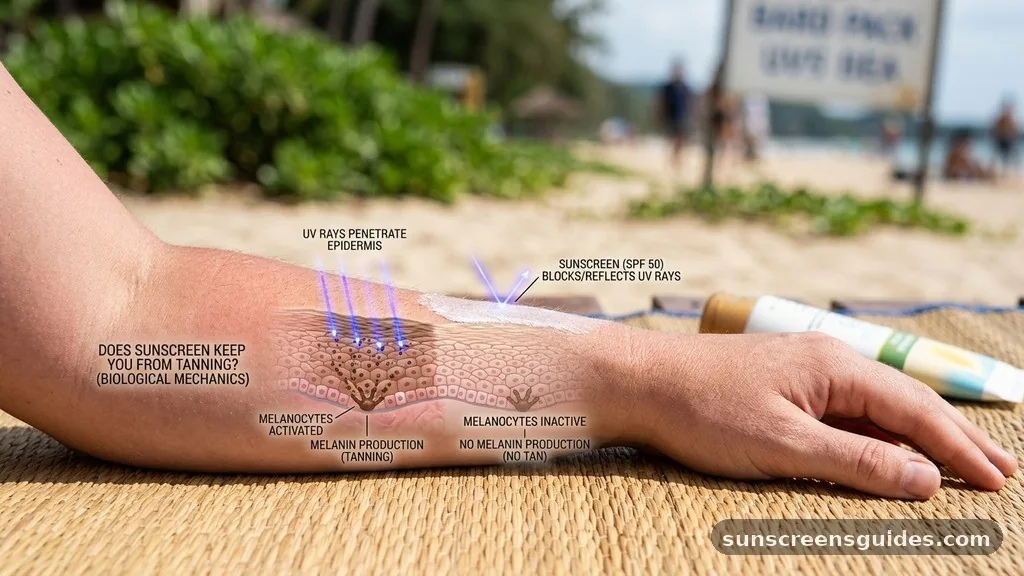
To understand if does sunscreen keep you from tanning, you must first look at what a tan actually is. A tan is not a sign of health; it is the skin’s defensive response to injury.
When your skin is exposed to ultraviolet radiation, it triggers your melanocytes to produce more pigment. This pigment, known as melanin, is released to protect your cell nuclei from further damage.
Essentially, when you see your skin darkening, you are witnessing a structural defense mechanism in action. Your body is attempting to create a shield against future radiation.
If you are aiming for a tan, you are technically provoking a trauma response from your own dermis. While many find the aesthetic result desirable, the biological cost is significant, as this process is closely linked to photoaging and the degradation of your skin barrier.
How Sunscreen Filters Affect UV Exposure
Sunscreen works by either reflecting or absorbing rays before they can penetrate deep into your skin. Broad-spectrum sunscreen is specifically designed to block both UVA rays and UVB rays. These two types of light interact with your skin in very different ways, and understanding their roles is vital when asking does sunscreen keep you from tanning.
UVB rays are primarily responsible for erythema, or sunburn, and are the main triggers for the immediate browning of the skin. By wearing an effective product, you significantly reduce the amount of these rays reaching your cells.
However, even with high-level protection, a small percentage of radiation can still bypass the filter. This explains why you might notice a subtle change in color over a long summer, even when you are diligent about your application.
Chemical Versus Physical Filters
There are two primary ways that sunscreens handle radiation, and both impact how your skin manages pigment production. Chemical versus physical filters represent the two main technological approaches to sun protection.
- Chemical filters work by absorbing UV energy and converting it into a small, harmless amount of heat that is then released from the skin.
- Physical filters, which include minerals like zinc oxide and titanium dioxide, act as a microscopic shield by reflecting light away from the surface.
- Most modern formulations use a hybrid approach to ensure full coverage against the entire spectrum of light.
- The effectiveness of either type depends entirely on the volume of application and your reapplication habits.
Because these filters are not 100% impenetrable, they don’t lock out every single photon of light. They act as a dimmer switch rather than a total blackout curtain. This is why you can still experience a gradual shift in skin pigmentation while using a high sun protection factor.
The Role of SPF in Slowing Pigmentation
The sun protection factor (SPF) is a measure of how well a product prevents UVB rays from causing sunburn. A common misconception is that a higher SPF creates a total barrier.
In reality, an SPF 30 sunscreen blocks about 97% of UVB rays, while an SPF 50 blocks about 98%. That 1% difference might seem negligible, but it can be the difference between a burn and a slight tan.
Debunking the Myth of “Healthy” Tanning
You might ask does sunscreen keep you from tanning if you only spend a few minutes outside. Short bursts of sunlight can still trigger melanin production. However, relying on these brief periods for “color” is risky. Even without a visible burn, the cumulative effects of UV exposure contribute to long-term skin health issues. Tanning is a sign that your skin’s DNA has been impacted by radiation, which is a major factor in skin cancer prevention efforts.
Managing Vitamin D Synthesis
Many people worry that using sun protection will lead to a deficiency in vitamin D. While it is true that your body requires sunlight for vitamin D synthesis, you do not need to tan to get it. Most people receive sufficient exposure through incidental contact during daily activities, such as walking to your car or standing near a window. You don’t have to sacrifice your skin health to maintain adequate levels of this vital hormone.
Comparing Sun Protection Levels

The following table illustrates how different SPF levels theoretically manage UV exposure during typical outdoor conditions.
| SPF Level | UVB Blockage Percentage | Tanning Potential |
|---|---|---|
| SPF 15 | 93% | Higher risk of tanning/burning |
| SPF 30 | 97% | Moderate protection |
| SPF 50 | 98% | Low tanning, high protection |
| SPF 100 | 99% | Minimal tanning, highest protection |
Addressing Common Topical Gaps
A frequent question is whether sunscreen behaves differently on various skin tones. The answer is that melanin provides some natural protection, but it is not a substitute for sunscreen.
Darker skin can still suffer from photoaging and damage from UVA rays, which penetrate deep into the dermis. Regardless of your natural complexion, the biological response to UV damage remains the same.
Another gap involves the “base tan” myth. Many believe that getting a tan before a vacation protects them from future burning. This is scientifically incorrect.
A base tan offers an SPF of approximately 2 to 4, which is effectively useless against the intensity of midday sun. Relying on this strategy increases your risk of skin damage while failing to provide any meaningful protection.
Best Practices for Consistent Protection
To ensure you are properly shielded, consistency is far more important than the specific brand you choose. Apply your sunscreen at least 15 minutes before heading outdoors to allow the ingredients to form a protective layer. Most people fail to use enough product, which leads to a false sense of security.
Don’t forget the areas often missed, such as the ears, the back of the neck, and the tops of your feet. If you are swimming or sweating, you must reapply every two hours or immediately after drying off with a towel. By treating sunscreen as a daily skincare essential rather than a beach-only product, you effectively manage your exposure levels throughout the year.
Understanding the Long-Term Consequences
The aesthetic appeal of a tan is often prioritized over long-term skin integrity, yet the consequences of chronic UV exposure are cumulative. Every time you tan, you are accelerating the breakdown of collagen and elastin in your skin. This leads to premature wrinkles, leathery texture, and sunspots that are difficult to treat later.
When you look in the mirror twenty years from now, the health of your skin will reflect the choices you make today. Does sunscreen keep you from tanning?
It certainly keeps you from the rapid, damaging darkening that signals acute injury. By choosing to prioritize protection, you are opting for a healthier, more resilient complexion that ages gracefully rather than prematurely.
Summarizing the Protection Strategy
While it is technically possible to achieve a tan while wearing sunscreen, the goal should always be to prevent the damage that causes the darkening in the first place. By using a high-quality broad-spectrum product, you allow your skin to remain in its natural state rather than forcing it into a defensive, pigmented mode. This approach is the gold standard for maintaining the structural integrity of your dermis and ensuring long-term skin health.
If you enjoy the look of a tan, consider using self-tanning lotions that provide the desired aesthetic without the harmful side effects of UV radiation. This allows you to enjoy the appearance you want while keeping your skin safe from the underlying damage of the sun. If you have any further questions about your specific skin type or the best products for your lifestyle, consulting with a dermatologist is always a smart move to ensure you are protecting yourself correctly.