

Deciding whether it is bad to use expired sunscreen often feels like a gamble when you are standing by the pool or packing for a vacation. Most people find a bottle tucked away in a beach bag and wonder if the protection it offers is still worth the effort.
While it might seem harmless to squeeze out the remainder of a lotion from last season, the reality involves complex chemistry and your skin’s long-term health. Understanding why these products have shelf lives and how they degrade under specific conditions will help you make better decisions about your sun safety routines.
Why Sunscreen Expiration Dates Matter
Sunscreen expiration dates exist because the active ingredients inside the bottle have a limited lifespan. Manufacturers test their formulas to ensure that the sun protection factor (SPF) remains stable and effective until the marked date, provided the product is stored correctly. Once that date passes, the stability of the chemical filters or minerals can no longer be guaranteed.
Over time, the chemical bonds within the formulation can break down. This process is accelerated by environmental factors such as exposure to heat or direct sunlight.
If you have been keeping your sunscreen on sunny pool decks or in a hot car, the degradation process moves much faster than the expiration date suggests. When the formula loses its integrity, it doesn’t just stop working; it may also undergo physical changes that make it unpleasant to apply.
Signs Your Product Has Degraded
You should pay close attention to the texture and smell of your lotion before applying it to your skin. If the consistency has become grainier, or unusually runny, the emulsion has likely separated. This separation indicates that the ingredients are no longer evenly distributed, meaning you won’t get a uniform layer of protection even if you try to rub it in.
* Change in color or yellowing of the lotion.
* A sour or off-putting odor.
* Visible separation of oil and water phases.
* Clumping or a gritty texture that feels uncomfortable on the skin.
If you notice any of these signs, the product has definitely reached the end of its useful life. Using such a formula provides a false sense of security, which is significantly more dangerous than wearing no protection at all because it encourages you to stay in the sun longer than you should.
The Risks of Using Outdated SPF
The primary risk of relying on old sunscreen is the potential for long-term DNA damage. When the active ingredients break down, they fail to absorb or reflect ultraviolet radiation effectively. This leaves your skin vulnerable to UVA and UVB rays, which are the main culprits behind sunburns, premature aging, and higher risks of skin cancers.
Many modern sunscreens rely on photostability to ensure the protection lasts while you are outside. Photostability refers to a chemical’s ability to remain unchanged when exposed to light.
When a product expires, it loses this property. The chemical filters may react with sunlight in ways that produce degradation products, which could potentially cause skin irritation or allergic reactions in sensitive individuals.
Chemical vs. Mineral Sunscreen Longevity
The type of sunscreen you use plays a role in how it ages. Mineral sunscreen formulations, which typically contain zinc oxide or titanium dioxide, are generally more stable than those containing organic chemical filters. These minerals act as physical blockers and do not break down in the same way that chemical UV filters like oxybenzone do.
However, even in mineral versions, the inactive ingredients—such as preservatives and emulsifiers—still expire. If these preservatives fail, the product can become a breeding ground for bacteria, which poses a secondary health risk beyond just sun protection.
When to Replace Your Product
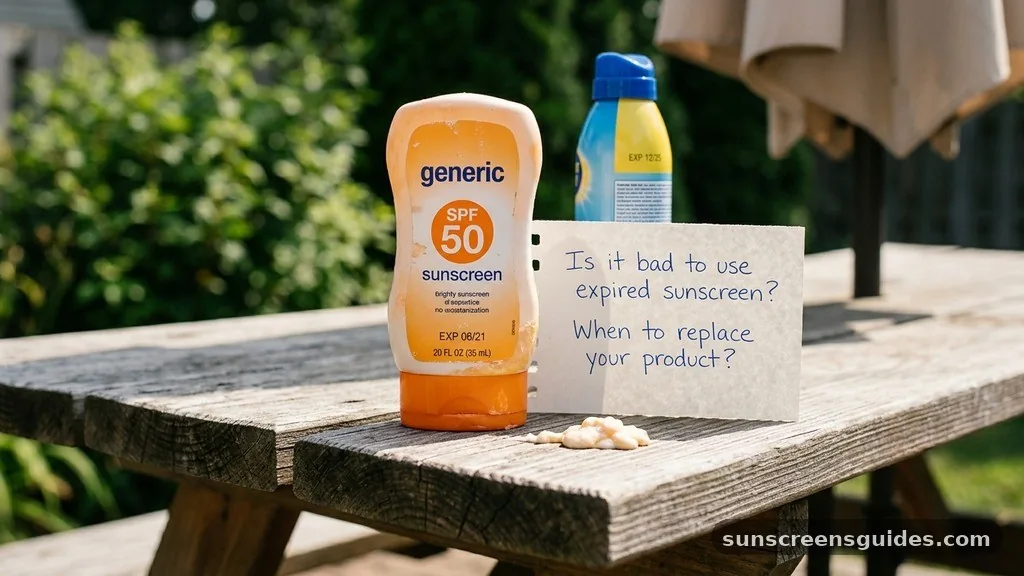
Knowing when to replace your product is the best way to maintain a consistent defense against sun damage. Most dermatologists suggest that you should replace sunscreen every year, even if the expiration date is still a few months away, especially if the bottle has been opened and exposed to the elements.
| Storage Condition | Estimated Shelf Life | Impact on Efficacy |
|---|---|---|
| Cool, dark cupboard | Up to 3 years (unopened) | High stability |
| Hot car or glovebox | Less than 6 months | Rapid degradation |
| Beach bag or pool deck | 1 season | Moderate to high degradation |
If you are unsure how long you have had a bottle, look for a small symbol on the back of the packaging that looks like an open jar with a number inside (e.g., “12M”). This signifies that the product should be discarded 12 months after the first time you open it.
Addressing Common Misconceptions
A common myth is that unopened sunscreen lasts forever. While it is true that an unopened bottle is safer than an opened one that has been cooking in a hot car, it is not invincible.
The chemical components still undergo slow, passive degradation over several years. If you find a bottle in the back of your closet that is four or five years old, it is best to discard it regardless of whether it was sealed.
Another point of confusion is whether using old sunscreen is better than using nothing at all. While there is a slight chance that a very recently expired product might provide some protection, it is an unpredictable amount. You cannot know if you are getting SPF 5 or SPF 30.
Relying on an unknown variable when your health is on the line is never a sound strategy. It is always better to skip the sun or seek shade until you can acquire a fresh, effective product.
Maximizing Your Sunscreen Investment
To get the most out of your purchase, keep your bottles away from direct heat and light. Storing them in a cool, dark place—like a bathroom cabinet or a drawer—prevents the ingredients from breaking down prematurely. When you are out for the day, keep your sunscreen inside an insulated bag or wrap it in a towel to keep it out of direct sunlight.
If you find that you constantly have half-used bottles at the end of the summer, consider buying smaller sizes. This reduces waste and ensures that you are always using a fresh product that hasn’t been compromised by repeated exposure to heat and contaminants. Consistency is the most important factor in sun safety, and that starts with having a product you can actually trust to do its job.
Conclusion
Ultimately, the question of whether it is bad to use expired sunscreen comes down to the reliability of the protection you receive. Because an expired product may have compromised chemical filters and can easily harbor bacteria, it is rarely worth the risk to your skin health. Protecting your skin from ultraviolet radiation requires a formulation that is stable, active, and properly preserved.
If you have any doubt about the age or condition of your bottle, the safest approach is to replace it immediately. Investing in fresh sunscreen is a small price to pay for consistent, effective defense against the sun. Prioritize your skin’s well-being by checking your stash and discarding anything that has seen better days.
Frequently Asked Questions
Is it bad to use expired sunscreen on your face?
Yes, expired sunscreen may cause clogged pores, skin irritation, or fail to protect against harmful UV rays.
Can I use sunscreen that is one month past the expiration date?
It is risky; the active ingredients may have lost stability, making the SPF rating unreliable for protection.
Does heat exposure make sunscreen expire faster?
Absolutely; high temperatures accelerate the chemical breakdown of active ingredients, rendering the product ineffective much sooner.
What happens if I use sunscreen that is two years old?
You likely won’t get the advertised SPF, leaving you highly susceptible to sunburns and long-term skin damage.
Is unopened sunscreen still good after the expiration date?
No, chemical degradation occurs over time even in sealed containers, so you should discard expired bottles.
How can I tell if my sunscreen is still effective?
Check for changes in consistency, separation, or an unusual odor; if it looks or smells off, discard.
Should I prioritize buying new sunscreen every year?
Yes, replacing your supply annually ensures the chemical filters remain stable and effective for your skin protection.



