

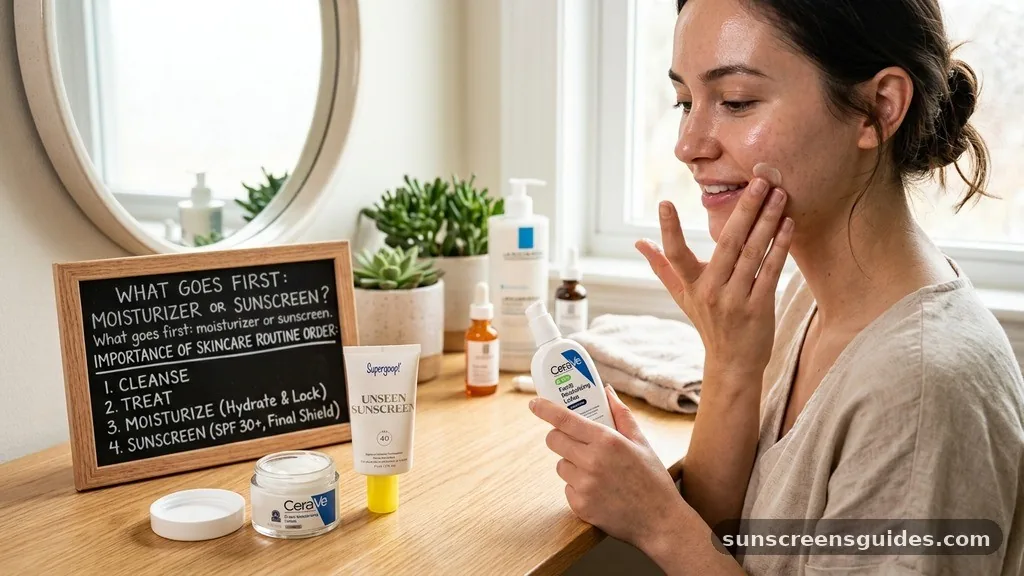
Knowing whether you should apply moisturizer or sunscreen first is a common dilemma that can impact the effectiveness of your entire skincare regimen. Many people assume the order doesn’t matter, but the reality is that the sequence of your products dictates how well your skin absorbs active ingredients and how effectively you are protected from the sun.
If you get the layer order wrong, you risk diluting your SPF or preventing your moisturizer from doing its job, which might leave your complexion dehydrated or vulnerable to damage. By understanding the science behind product absorption and the skin barrier, you can ensure your morning routine provides maximum benefits for your health and appearance.
The Importance of Skincare Routine Order

You should always apply your moisturizer before your sunscreen to ensure both products function correctly. This specific order is critical because it allows your moisturizer to sink into the surface layers of the skin, while your sunscreen creates a protective shield on top.
When you think about the physics of skincare, applying a thinner, water-based product before a thicker, oil-based one is the general rule. Most facial moisturizers contain humectants that draw moisture into the dermis and upper skin layers.
If you were to apply sunscreen first, the film-forming polymers and filters in the SPF could potentially block these hydrating ingredients from penetrating. By prioritizing the moisturizer, you allow your skin barrier to remain hydrated and supple before introducing the final layer of defense against ultraviolet radiation.
Why Sunscreen Must Be the Final Step
Sunscreen is formulated to sit on the surface of your skin to deflect or absorb incoming light. If you apply a moisturizer over the top of your sunscreen, you effectively disrupt the uniform film that the SPF creates. This disturbance leads to uneven coverage, which significantly lowers the product’s broad-spectrum protection rating.
Think of your sunscreen as a structural roof for your house. If you build the roof first and then try to install siding or insulation underneath it, the entire integrity of the structure becomes compromised.
When you apply a heavy cream or lotion on top of your SPF, you are essentially “smearing” that protective shield. This action can lead to:
- Reduced effectiveness of your SPF rating.
- Patchy protection that leaves areas of your face exposed to rays.
- Increased risk of photoaging prevention failure.
- Dilution of the active ingredients within the sunscreen formula.
Distinguishing Between Mineral and Chemical Sunscreens
While the general rule of “moisturizer first” holds firm, the type of sun protection you choose—either chemical sunscreen or mineral sunscreen—can influence how the products feel on your face. Understanding the differences helps you select the best formulas for your skin type.
Chemical Filters and Absorption
Chemical filters work by absorbing into the top layer of the skin and converting UV rays into heat. Because these formulas need to penetrate slightly to be effective, some users worry that moisturizer might interfere. However, modern cosmetic chemistry ensures that these products are designed to be compatible with standard layering. As long as you allow your moisturizer to dry for sixty seconds, the chemical filters will settle into the skin properly.
Physical Sunscreen and Surface Barriers
Physical sunscreen, often referred to as mineral sunscreen, works differently by sitting purely on the surface to reflect light. These products often rely on zinc oxide or titanium dioxide. Because they are designed to form a physical barrier, they are even more sensitive to being moved around by subsequent product applications. Never layer a moisturizer over a mineral formula, as you will physically wipe away the protective minerals, leaving your skin vulnerable to sun damage.
The Science of Product Absorption and Occlusives

Your skin acts as a semi-permeable membrane. Its primary role is to prevent transdermal water loss, which is the process of water evaporating from your skin into the air. Occlusive agents found in your moisturizer help seal this hydration in. If you put your sunscreen on first, the occlusives in your moisturizer might trap the sunscreen chemicals in a way that causes irritation or acne, especially for those with sensitive or oily skin.
| Product Type | Primary Function | Ideal Application Order |
|---|---|---|
| Moisturizer | Hydration and Barrier Support | First (After Serum) |
| Chemical Sunscreen | Absorption of UV Light | Second |
| Mineral Sunscreen | Reflection of UV Light | Last |
Addressing Topical Gaps: Wait Times and Texture Compatibility
A common point of confusion is how long to wait between applying your moisturizer and your SPF. Many people rush their routine, which leads to “pilling”—that annoying situation where your products start to clump and rub off in little balls.
To avoid this, you should wait until your moisturizer is touch-dry before applying your sunscreen. If you have a particularly rich or heavy moisturizer, you might need to wait two to three minutes.
This waiting period allows the ingredients to fully set, ensuring that your sunscreen can form an even, stable film. If your products are pilling, it is often a sign that you are using too much product or that the textures are incompatible, such as trying to layer a heavy oil-based cream with a water-based gel sunscreen.
How Ingredients Affect Your Layering Strategy
Not all moisturizers are created equal. Some contain specialized ingredients that might interact with your sunscreen if they are not applied in the correct order.
If your moisturizer contains high concentrations of silicones, for instance, it creates a very smooth, slippery base. While this makes your skin feel great, it can make it harder for the sunscreen to adhere.
In these cases, waiting for the moisturizer to fully absorb is even more critical. You want the surface of your skin to return to a neutral state before you apply your protection. If you find that your sunscreen feels greasy or heavy, consider switching to a lighter moisturizer, perhaps a lotion or serum-based formula, during the summer months when you are applying SPF every single day.
Maintaining Skin Health Through Proper Sequencing
The ultimate goal of your morning routine is to balance hydration with protection. By following the correct order, you optimize the performance of each product. Moisturizers provide the essential lipids and humectants necessary to keep the skin barrier robust, while sunscreens provide the necessary shield against the environmental stressors that cause premature aging.
Consistency is the most important factor in a skincare routine. Whether you are using a basic drugstore moisturizer or a high-end cream, the physics of layering remains the same. Protect your skin by ensuring your hydration layer goes down first, and your protection layer stays on top.
Conclusion
The confusion regarding what goes on first moisturizer or sunscreen is easily resolved by prioritizing the role of each product. By applying your moisturizer first, you ensure that your skin remains hydrated and your barrier is supported, while the sunscreen applied immediately after creates an undisturbed, effective shield against harmful rays. Never apply a moisturizer over your sunscreen, as this disrupts the protective film and leaves your skin susceptible to damage.
By allowing each product a moment to set before moving to the next, you will avoid pilling and ensure your complexion stays healthy. If you are struggling with a specific product combination, try switching to lighter formulas to see if that improves the finish. Start incorporating these simple steps today to see the difference in your skin’s health.
FAQ
Does the order change if I have oily skin?
No, the order remains the same; you should still apply moisturizer before sunscreen regardless of skin type.
Can I mix my moisturizer and sunscreen together?
Avoid mixing them, as this can dilute the SPF and compromise the uniform protection of the sunscreen film.
How long should I wait between moisturizer and sunscreen?
Wait at least sixty seconds or until your moisturizer feels dry to the touch before applying your sunscreen.
Does the order change for chemical or mineral sunscreens?
Both types should be applied after your moisturizer to ensure the product functions correctly on the skin’s surface.
What if my products start to pill or roll off?
Pilling usually happens when you use too much product or don’t allow enough time for absorption between layers.
Can I skip moisturizer if my sunscreen is hydrating?
You can skip moisturizer if your sunscreen is specifically formulated to be hydrating enough for your skin’s needs.
Should I wait for my sunscreen to dry before makeup?
Yes, waiting for your sunscreen to set ensures your makeup application is smooth and the SPF remains intact.



