

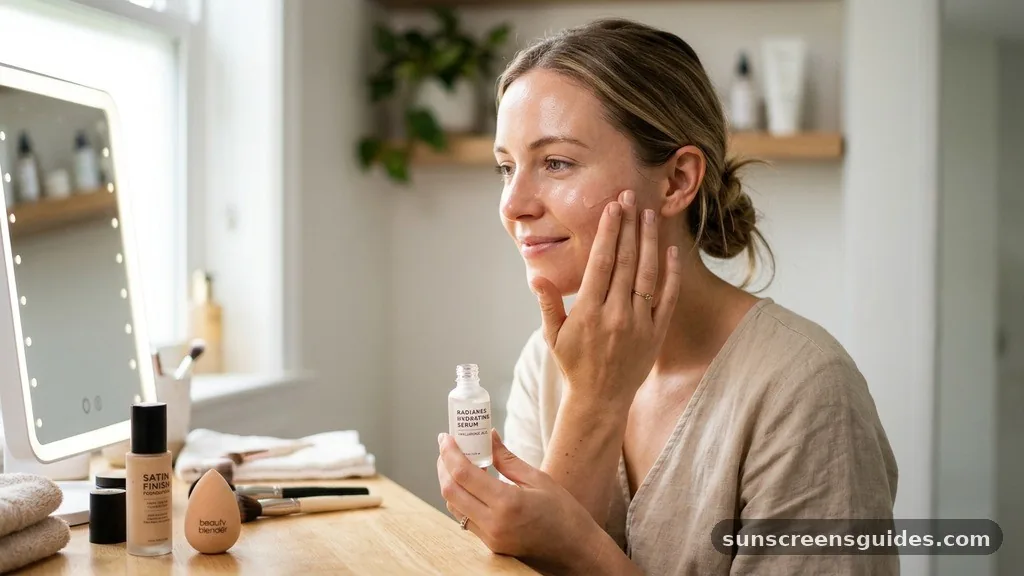
Learning the nuances of how to apply serum correctly transforms your daily bathroom ritual into a professional-grade treatment. Many people invest in high-quality skincare products only to lose their efficacy through improper application techniques or incorrect timing. By understanding the science of epidermal absorption and the importance of moisturizer layering, you ensure that those concentrated active ingredients actually reach their intended destination.
Whether you are using a potent vitamin C boost in the morning or a corrective retinol treatment at night, the way you distribute the product dictates the final outcome. This breakdown covers the precise steps to help your skin reap the full rewards of every drop.
The Foundation of Proper Serum Application

The most effective way to apply serum involves prepping your skin to act like a sponge rather than a barrier. Because serums contain smaller molecular weights than heavy creams, they need a clean, slightly receptive canvas to penetrate deeply.
You should always start with a gentle cleanser to remove surface oils and debris that might block pore penetration. If you skip this, you’re essentially layering expensive ingredients over a film of dirt, which limits their potential and may even lead to congestion.
Once your face is clean, think about the moisture levels on your skin. Applying serum to damp skin is a widely accepted technique among experts because water acts as a transport mechanism.
When the skin is slightly hydrated, the product spreads more evenly and absorbs faster. Avoid harsh rubbing; instead, focus on a gentle pressing motion that encourages the formula to sink into the epidermis.
Step-by-Step Sequence for Daily Usage
Following a logical order prevents product pilling and ensures that each layer serves a specific purpose in your skincare routine. You want to work from the thinnest consistency to the thickest, which allows for optimal absorption.
* Cleanse your face thoroughly with a pH-balanced wash.
* Apply a toner if you use one to reset your pH balance.
* Dispense three to four drops of serum into your palms.
* Warm the product slightly between your fingers.
* Press the liquid into your skin using a light facial massage.
* Allow the serum to set for 60 seconds before moving to the next step.
* Seal everything in with a moisturizer to prevent trans-epidermal water loss.
Addressing Topical Gaps: Serum Myths vs. Reality
There is a common misconception that more product equals better results. In reality, serums are highly concentrated, and using too much can overwhelm the skin barrier or lead to product waste. If you find your face feeling tacky or sticky long after application, you have likely applied an excessive amount.
Another common gap involves the fear of using serums on sensitive skin. If you have concerns about irritation, introduce the product slowly, perhaps every other night, until your skin builds tolerance to the active ingredients.
Furthermore, many users fail to account for the serum viscosity when deciding which to apply first. If you are layering multiple serums, always apply the water-based formulas before any oil-based treatments. Oil creates a hydrophobic layer that naturally repels water-based products, meaning any serum applied after an oil will likely just sit on the surface of your skin, failing to deliver its intended benefits.
Comparing Different Serum Types

Different ingredients require slightly different handling techniques to ensure safety and efficacy. The table below highlights how to manage common popular serum types within your routine.
| Ingredient Type | Best Time to Apply | Key Benefit |
|---|---|---|
| Vitamin C | Morning | Antioxidant protection and brightening |
| Hyaluronic Acid | Morning and Night | Deep hydration and plumping |
| Retinol | Night Only | Cell turnover and collagen support |
| Niacinamide | Morning and Night | Oil control and texture refinement |
Techniques for Enhanced Absorption
The way you physically touch your face makes a difference in how the ingredients settle. Using a deliberate facial massage helps stimulate circulation, which can improve the overall delivery of nutrients to the skin cells.
Start from the center of your face and work outward and upward. This motion is not only therapeutic but ensures that you cover every contour, including the often-neglected jawline and neck areas.
Be mindful of the comedogenic threshold of the products you choose. If you have acne-prone skin, look for labels that explicitly state they are non-comedogenic.
Even the best application technique cannot overcome a formula that is inherently too heavy or pore-clogging for your specific skin type. Always check the ingredient list if you are prone to breakouts, as certain oils can be problematic even in small doses.
Common Mistakes to Avoid
Many enthusiasts fall into the trap of skipping the neck and décolletage. Your face doesn’t end at the chin, and these areas show signs of aging just as quickly. When you apply your serum, extend the reach of your fingertips down to your chest.
Additionally, don’t rush the process. If you layer a heavy cream immediately after a watery serum, you might dilute the product or disrupt the formulation’s intended effect. Wait for that minute of “dry-down” time to ensure the serum has fully anchored.
The Importance of Consistency
Skincare is a marathon, not a sprint. While some products provide an immediate glow, the true benefits of serums—especially those targeting fine lines or pigmentation—take weeks to manifest.
Consistency in your application method is just as important as the quality of the serum itself. By sticking to a routine that respects the needs of your skin barrier, you allow the ingredients to work in harmony with your natural biology.
Conclusion
Mastering the art of how to apply serum is a simple yet powerful change that rewards you with better skin health. By keeping your skin clean, respecting the order of operations, and using a gentle, consistent touch, you optimize every drop for its intended purpose. Whether you are aiming for deep hydration or targeted treatment, remember that the goal is to let the product do the heavy lifting while you provide the right environment for absorption.
Take your time, monitor how your skin reacts over the coming weeks, and enjoy the process of refining your routine for the best possible results. Feel free to reach out if you have questions about specific product combinations or need further advice on building your regimen.
Is it necessary to apply serum to damp skin?
Yes, damp skin acts as a conduit, helping ingredients like hyaluronic acid penetrate more effectively and deeply.
Can I use multiple serums at once?
You can, provided you layer them from thinnest to thickest consistency and allow each to absorb fully.
Should I massage my face when applying?
Yes, a gentle facial massage improves blood flow and helps the product settle evenly across the skin.
How long should I wait between serum and moisturizer?
Waiting about 60 seconds ensures the serum is fully absorbed, preventing it from pilling under your moisturizer.
Does the order of application matter for serums?
Absolutely, you must apply serums before heavier creams or oils to ensure proper pore penetration and efficacy.
Can I apply serum around my eyes?
Only if the product is ophthalmologist-tested; otherwise, avoid the delicate eye area to prevent potential irritation.
How much serum is enough for the whole face?
Usually, three to four drops are sufficient to cover your entire face and neck without wasting product.



