

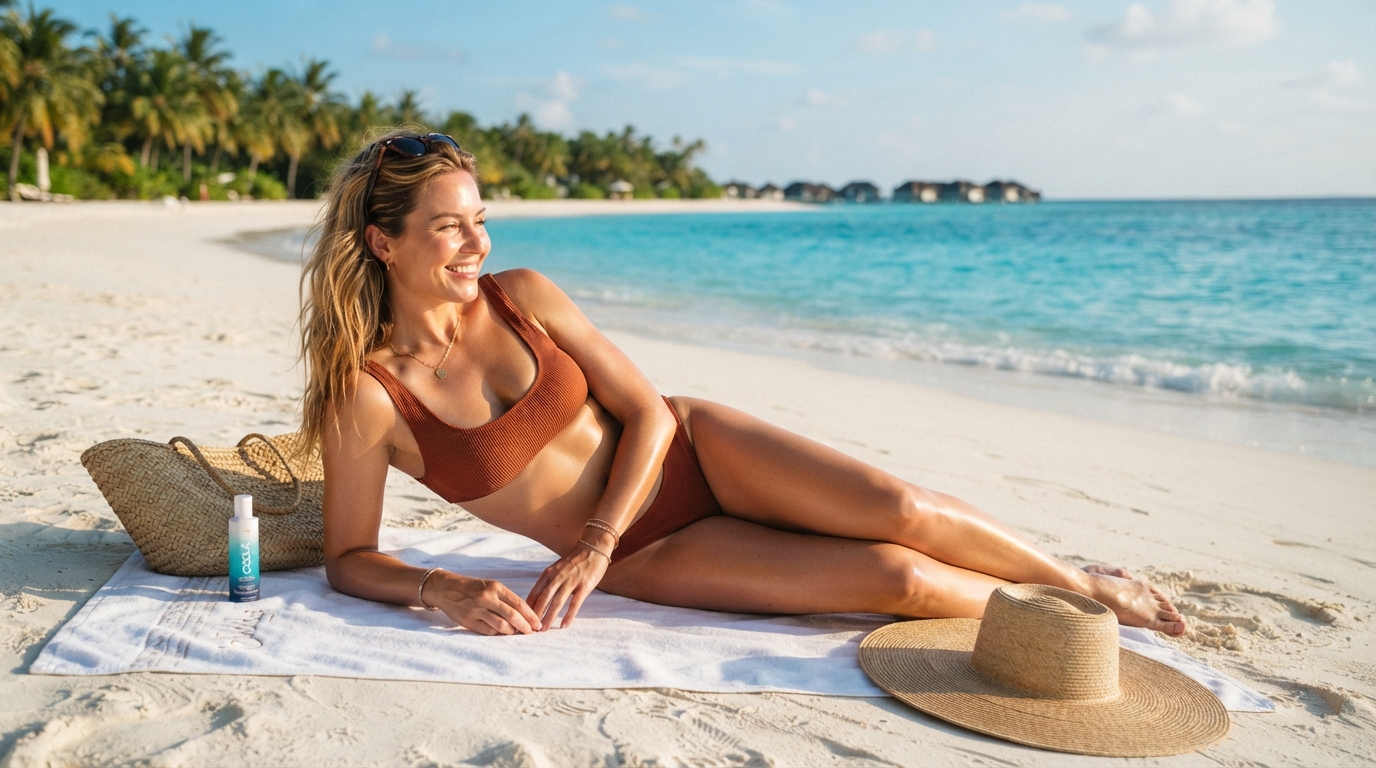
You keep wondering can you still get a tan with sunscreen, don’t you? Maybe you’ve spent hours outside, remembered to apply SPF, and somehow came home looking a little darker anyway. That kinda makes you question whether sunscreen actually works, or if tanning and protection can somehow happen at the same time. It’s a fair thing to wonder, honestly, because skin doesn’t always behave in the neat little ways we expect.
The short answer is yes, you can still get a tan while wearing sunscreen. But there’s a lot hiding behind that simple answer. A tan doesn’t automatically mean your sunscreen failed, and wearing sunscreen doesn’t mean you’re wrapped in an invisible shield that blocks every single ultraviolet (UV) ray. Skin biology is a bit messier than that, and that’s exactly why understanding how sunscreen works matters more than chasing perfect protection.
Whether you’re heading to the beach, hiking in the mountains, relaxing beside a pool, or simply walking around town on a sunny afternoon, knowing what really happens between sunlight, sunscreen, and your skin can help you stay healthier without giving up outdoor fun.
The Short Answer: Yes, You Can Still Tan While Wearing Sunscreen
Many people assume sunscreen completely blocks sunlight. It doesn’t.
Most sunscreens reduce the amount of ultraviolet radiation that reaches your skin rather than eliminating it entirely. Even a high-SPF sunscreen allows a small percentage of UV rays to penetrate. Those remaining rays may still stimulate melanin production, which is your skin’s natural response to UV exposure.
That’s why you might notice:
- A gradual tan after several days outdoors
- Less redness than usual
- Slower color development
- Reduced burning compared to not wearing sunscreen
If you’re tanning while using sunscreen, it usually means some UV radiation reached your skin—not that the sunscreen stopped working. That bit surprises people more often than you’d think.
How Tanning Actually Happens
Your skin contains specialized cells called melanocytes. When ultraviolet radiation reaches them, they begin producing melanin, the pigment responsible for giving skin its color.
Melanin acts as your body’s natural defense mechanism.
Here’s what happens:
| UV Radiation | Skin Response |
|---|---|
| UVA rays | Immediate tanning and contributes to premature skin aging |
| UVB rays | Delayed tanning, sunburn, and DNA damage |
| Both UVA and UVB | Increase melanin production over time |
Interestingly, a tan itself is evidence that your skin experienced DNA stress. Dermatologists often point out that there isn’t really such a thing as a completely “safe tan” caused by UV exposure.
According to the American Academy of Dermatology, tanning represents the skin’s attempt to protect itself after ultraviolet damage rather than a sign of healthy skin.
“A tan is a sign that your skin has been injured by UV radiation.”
That sentence feels a little harsh, maybe, but it’s medically accurate.
What Does SPF Really Mean?
One of the biggest misunderstandings involves SPF numbers.
SPF stands for Sun Protection Factor, and it mainly measures protection against UVB rays.
Here’s an easy comparison:
| SPF | Approximate UVB Blocked |
|---|---|
| SPF 15 | 93% |
| SPF 30 | 97% |
| SPF 50 | 98% |
| SPF 100 | About 99% |
Notice something?
Even SPF 100 doesn’t block 100% of UV rays. That tiny remaining percentage may still contribute to tanning over time, especially during long periods outside.
Another thing people don’t always realize is that SPF says nothing about UVA unless the sunscreen is labeled broad-spectrum.
Why You Might Tan Even With SPF 50
You applied SPF 50 in the morning, yet somehow ended up with tan lines.
How?
Several reasons could explain it.
You Didn’t Apply Enough
Most adults need roughly:
- One ounce (about a shot glass full)
- Around two tablespoons for the body
- About a nickel-sized amount for the face
Research consistently shows most people apply only 25% to 50% of the recommended amount. That’s… kinda common actually.
You Forgot to Reapply
Sunscreen gradually wears away because of:
- Sweat
- Swimming
- Towel drying
- Friction from clothing
- Natural skin oils
Experts recommend reapplying every two hours and immediately after swimming or heavy sweating.
UV Rays Build Up Throughout the Day
Even tiny amounts of UV exposure accumulate.
Twenty minutes here.
Thirty minutes there.
Walking your dog.
Driving with sunlight coming through the window.
Having lunch outdoors.
Those little bits stack together more than most people imagine.
Sunscreen Doesn’t Create Total Darkness
Think of sunscreen like lightly closing window blinds rather than building a concrete wall.
Some sunlight still gets through.
That’s a wierd comparison maybe, but it fits surprisingly well.
Does Higher SPF Prevent Tanning Completely?
Not completely.
Higher SPF significantly reduces your chances of tanning, but it cannot eliminate them entirely under normal outdoor conditions.
Here’s a comparison.
| Sunscreen Type | Chance of Tanning |
|---|---|
| No sunscreen | Very high |
| SPF 15 | High |
| SPF 30 | Moderate |
| SPF 50 | Lower |
| SPF 50+ with proper application | Lowest practical risk |
If your goal is avoiding tanning altogether, sunscreen alone isn’t enough.
You’ll also need:
- Wide-brimmed hats
- UV-protective clothing
- Sunglasses
- Shade during midday
- Limiting sun exposure between 10 a.m. and 4 p.m.
Does Broad-Spectrum Sunscreen Make a Difference?
Absolutely.
Broad-spectrum sunscreen protects against:
- UVA rays
- UVB rays
Without UVA protection, your skin may still tan significantly because UVA penetrates deeper into the skin and contributes heavily to pigment production.
When choosing sunscreen, always look for:
- SPF 30 or higher
- Broad-spectrum protection
- Water resistance if swimming
Those three features make a pretty solid combination.
Can Darker Skin Still Tan With Sunscreen?
Yes.
Every skin tone can produce additional melanin.
People with naturally darker skin often:
- Tan more easily
- Burn less frequently
- Still experience UV damage
- Can develop skin cancer, although risk is generally lower than for lighter skin
The Centers for Disease Control and Prevention emphasizes that sunscreen benefits every skin tone.
No skin color is completely immune to ultraviolet damage.
Can You Tan Faster Without Sunscreen?
Technically yes.
But faster tanning comes with greater DNA damage, increased sunburn risk, premature aging, and a higher lifetime risk of skin cancer.
Here’s a comparison.
| Without Sunscreen | With Sunscreen |
|---|---|
| Faster tanning | Slower tanning |
| Higher burn risk | Lower burn risk |
| Greater skin damage | Reduced damage |
| More wrinkles over time | Better skin preservation |
The slower tan you might develop while wearing sunscreen generally involves less UV exposure than tanning without protection.
That’s a trade worth making for most people.
Is Tanning Through Sunscreen Safer?
Safer doesn’t mean safe.
If you tan while wearing sunscreen, you’ve likely reduced the total UV damage compared with tanning unprotected.
However:
- DNA damage still occurs
- Pigment changes still happen
- Skin aging continues, although more slowly
- Long-term exposure still increases cancer risk
Dermatologists generally recommend focusing on protecting skin health rather than trying to achieve a tan.
Factors That Affect Whether You Tan
Not everyone tans at the same speed.
Several things influence it.
Your Skin Type
People with lighter skin often burn before tanning.
Medium skin usually tans gradually.
Darker skin often develops pigmentation faster.
Time of Day
UV radiation peaks between:
- 10 a.m.
- 4 p.m.
Sun exposure during these hours causes more tanning and more damage.
Altitude
Higher elevations receive stronger UV radiation because there’s less atmosphere filtering sunlight.
Mountain vacations can surprise people pretty quick.
Reflection
Water, snow, sand, and concrete reflect UV rays.
That means exposure increases even if you’re sitting under an umbrella.
Sneaky, honestly.
Latitude and Season
Places closer to the equator receive stronger UV radiation year-round.
Summer months also increase UV intensity across much of the world.
Common Myths About Sunscreen and Tanning
Some myths refuse to disappear.
Let’s clear up a few.
Myth: Sunscreen Stops All Tanning
False.
It reduces UV exposure but cannot block every ultraviolet ray.
Myth: If You Tan, Your Sunscreen Failed
False.
A mild tan may still occur despite proper sunscreen use.
Myth: SPF 100 Means You Never Need to Reapply
False.
Every sunscreen needs regular reapplication regardless of SPF.
Myth: Cloudy Days Prevent Tanning
False.
Up to 80% of UV radiation can pass through clouds.
That catches lots of people off guard every summer.
What the Research Says
Scientific evidence consistently supports sunscreen use.
Several large studies have shown that daily sunscreen use:
- Reduces sunburn
- Lowers skin cancer risk
- Decreases premature skin aging
- Reduces actinic keratoses
- Helps maintain more even skin tone
A long-term Australian randomized clinical trial found participants using sunscreen daily experienced significantly fewer signs of skin aging compared with those using sunscreen only occasionally.
Meanwhile, the World Health Organization classifies ultraviolet radiation as a proven human carcinogen, emphasizing the importance of sun protection regardless of whether someone intends to tan.
These findings don’t mean sunscreen is perfect. They simply show it’s one of the most effective everyday tools available for reducing UV-related skin damage.
Tips to Minimize Tanning While Wearing Sunscreen
If avoiding tanning is your goal, combine several protective habits instead of relying on SPF alone.
- Apply sunscreen 15 to 30 minutes before sun exposure.
- Use broad-spectrum SPF 30 or higher.
- Reapply every two hours.
- Reapply immediately after swimming.
- Wear UV-protective clothing.
- Use a wide-brimmed hat.
- Seek shade whenever possible.
- Avoid prolonged midday sun.
- Check expiration dates before using sunscreen.
- Cover commonly forgotten areas like ears, neck, feet, and hands.
Doing several small things together works much better than depending on one product.
Final Thoughts
So, can you still get a tan with sunscreen? Yes, you absolutely can. Sunscreen dramatically reduces ultraviolet exposure, but it doesn’t completely eliminate it. Some UV rays still reach your skin, encouraging melanin production and leading to gradual tanning over time.
The important thing to remember is that tanning isn’t proof your sunscreen failed. More often, it’s simply evidence that your skin received some ultraviolet exposure despite being protected. Proper application, frequent reapplication, choosing a broad-spectrum sunscreen, and combining SPF with protective clothing all help reduce both tanning and long-term skin damage.
Healthy skin isn’t measured by how bronze it looks after a weekend outside. It’s measured by how well it’s protected for years to come. That might not sound flashy, but your future self will almost certianly appreciate it.
Frequently Asked Questions
Can you still get a tan with sunscreen SPF 50?
Yes. SPF 50 blocks most UVB rays but not all. Small amounts of ultraviolet radiation can still stimulate melanin production and gradually darken your skin.
Does sunscreen stop tanning completely?
No. Sunscreen significantly reduces tanning but cannot completely prevent it because some ultraviolet rays still penetrate even when sunscreen is applied correctly.
Why did I tan even though I wore sunscreen?
You may have applied too little, forgotten reapplication, or spent extended time outdoors. Even properly applied sunscreen allows limited UV exposure that can cause tanning.
Is tanning with sunscreen safer than tanning without it?
Generally yes. Wearing sunscreen reduces ultraviolet exposure, lowering sunburn and skin damage, although any UV-induced tan still indicates some skin injury occurred.
Can you get darker while wearing sunscreen every day?
Yes. Daily outdoor exposure can gradually deepen skin pigmentation over time because sunscreen reduces, rather than completely blocks, ultraviolet radiation.