
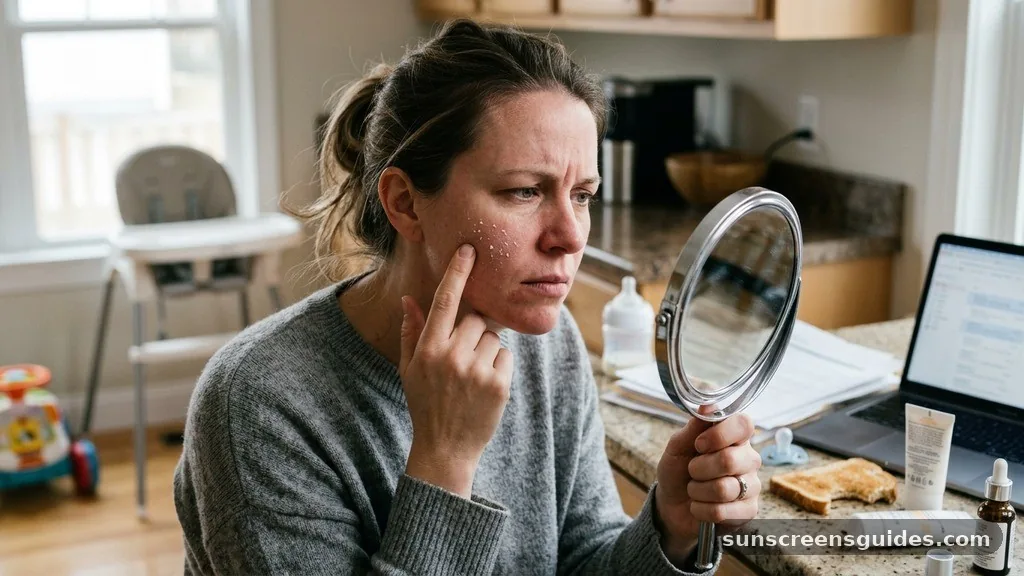
Dealing with the frustration of your daily skincare routine ending in little white flakes is a common struggle. When you notice why is my sunscreen pilling, it usually signals a breakdown in your skincare layering process. This phenomenon, often called pilling, occurs when products fail to absorb or bind properly to the skin, instead forming tiny balls of residue.
While it might feel like a minor annoyance, it effectively creates a uneven shield across your face. By understanding the underlying interactions between your moisturizer, serum, and SPF, you can reclaim your morning routine and ensure your skin stays protected throughout the day.
Understanding the Mechanics of Pilling
Sunscreen pilling happens when the polymers and film-formers in your various skincare products clash. These ingredients are designed to stay on the surface of your skin to lock in moisture or provide a UV filter.
When you apply multiple layers, these molecules can tangle instead of forming a cohesive barrier. The result is visible, ball-like debris that rolls off the skin the moment you touch your face or apply makeup.
The Role of Ingredient Incompatibility

The most frequent culprit is the mixing of conflicting base ingredients. Most skincare products are either oil-based, silicone-based, or water-based. If you apply a heavy, oil-rich cream and then try to layer a water-based sunscreen on top, the two textures will struggle to integrate.
Silicone-based primers or moisturizers can also create a slippery, hydrophobic layer that prevents subsequent products from adhering to the skin texture. When these layers sit side-by-side without absorbing, physical friction from your fingers or a makeup sponge causes them to clump together.
Chemical vs Physical Sunscreen Considerations
The type of sun protection you choose also dictates how it sits on your complexion. Chemical sunscreens typically absorb into the top layer of the epidermis, while physical sunscreen (mineral) relies on zinc oxide or titanium dioxide to sit on top of the skin. If you are using a thick, mineral-based formula, it requires a different application technique than a thin, chemical-based liquid. Applying a dense physical formula over a tacky, water-based moisturizer often leads to immediate texture issues.
Common Causes for Product Balling
Identifying why is my sunscreen pilling requires looking at your application habits. Often, the issue isn’t the product quality but the technique used during your morning routine.
- Excess product application: Using too much moisturizer prevents proper absorption.
- Lack of absorption time: Rushing to the next step before your serum has dried.
- Buildup of dead skin cells: A rough surface prevents products from laying flat.
- Rubbing vs. patting: Physical agitation of the skin during application triggers clumping.
- Incompatible textures: Mixing silicone-heavy products with water-based formulas.
The Impact of Skin Barrier Health
Your skin barrier plays a silent role in how products sit on your face. When the skin is dehydrated or contains a buildup of dead cells, it becomes uneven. Products catch on these dry patches rather than spreading smoothly across the surface.
Regular, gentle exfoliation helps remove these barriers, creating a smooth canvas that allows your sunscreen to bind effectively. If your skin is perpetually dry, your moisturizer might not be absorbing at all, leaving a thick film that causes the sunscreen to pill the moment you apply it.
Optimizing Your Skincare Layering Sequence
To stop the flakes, you must audit the order and timing of your routine. The goal is to allow each layer to fully settle before adding the next.
| Step | Action | Benefit |
|---|---|---|
| Cleansing | Remove debris | Prepares a clean surface |
| Exfoliation | Remove dead cells | Improves product adherence |
| Serum | Pat into skin | Hydrates without heavy residue |
| Moisturizer | Wait 60 seconds | Seals in active ingredients |
| Sunscreen | Apply by patting | Maintains film integrity |
The Importance of Absorption Time

Patience is your best tool when managing pilling. Many people apply their entire routine in a frantic two-minute window. If you apply sunscreen immediately after a heavy serum containing hyaluronic acid, the sunscreen will sit on top of the serum’s remaining moisture rather than bonding to your skin.
Giving each product 60 to 90 seconds to “set” or absorb makes a massive difference. You should feel the skin become slightly tacky or dry to the touch before moving to the next layer.
Application Techniques that Prevent Clumping
How you move your hands across your face matters as much as the product itself. Many people accidentally create pilling by rubbing their sunscreen in circles for too long. Once the product is distributed, switch to a gentle patting motion.
Pushing the sunscreen into the skin with your palms or fingertips encourages the film-formers to lock into place without disturbing the layers underneath. Avoid using a heavy hand; light, tapping motions are sufficient to ensure even coverage without creating friction that leads to debris.
Addressing Topical Gaps in Routine Optimization
A common area where users struggle is the “mid-day touch-up” or the transition to makeup. If your sunscreen pills when you apply foundation, the issue likely stems from the occlusive agents in your moisturizer. Occlusives, such as petrolatum or heavy waxes, are designed to sit on top of the skin to prevent water loss.
If you use an occlusive-heavy moisturizer, it will almost always cause pilling when layered under makeup or sunscreen. Switching to a lighter, gel-cream moisturizer in the morning can resolve this conflict entirely, as these formulas absorb more readily without leaving a thick, greasy residue that disrupts other products.
Evaluating Product Compatibility
If you suspect your products are fighting each other, perform a simple “texture test” on the back of your hand. Apply your moisturizer, wait two minutes, and then apply your sunscreen. If it balls up on your hand, you know the interaction is happening between those two specific formulas.
You do not necessarily need to discard your products; often, simply switching the order or waiting longer between steps is enough to fix the issue. If you use a silicone primer, try skipping it on days you wear heavy sunscreen, or vice versa, to see which product is the primary offender.
FAQ Regarding Sunscreen Pilling
Does pilling mean my sunscreen isn’t working?
Yes, pilling creates gaps in your UV protection, meaning your skin is not fully shielded from the sun.
Can I stop pilling by changing how I apply sunscreen?
Yes, switching from rubbing to a gentle patting motion significantly reduces the likelihood of product balling up.
Is pilling caused by my moisturizer?
It is often caused by a moisturizer that is too heavy or contains silicones that conflict with your sunscreen.
Should I exfoliate to prevent sunscreen pilling?
Regular, gentle exfoliation removes dead skin cells, creating a smooth surface that helps products absorb and adhere better.
Does wait time between skincare steps matter?
Yes, waiting at least 60 seconds between each layer allows products to absorb and set, preventing surface friction.
Are water-based sunscreens better for layering?
They are often easier to layer, especially if your other skincare products are also water-based and lightweight in nature.
Why does my sunscreen pill only when I wear makeup?
Makeup often contains pigments and waxes that clash with the film-formers in your sunscreen, causing both to clump.
Conclusion
Mastering the balance of your morning routine is the key to preventing the frustration of white flakes on your skin. When you understand that the culprit is usually a conflict between film-formers and occlusive agents, you can make simple adjustments to your timing and product selection. By allowing adequate absorption time, prioritizing hydration over heavy creams, and using a gentle patting motion, you ensure that your protective barrier remains intact.
If you find yourself asking why is my sunscreen pilling, look first at the texture of your moisturizer and the time you allow for your skin to settle. Small, consistent changes to your daily regimen will lead to a smooth, protected, and flake-free complexion every single day.