
You probably started wondering how long does sunscreen last right after noticing your skin feeling warm again, even tho you swear you applied plenty before stepping outside. That tiny doubt sneaks in faster than sunshine sometimes. Maybe you’ve been at the beach, walking the dog, driving with the window down, or just sitting near a bright office window thinking, “Wait… is this stuff still working?” Turns out, the answer isn’t as simple as a number on a bottle, and that’s kinda what catches people off guard.
Sunscreen is designed to protect your skin from ultraviolet (UV) radiation, but its effectiveness changes with time, activity, and even how generously you apply it. A single application isn’t magic armor that stays perfect all day. Sweat, water, rubbing your face, clothing, and even natural skin oils slowly reduce the protective layer.
Understanding sunscreen longevity helps you avoid unnecessary sun damage while making the most of every application. Whether you wear sunscreen every morning or only during vacations, knowing when protection fades is one of those little things that quietly makes a big difference.
How Long Does Sunscreen Last After You Apply It?
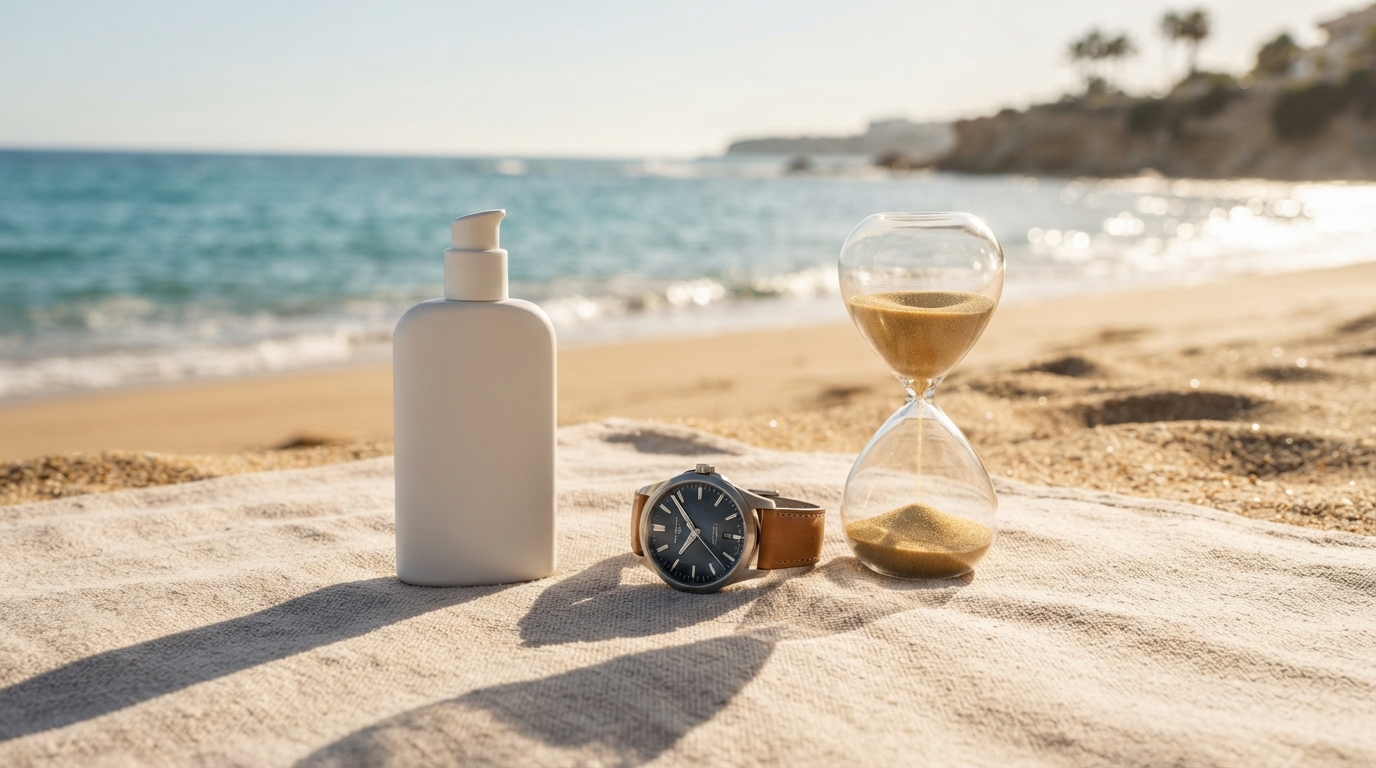
For most people, sunscreen remains fully effective for about two hours under normal outdoor conditions. After that, the protective film gradually breaks down or wears away.
Dermatologists and public health organizations consistently recommend reapplying sunscreen every two hours when you’re outdoors. If you’re swimming, sweating heavily, or drying yourself with a towel, you should reapply even sooner, regardless of the SPF number. It sounds repetitive, but your skin doesnt really negotiate with UV rays.
Here’s a quick overview:
| Situation | Recommended Reapplication |
|---|---|
| Sitting outdoors | Every 2 hours |
| Swimming | Immediately after leaving the water, even if labeled water-resistant after the stated time |
| Heavy sweating | Every 2 hours or sooner |
| Towel drying | Immediately after drying |
| Indoor office work | Usually not necessary unless exposed to strong sunlight |
Even high-SPF sunscreens don’t last longer simply because the SPF number is higher.
Does SPF Affect How Long Sunscreen Lasts?
One of the biggest misconceptions is believing SPF 100 lasts twice as long as SPF 50.
It doesn’t.
SPF measures how much UVB radiation is filtered, not how many hours the sunscreen remains effective.
Here’s a simple comparison:
| SPF | Approximate UVB Protection |
|---|---|
| SPF 15 | About 93% |
| SPF 30 | About 97% |
| SPF 50 | About 98% |
| SPF 100 | About 99% |
Notice how protection increases only slightly after SPF 50. The reapplication schedule stays essentially the same.
That’s why dermatologists often say the quality of application matters more than chasing the highest SPF available.
What Makes Sunscreen Wear Off Faster?
Several everyday activities reduce sunscreen performance much quicker than people expect. Funny enough, half of them happen without you noticing.
Some common reasons include:
- Sweating during exercise
- Swimming in pools or oceans
- Drying with a towel
- Touching your face repeatedly
- Wearing hats that rub against your forehead
- Backpack straps rubbing shoulders
- Skin producing natural oils
- High humidity
- Sand and dust abrasion
Every little bit removes tiny amounts of sunscreen until the protection becomes uneven.
Water-Resistant Doesn’t Mean Waterproof
The term “waterproof sunscreen” is no longer allowed on sunscreen labels in many countries because no sunscreen stays completely effective forever in water.
Instead, products are labeled as:
- Water-resistant (40 minutes)
- Water-resistant (80 minutes)
Those numbers refer to laboratory testing under controlled conditions.
Real life isn’t a laboratory.
If you’re playing volleyball at the beach, diving into waves, sweating, and wiping your face, protection may decrease even before the stated time. Thats why experts still recommend reapplying after swimming.
How Long Does Sunscreen Last on Your Face?
Your face is one of the hardest places for sunscreen to stay put.
Throughout the day you might:
- Touch your chin
- Rub your eyes
- Blow your nose
- Wear sunglasses
- Apply makeup
- Sweat around your hairline
All those small actions slowly remove sunscreen.
If you’re spending significant time outdoors, reapply facial sunscreen every two hours. Powder sunscreens, sticks, cushions, and sprays designed for facial reapplication can make the process easier over makeup.
Does Sunscreen Expire?
Yes.
Every sunscreen has an expiration date because UV filters slowly become less stable over time.
According to manufacturers and dermatology experts, expired sunscreen may:
- Lose SPF protection
- Separate into layers
- Change color
- Develop an unusual smell
- Become harder to spread evenly
If there’s no expiration date, many unopened sunscreens remain effective for about three years from manufacture when stored properly.
However, storage conditions matter almost as much as age.
Heat Can Shorten Sunscreen’s Shelf Life
Leaving sunscreen inside a hot car all summer isn’t doing it any favors.
Extreme heat speeds up ingredient degradation.
Avoid storing sunscreen:
- Inside parked vehicles
- On sunny windowsills
- Near heaters
- On hot beach towels for hours
Better storage locations include:
- Cool indoor cabinets
- Beach bags with shade
- Insulated bags
- Air-conditioned rooms
A bottle that’s constantly overheated may lose effectiveness even before its printed expiration date. Kinda annoying, but chemistry does its own thing.
Mineral vs Chemical Sunscreen Longevity
Both mineral and chemical sunscreens generally follow the same reapplication guidelines.
Mineral sunscreens contain ingredients like:
- Zinc oxide
- Titanium dioxide
Chemical sunscreens often contain filters such as:
- Avobenzone
- Octisalate
- Octocrylene
- Homosalate
Neither type should be expected to protect all day from one application.
Modern formulations are heavily tested for stability, and both categories perform well when used correctly.
How Much Sunscreen Should You Apply?
Using too little sunscreen dramatically reduces actual protection.
Dermatologists generally recommend:
| Body Area | Approximate Amount |
|---|---|
| Face and neck | About half a teaspoon |
| Entire adult body | Around one ounce (roughly a shot glass) |
Research has shown that many adults apply only 25–50% of the recommended amount, which can reduce SPF performance significantly.
So if your sunscreen “isn’t working,” sometimes it isnt the sunscreen at all.
Signs Your Sunscreen May No Longer Be Protecting You
You can’t always tell by looking.
Still, there are clues that your sunscreen layer may have become unreliable.
Watch for:
- Excessive sweating
- Skin feeling dry after towel rubbing
- Long periods in direct sunlight
- Frequent face touching
- Swimming
- Sunscreen visibly rubbed off
- Hours passing without reapplication
Waiting until you notice redness usually means UV exposure has already occurred.
Sunscreen During Everyday Activities
Many people think sunscreen only matters at beaches.
Actually, UV exposure builds quietly during ordinary routines.
Examples include:
- Driving
- Gardening
- Outdoor sports
- School pickup
- Walking pets
- Lunch breaks
- Cycling
- Outdoor shopping
Even small exposures accumulate over months and years.
Can Sunscreen Last All Day Indoors?
Sometimes, yes—but it depends on your environment.
If you’re working inside away from windows with minimal sun exposure, one morning application may be sufficient.
However, consider reapplying if you:
- Sit beside large sunny windows
- Drive frequently
- Spend time outside during lunch
- Work outdoors part of the day
UVA rays can penetrate glass, although standard windows block most UVB radiation.
How to Make Sunscreen Last as Long as Possible
You can’t extend the official protection time, but you can keep the sunscreen layer intact longer.
Helpful habits include:
- Apply sunscreen 15–30 minutes before sun exposure if using chemical sunscreen.
- Use enough product.
- Let sunscreen dry before getting dressed.
- Avoid excessive face rubbing.
- Wear protective clothing.
- Use hats and sunglasses.
- Seek shade during peak UV hours.
- Reapply after sweating or swimming.
These small habits work together rather then relying on sunscreen alone.
Common Sunscreen Myths
Let’s clear up several myths that still circulate.
Myth: SPF 100 Means You Only Apply Once
False.
Higher SPF improves UVB filtering slightly but doesn’t eliminate the need for reapplication.
Myth: Cloudy Days Don’t Require Sunscreen
False.
Up to 80% of UV radiation can pass through clouds depending on cloud thickness and atmospheric conditions.
Myth: Darker Skin Doesn’t Need Sunscreen
False.
Although melanin provides some natural protection, everyone can experience UV damage, premature aging, and certain skin cancers.
Myth: Makeup With SPF Is Enough
Usually false.
Most people don’t apply enough foundation or tinted moisturizer to reach the labeled SPF.
What Experts Say About Sunscreen Longevity
Health authorities around the world consistently emphasize regular reapplication.
The American Academy of Dermatology recommends broad-spectrum sunscreen with SPF 30 or higher, applied generously and reapplied every two hours outdoors.
The U.S. Food and Drug Administration also advises reapplying after swimming or sweating according to product directions.
The World Health Organization encourages combining sunscreen with hats, protective clothing, and shade rather than relying on sunscreen alone.
As dermatologist Dr. Henry Lim has explained in educational materials, “No sunscreen blocks 100 percent of UV rays.”
That short sentence kinda sticks with you because it quietly reminds us sunscreen is only one layer of protection.
Real-World Example
Imagine two friends spending six hours at a summer festival.
One applies SPF 50 once at 10 a.m. and never reapplies.
The other applies SPF 30 at 10 a.m., reapplies at noon, and again around 2 p.m.
Despite using the lower SPF product, the second friend is much more likely to maintain consistent UV protection throughout the day.
That’s why sunscreen longevity matters more than simply choosing the biggest SPF number on the shelf.
Final Thoughts
When people ask how long does sunscreen last, they’re usually hoping for one simple answer. The honest answer is that sunscreen lasts only as long as the protective layer remains on your skin, and daily life chips away at that layer faster than most of us realize. Two hours is the general rule outdoors, but swimming, sweating, towel drying, and constant movement can shorten that window.
The good news is that protecting your skin doesn’t require complicated routines. Apply enough sunscreen, choose a broad-spectrum SPF 30 or higher, reapply when needed, and combine it with shade and protective clothing. Those habits may seem small on their own, but over months and years they add up to healthier skin, fewer sunburns, and a lower risk of long-term sun damage. Weirdly enough, the bottle in your bag only does half the job—the other half is remembering it still has limits.
Frequently Asked Questions
How long does sunscreen last after application?
Most sunscreens provide reliable protection for about two hours outdoors. Reapply sooner after swimming, sweating heavily, or towel drying to maintain effective coverage.
Does SPF 100 last longer than SPF 30?
No. SPF measures UVB protection strength, not duration. Both SPF 30 and SPF 100 generally need reapplication every two hours during outdoor exposure.
Can expired sunscreen still protect my skin?
Expired sunscreen may lose effectiveness and become unstable. If the product smells unusual, changes texture, or has expired, it’s better to replace it.
Should I reapply sunscreen if I stay indoors?
Usually one morning application is enough indoors, but reapply if you spend time near sunny windows or regularly go outside during the day.
How can I make sunscreen protection last longer?
Apply the recommended amount evenly, avoid rubbing it away, wear protective clothing, and reapply every two hours when outdoors for consistent sun protection.