


Learning how to make lash serum allows you to take control of the ingredients touching your delicate eyelid skin while potentially saving significant money. Many commercial products contain harsh preservatives or prostaglandins that can lead to unwanted side effects, making a custom-blended alternative an attractive project for beauty enthusiasts.
By selecting high-quality, plant-based oils, you can create a gentle formula designed to nourish your lash line and support the natural growth cycle. This approach focuses on hydration and conditioning, which are the fundamental pillars of maintaining strong, healthy-looking eyelashes over time.
Selecting High-Quality Ingredients for Lash Health
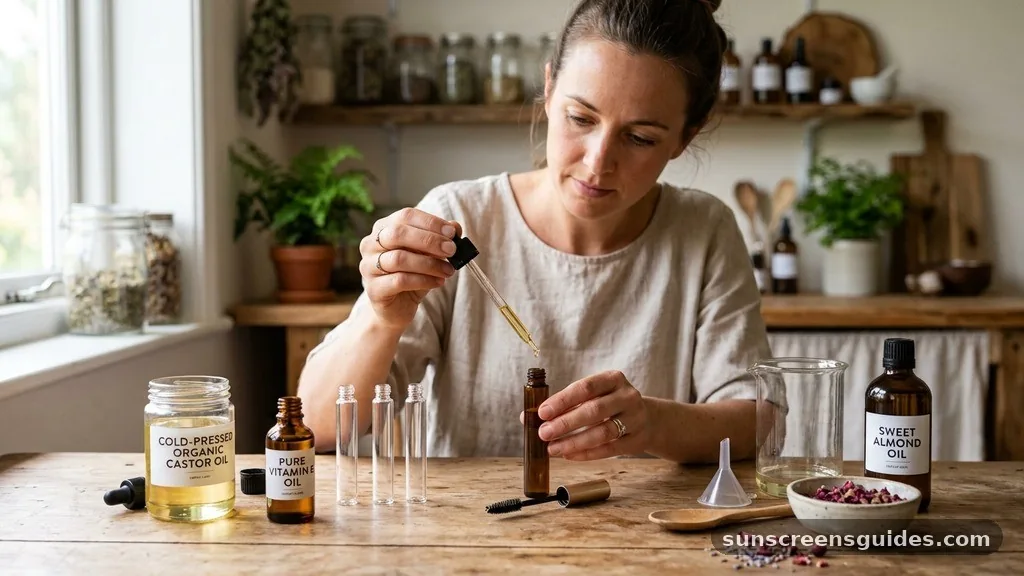
When you start the process of creating your own serum, the quality of your base ingredients determines the efficacy and safety of the final product. You want to prioritize carrier oils that are rich in essential fatty acids, as these nutrients are known to support eyelash follicle health. Most successful DIY formulas rely on a blend of oils to balance thickness and absorption.
Castor oil remains the gold standard in the DIY community because of its high viscosity and high concentration of ricinoleic acid. When sourcing this, always ensure you select a cold-pressed, hexane-free version to avoid chemical residues. However, because castor oil is quite thick, it is often best paired with lighter alternatives to create a more user-friendly consistency.
Cold-pressed jojoba oil is an excellent addition because its molecular structure closely mimics the natural sebum produced by your skin. This makes it highly absorbent and unlikely to clog the pores around your lash line. Sweet almond oil serves as another fantastic lighter base, providing a boost of Vitamin E and proteins that help prevent lash breakage. If you want to add extra antioxidant protection, a small amount of vitamin E oil can be mixed in to act as both a conditioning agent and a mild stabilizer for your oils.
Safe Mixing and Sterilization Procedures
Safety is non-negotiable when you are applying substances near your eyes. Because you are creating a product that will be used repeatedly on a sensitive area, you must treat your workspace like a tiny laboratory to avoid bacterial contamination. Even though oil-based serums don’t require the same water-based preservatives as store-bought lotions, they can still harbor germs if handled improperly.
Before you begin mixing, sanitize all your equipment thoroughly. You will need a small glass container or a clean, empty mascara tube.
If you are repurposing an old tube, it must be cleaned with hot, soapy water and then rinsed with high-percentage isopropyl alcohol to ensure it is completely sterile. Using a sterile mascara wand for each application is the most effective way to keep your bottle of serum clean and prevent cross-contamination.
If you notice the scent of your oils changing or the texture becoming cloudy, this is a sign that the shelf life preservation has failed. Oil-based mixtures typically last about three to six months if stored in a cool, dark place away from direct sunlight. Keeping your serum in a small, opaque dropper bottle or a dark glass container will significantly slow down the oxidation process, ensuring your ingredients remain potent for as long as possible.
Establishing a Routine for Follicle Stimulation
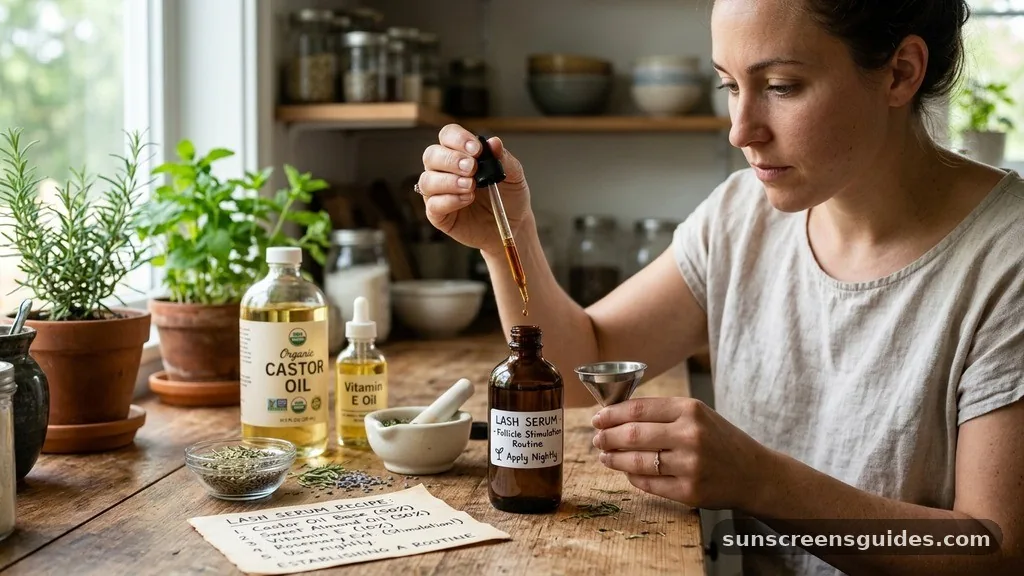
Consistency is the secret to seeing results with any conditioning treatment. Follicle stimulation doesn’t happen overnight; it requires regular application to keep the hairs hydrated and flexible. Most people find that applying their DIY serum once every evening after washing their face works best, as this allows the oils to soak into the roots overnight without interfering with makeup application during the day.
To apply, dip your clean wand into the mixture and wipe off any excess on the rim of the bottle. You only need a very thin coating to be effective. Start at the base of your upper lash line, moving outward toward the tips.
Avoid getting the oil directly into your eye, as this can create a temporary, blurry film that is uncomfortable. If you accidentally get oil in your eye, simply flush it with cool water.
You can track your progress by taking photos of your lashes every two weeks. Since lashes have a natural growth and shedding cycle, it usually takes about four to eight weeks of consistent use to notice a difference in the fullness or flexibility of your hair. Remember that natural oils are conditioning agents; they improve the appearance of existing lashes by preventing them from becoming brittle, rather than forcing them to grow at an unnatural rate.
Identifying Risks and Avoiding Irritation
Even with the most natural ingredients, individual sensitivities can vary. Before you commit to daily use, you must conduct a patch test on your inner forearm or behind your ear.
Apply a small drop of your finished blend and wait 24 hours to ensure you do not experience an allergic reaction. While rare, some individuals may have specific sensitivities to nuts or botanical extracts found in almond or jojoba oils.
Eyelid irritation can also occur if the product is applied too heavily, causing the oil to migrate into the eye or clog the small glands along the lash line. If you notice redness, itching, or swelling, discontinue use immediately. It is important to note that the PH balance of your eye area is quite delicate; if you feel any burning sensation, your mixture may be too heavy or not clean enough.
The following table provides a quick reference for the most common ingredients used in these serums and their primary benefits for your lashes:
| Ingredient | Primary Benefit | Best For |
|---|---|---|
| Castor Oil | Conditioning & Shine | Thickening appearance |
| Jojoba Oil | Absorption & Sebum mimicking | Sensitive skin |
| Sweet Almond Oil | Nourishment | Brittle lashes |
| Vitamin E Oil | Antioxidant | Shelf life & Repair |
Addressing Common DIY Questions
How do I make homemade lash serum?
Mix equal parts cold-pressed castor oil and jojoba oil in a sterile glass container using a clean dropper.
What can I use instead of lash serum?
Pure organic cold-pressed castor oil is the most effective natural substitute for commercial lash conditioning products.
What grows lashes fast naturally?
Nothing forces instant growth, but daily conditioning with nutrient-rich oils prevents breakage, making lashes appear fuller longer.
Can vaseline be a lash serum?
Vaseline acts as an occlusive barrier to prevent moisture loss, but it lacks the nutrients found in botanical oils.
Is it safe to use essential oils in my serum?
It is generally not recommended to add essential oils, as they can cause severe irritation near the eyes.
Why is my homemade serum cloudy?
Cloudiness often indicates moisture exposure or oxidation; if it smells rancid, discard it and make a fresh batch.
How often should I apply the serum?
Apply the serum once nightly on clean, makeup-free lashes to allow the oils to absorb while you sleep.
Final Thoughts on Your DIY Journey
Learning the craft of mixing your own beauty products is an empowering way to simplify your routine while ensuring you know exactly what is going into your care regimen. By focusing on high-quality, cold-pressed oils and maintaining strict hygiene standards, you can effectively support the health of your lashes without the need for expensive or questionable commercial additives. Remember that the best results come from patience and consistent, daily application.
If you ever feel unsure about an ingredient, start with the simplest version: a single, high-quality oil like castor or jojoba. Once your skin confirms that it tolerates the base well, you can experiment with adding small amounts of other oils to customize the texture to your liking. Feel free to reach out if you have questions about specific oil combinations or if you want to share your own results after a few months of testing your custom blend.



