

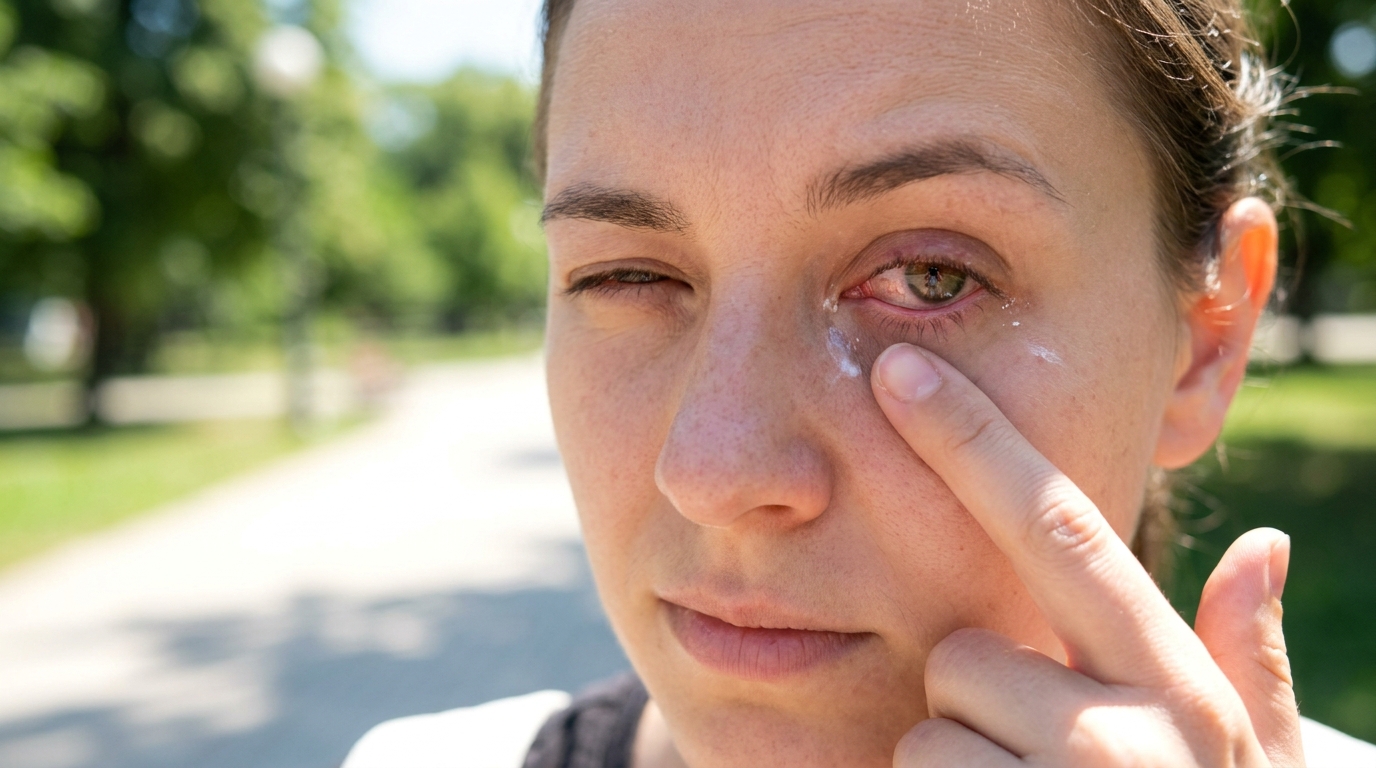
Okay so you just put on sunscreen, went outside feeling all responsible about your skin, and now your eyes are stinging like you rubbed a jalapeno straight into them, and that is exactly the kind of moment that makes you google “why does sunscreen burn my eyes” while blinking furiously in front of the bathroom mirror. If that’s you right now, breathe, its not just you, this happens to a lot of people and there’s actual reasons behind it, not just bad luck.
I remember the first time this happened to me at a pool party, sweat mixed with sunscreen dripped straight into my eye and within seconds I was crying (not emotionally, just physically) in front of everyone. Kind of embarrassing honestly. But once you understand the chemistry and biology of what’s going on, it stops feeling like some random curse and starts making a lot more sense.
What’s Actually Happening When Sunscreen Burns Your Eyes
Your eyes are one of the most sensitive parts of your body, the cornea especially has way more nerve endings per square inch than most of your skin does. So when a foreign substance, especially one packed with chemical filters and preservatives, gets anywhere near it, your body reacts fast and loud.
Most sunscreens contain a mix of active ingredients that are designed to absorb or reflect UV rays. The problem is some of these ingredients, like avobenzone, octinoxate, and oxybenzone, are chemically irritating to mucous membranes, and your eyes basically ARE mucous membrane territory. These chemicals werent really built with “what if this touches an eyeball” in mind, they were built to sit on skin and absorb sunlight.
There’s also alcohol denat (denatured alcohol) in a lot of formulas, which helps sunscreen dry faster and feel less greasy, but alcohol is drying and irritating on contact with eye tissue too. Combine that with fragrance, which tons of sunscreens still have despite everyone hating it, and you’ve basically built a tiny irritant cocktail thats just waiting to slide down your face the second you start sweating.
The Sweat Factor Nobody Talks About Enough
Here’s something that a lot of articles skip over, sunscreen doesn’t even need to touch your eye directly for it to burn. Sweat mixes with the sunscreen sitting on your forehead and temples, and that mixture runs downhill (thanks gravity) right into your eyes. Its basically diluted chemical soup at that point, and it stings way worse than the sunscreen alone would.
Dermatologists often point out that this is actually the most common complaint they hear about sunscreen, more than allergic reactions or breakouts even. One skincare specialist explained it simply as your eyes reacting defensively to anything that isn’t natural tears, which is basically your body doing its job a little too enthusiastically.
Chemical Vs Mineral Sunscreen And Why It Matters For Your Eyes
This is honestly the biggest thing you need to know if your eyes keep burning. Not all sunscreens are made the same, and the “why does sunscreen burn my eyes” question usually has a very different answer depending on which type your using.
| Sunscreen Type | Common Active Ingredients | Eye Irritation Risk | Texture |
|---|---|---|---|
| Chemical | Avobenzone, Octinoxate, Oxybenzone, Homosalate | High | Lightweight, absorbs fast |
| Mineral (Physical) | Zinc Oxide, Titanium Dioxide | Low | Thicker, can leave white cast |
| Hybrid | Mix of both | Medium | Varies by brand |
Mineral sunscreens sit ON TOP of your skin instead of absorbing into it, and they physically reflect UV rays rather than converting them chemically. Because of that they tend to be way gentler if they accidentally migrate into your eye area. This is basically consistent with what the American Academy of Dermatology has said about mineral filters being generally better tolerated by sensitive skin types, including the eye region.
Chemical sunscreens, meanwhile, need to be absorbed into the skin to work properly, which means they’re formulated to penetrate barriers a little more aggressively. Great for effectiveness, not so great when that same absorption tendency meets your cornea.
Other Reasons Sunscreen Might Be Burning Your Eyes
Its not always just the sunscreen formula itself being the problem, sometimes its a combo of things working against you.
- Fragrance and essential oils added for scent, these are common eye irritants even in tiny amounts
- Preservatives like phenoxyethanol which extend shelf life but arent eye friendly
- Alcohol based formulas that dry fast on skin but sting badly near eyes
- Applying too close to the lash line, especially under eye areas where skin is thinner
- Old or expired sunscreen where the formula has broken down and separated
- Waterproof formulas which often use stronger binding agents so they don’t wash off in water, meaning they don’t wash out of eyes easily either
That last one is kind of ironic right, the very thing that makes waterproof sunscreen good at its job (resisting water and sweat) is also what makes it so hard to get out of your eyes once it’s in there.
Is It An Allergy Or Just Irritation
There’s actually a difference here that matters. True sunscreen allergies are less common than people think, what most people experience is irritant contact dermatitis, basically your skin or eye tissue reacting to a harsh ingredient rather than your immune system launching a full allergic response.
Signs it might be an actual allergy include swelling, hives, or a reaction that shows up hours or even a day later. Simple irritation usually happens immediately, burns for a bit, and then calms down once you rinse and blink it out. If you’re only getting the immediate sting and nothing lingers, you’re probably dealing with plain old irritation, not allergies.
How To Stop Sunscreen From Burning Your Eyes
Alright here’s the part you actually came for probably, the fixes.
- Switch to a mineral sunscreen with zinc oxide or titanium dioxide as the only active ingredients
- Look for sunscreens labeled “sensitive skin” or specifically “for face and eye area”
- Apply with your fingertip in small dabs rather than rubbing broadly across your forehead
- Let it sit for a minute or two before doing anything active, this reduces how much ends up sweating into your eyes later
- Avoid stick sunscreens directly around the eye socket, use a separate eye-safe stick if you need coverage there
- Keep a small towel handy during outdoor activity to blot sweat before it travels
- Rinse eyes with cool clean water immediately if burning starts, don’t rub
A lot of sports and swim brands now make “sport” or “eye friendly” formulas specifically because this complaint is so common among runners and swimmers. Worth checking labels for phrases like “tear-free” or “ophthalmologist tested,” these usually indicate the brand actually tested for this exact scenario.
What To Do In The Moment If It’s Already Burning
If your eyes are burning right now while reading this, honestly just go rinse with clean cool water for a solid 60 seconds, don’t rub your eyes because that just spreads the irritant around more. Blinking a lot actually helps too since your natural tears are designed to flush foreign substances out. If burning continues for more than 15-20 minutes after rinsing, or if vision gets blurry, that’s when it’s worth checking in with an eye doctor rather than just toughing it out.
Choosing Sunscreen That Won’t Attack Your Eyes Going Forward
Long term the real fix is just being pickier about what you put on your face. Mineral sunscreens, fragrance free formulas, and products specifically marketed toward sensitive eyes or kids (kids formulas are almost always gentler since companies know children rub their eyes constantly) tend to solve this problem for most people.
Some dermatologists recommend applying facial sunscreen a full 15-20 minutes before any activity that might cause sweating, giving it time to set properly instead of sitting wet on the skin surface where its more likely to migrate. Its a small habit change but it genuinely makes a difference according to multiple skincare professionals who deal with this exact complaint regularly.
At the end of the day sunscreen burning your eyes isn’t a sign you should skip sun protection, sunburn and long term UV damage are way worse outcomes than a temporary sting. It just means your current formula probably isnt the right match for your skin and eye sensitivity, and switching things up a little can make outdoor days a lot less miserable.