
Why does sunscreen burn my face is the question you start asking when a product that is supposed to protect your skin suddenly feels like it is fighting against it. You apply sunscreen expecting comfort and protection, then a few minutes later your cheeks sting, your eyes water, or your skin feels hot and irritated. It can be really confusing because sunscreen is marketed as a skincare essential, so why does something helpful sometimes feel so uncomfortable?
The truth is, sunscreen burning your face can happen for several reasons. Your skin type, the ingredients inside the formula, how damaged your skin barrier is, or even where you apply it can all play a role. A sunscreen that works beautifully for one person might make another person’s skin feel like it is quietly complaining all day.
Understanding the reason behind the burning sensation can help you choose better products and avoid unnecessary irritation. Your skin is not just reacting randomly; it is giving you information.
Why Does Sunscreen Burn My Face? The Common Reasons Behind Skin Irritation
When people ask, “why does sunscreen burn my face,” they are usually experiencing irritation caused by either the sunscreen ingredients or the condition of their skin at the time of application.
Sunscreen contains active ingredients designed to protect against ultraviolet radiation. Some formulas use chemical filters that absorb UV rays, while others use mineral ingredients that sit on top of the skin and reflect UV radiation. Both types can be effective, but some people’s skin reacts differently to certain ingredients.
Common reasons sunscreen may burn your face include:
| Cause | What Happens |
|---|---|
| Sensitive skin | Your skin reacts quickly to certain ingredients or fragrances |
| Damaged skin barrier | Irritated skin allows ingredients to penetrate more deeply |
| Chemical sunscreen filters | Some filters may cause stinging in sensitive individuals |
| Fragrance or preservatives | Added ingredients can trigger irritation |
| Applying near eyes | The eye area is thinner and more reactive |
| Existing skin conditions | Conditions like rosacea or eczema may increase sensitivity |
Sometimes the burning is not because sunscreen is “bad.” It may simply mean the formula does not match your skin’s current needs.
Chemical Sunscreen vs Mineral Sunscreen: Which One Causes More Burning?
One of the biggest reasons behind sunscreen irritation is the type of UV filter used.
Chemical sunscreens contain organic filters that absorb UV energy. Common ingredients include avobenzone, octocrylene, octinoxate, and oxybenzone. These ingredients are widely used because they usually create lightweight, invisible formulas.
However, some people experience stinging or burning sensations, especially if they have sensitive skin.
Mineral sunscreens usually contain zinc oxide or titanium dioxide. These ingredients work by creating a protective layer that reflects and scatters UV rays.
Many dermatologists recommend mineral sunscreens for people with reactive skin because they are often gentler. According to the American Academy of Dermatology, both chemical and mineral sunscreens can provide effective protection when used correctly, but sensitive skin may tolerate mineral formulas better.
That does not mean every mineral sunscreen will work perfectly. A person can still react to other ingredients like preservatives, fragrances, or botanical extracts.
Your Skin Barrier Might Be the Real Problem
Sometimes the sunscreen gets blamed when the real issue is a weakened skin barrier.
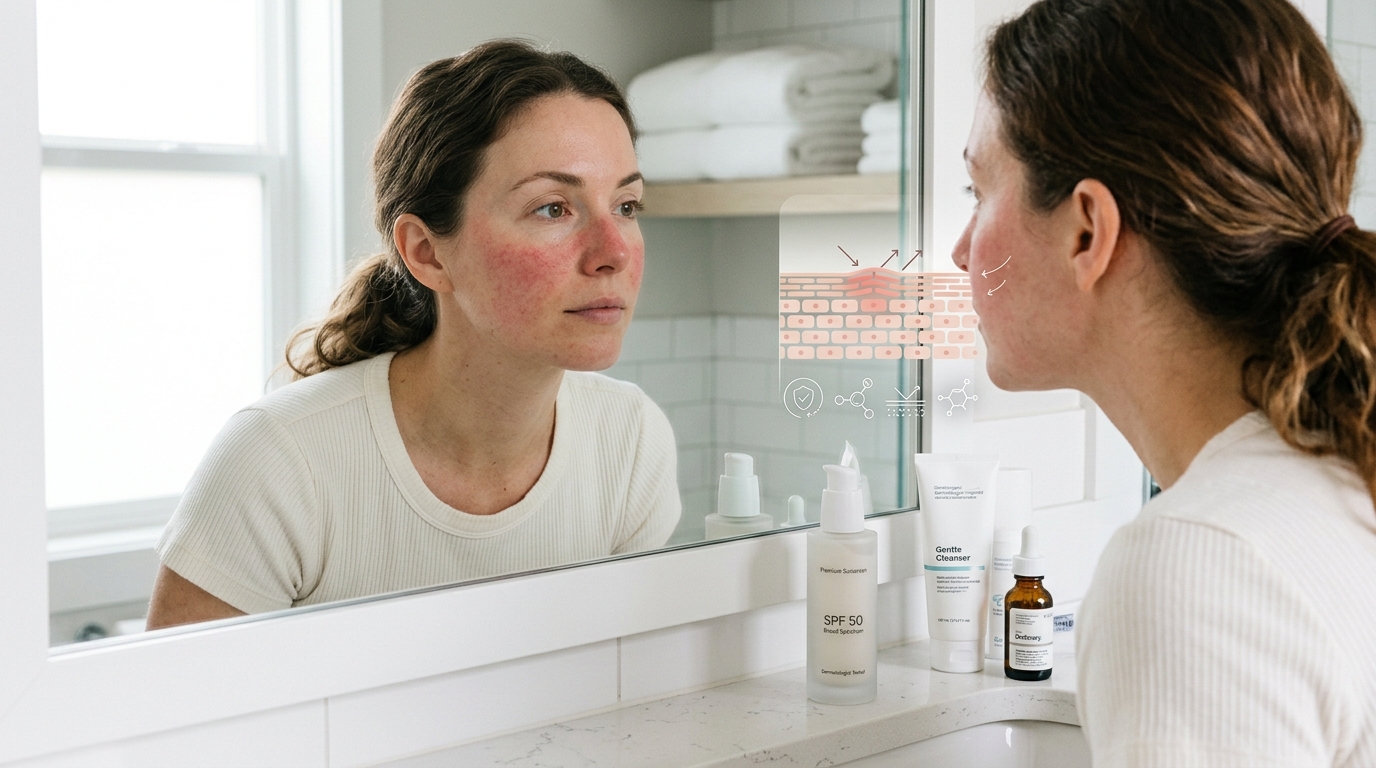
Your skin barrier acts like a protective wall. It helps keep moisture inside and prevents irritating substances from entering too easily. When this barrier becomes damaged, even normal skincare products can suddenly sting.
Things that can damage your skin barrier include:
- Over-exfoliating with acids or scrubs
- Using harsh cleansers
- Excessive retinoid use
- Cold weather and dry air
- Sunburn
- Frequent product changes
When your barrier is damaged, sunscreen ingredients may reach more sensitive layers of your skin, creating that uncomfortable burning feeling.
A person might use the same sunscreen for months without problems, then suddenly feel irritation after introducing a strong exfoliant or acne treatment. The sunscreen did not necessarily change; your skin did.
Why Does Sunscreen Burn My Face Around My Eyes?
The eye area is one of the most common places where sunscreen causes discomfort.
The skin around your eyes is thinner compared with other areas of your face. Because of this, it reacts more easily to irritating ingredients. Sunscreen can also migrate throughout the day because of sweat, oil, or facial movement.
If sunscreen gets into your eyes, you may experience:
- Burning
- Watery eyes
- Redness
- A gritty feeling
- Temporary discomfort
To reduce this problem, many people apply a sunscreen specifically designed for sensitive areas around the eyes or choose mineral formulas containing zinc oxide.
Another simple trick is avoiding applying sunscreen directly onto your eyelids unless the product is specifically made for that area.
Ingredients That May Cause Sunscreen Burning
Not everyone reacts to the same ingredients, but certain components are more commonly associated with irritation.
Chemical UV Filters
Some people report sensitivity to filters such as:
- Oxybenzone
- Octinoxate
- Octocrylene
- Avobenzone
These ingredients are considered safe and regulated in many countries, but individual sensitivity can still occur.
Fragrance
Fragrance can make a sunscreen smell pleasant, but it may irritate sensitive skin. If your face burns after applying scented sunscreen, a fragrance-free option may be worth trying.
Alcohol
Some lightweight sunscreens contain alcohol to create a fast-drying texture. While many people tolerate it, it may sting on dry or irritated skin.
Preservatives
Preservatives help prevent bacterial growth inside skincare products. However, certain preservatives can trigger reactions in sensitive individuals.
How to Tell If Sunscreen Is Irritating Your Skin
A burning sensation does not always mean the same thing. The type of reaction can provide clues.
| Reaction | Possible Meaning |
|---|---|
| Mild tingling for a few seconds | Temporary sensitivity |
| Strong burning lasting minutes | Possible irritation |
| Red rash or swelling | Possible allergic reaction |
| Itching and bumps | Possible sensitivity or allergy |
| Dry peeling skin | Barrier damage |
If your skin feels uncomfortable every time you use a specific sunscreen, continuing to use it may not be the best choice.
What To Do When Sunscreen Burns Your Face
If your sunscreen causes burning, you do not have to simply tolerate it.
Try these steps:
- Wash the sunscreen off gently with lukewarm water.
- Avoid using harsh cleansers afterward.
- Apply a simple moisturizer to calm the skin.
- Stop using other irritating products temporarily.
- Try a different sunscreen formula after your skin recovers.
A good sunscreen should protect your skin without making you feel like you are wearing something uncomfortable.
How To Choose Sunscreen for Sensitive Skin
Finding the right sunscreen can take some trial and error. Sensitive skin usually benefits from simpler formulas.
Look for:
- Fragrance-free labels
- Mineral sunscreen ingredients like zinc oxide
- Lightweight formulas
- Products labeled for sensitive skin
- Non-comedogenic options if you are acne-prone
Avoid immediately testing multiple new skincare products together. If irritation happens, you will not know which product caused the problem.
Dermatologists often recommend patch testing new products. Apply a small amount to a limited area of skin and observe how your skin responds before applying it all over your face.
Does Burning Mean Sunscreen Is Working?
No. Burning does not mean sunscreen is providing better protection.
This is a common misunderstanding. Some people think a strong sensation means the product is “active,” but effective sun protection should not hurt your skin.
The effectiveness of sunscreen depends on factors such as:
- SPF rating
- Broad-spectrum protection
- Correct application amount
- Reapplication habits
A sunscreen that feels comfortable is more likely to be used consistently, and consistency is a major part of sun protection.
When Should You Stop Using a Sunscreen?
You should consider stopping a sunscreen if you experience:
- Persistent burning
- Facial swelling
- Severe redness
- Blisters
- Worsening irritation
A mild reaction may simply mean the product is not suitable for your skin. However, stronger reactions may require advice from a dermatologist.
The Bottom Line: Why Does Sunscreen Burn My Face?
So, why does sunscreen burn my face? The answer usually comes down to skin sensitivity, irritating ingredients, a damaged skin barrier, or a formula that does not match your skin type.
Sunscreen should feel like a protective layer, not a daily battle. If one product burns, it does not mean all sunscreens will cause the same reaction. There are many different formulas available, and finding the right one can make sun protection much easier.
Your skin is giving you feedback. Paying attention to that feedback helps you choose products that protect your face while keeping it calm and comfortable.
Frequently Asked Questions
Why does sunscreen burn my face immediately after applying it?
Sunscreen may burn immediately due to sensitive skin, chemical filters, fragrance, alcohol, or a weakened skin barrier reacting quickly.
Is it normal for sunscreen to sting my face?
A slight temporary sensation can happen, but strong or lasting stinging usually indicates irritation or product sensitivity.
Should I stop using sunscreen if it burns my face?
Yes, stop using a sunscreen that repeatedly burns your skin and try a gentler formula suitable for sensitive skin.
Can damaged skin make sunscreen burn more?
Yes, a damaged skin barrier allows ingredients to penetrate deeper, making normally tolerated sunscreen products feel irritating.
What type of sunscreen is best for sensitive skin?
Mineral sunscreens containing zinc oxide or titanium dioxide are often better tolerated by people with sensitive or reactive skin.