

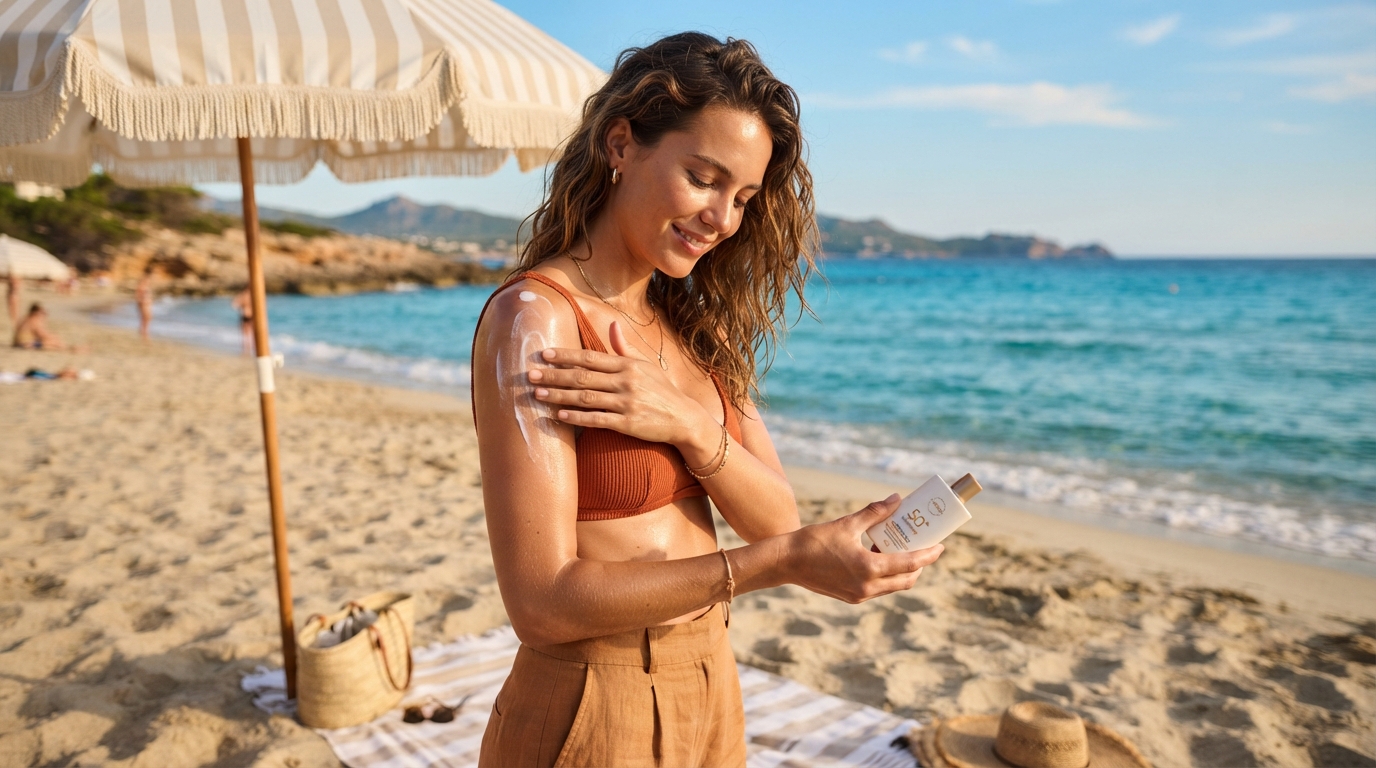
You probably wondered does sunscreen prevent tanning after spending a whole day outside, applying sunscreen like you were told, then coming home and noticing your skin still looked a little darker. It feels a bit unfair, honestly. You did the “right thing,” yet your tan showed up anyway. That’s where loads of confusion starts, and it isn’t weird at all to ask if sunscreen actually works or if tanning somehow sneaks around it.
The answer isn’t just yes or no. Sunscreen dramatically reduces tanning, but it doesn’t completely stop it in every situation. The reason comes down to how ultraviolet (UV) radiation interacts with your skin, how well sunscreen filters those rays, and even how you apply it. Tiny details matter more than most people realise, which is kinda annoying but also helpful once you know what’s happening.
Understanding whether sunscreen prevents tanning isn’t only about appearance either. Tanning itself is your skin responding to damage from UV radiation. That little bronze glow many people chase is actually your body’s defense system switching on after DNA in skin cells has already been affected. That sounds dramatic, but biology rarely bothers making things sound nice.
Does Sunscreen Prevent Tanning Completely?
No. Sunscreen does not completely prevent tanning.
Instead, it blocks or filters a significant percentage of ultraviolet radiation before it reaches your skin. Less UV exposure means less melanin production, which usually means less tanning.
Think of sunscreen like a really good umbrella during light rain. You’ll stay much drier than someone without one, but if the wind changes, if rain gets heavier, or if you leave gaps, you may still get wet. Sunscreen works kinda the same way.
Here’s what usually happens:
| Situation | Likelihood of Tanning |
|---|---|
| SPF 50 applied correctly and reapplied | Very low but still possible |
| SPF 30 applied once all day | Moderate |
| Too little sunscreen applied | High |
| Swimming without reapplication | High |
| Long beach day in peak sunlight | Moderate to high |
No sunscreen blocks 100% of ultraviolet rays.
According to the American Academy of Dermatology:
- SPF 15 blocks about 93% of UVB rays.
- SPF 30 blocks around 97%.
- SPF 50 blocks approximately 98%.
- SPF 100 blocks about 99%.
That remaining percentage may sound tiny, but after several hours outdoors, enough UV radiation can still reach your skin to trigger melanin production.
Why Does Your Skin Tan Anyway?
Your skin isn’t trying to become fashionable. It’s trying to protect itself.
When ultraviolet radiation reaches deeper skin layers, special cells called melanocytes begin producing melanin. Melanin acts almost like nature’s emergency sunglasses, absorbing some UV radiation before it causes even more damage.
Oddly enough, your tan isn’t evidence your skin adapted perfectly. It’s evidence your skin noticed trouble.
That’s a bit backwards from how many people think about tanning.
There are actually two main types of ultraviolet radiation involved.
UVA Rays
UVA penetrates deeply into the skin.
These rays:
- Cause immediate tanning
- Accelerate skin aging
- Contribute to wrinkles
- Increase skin cancer risk
UVB Rays
UVB rays mostly affect the skin’s surface.
They:
- Cause sunburn
- Trigger delayed tanning
- Damage DNA
- Increase melanoma risk
Broad-spectrum sunscreen protects against both UVA and UVB radiation, although no product eliminates exposure entirely.
What SPF Really Means
Many people think SPF tells you how strong sunscreen is.
Not exactly.
SPF measures how much longer protected skin can tolerate UVB exposure before burning compared to unprotected skin under controlled laboratory conditions.
Here’s a simple comparison.
| SPF | UVB Protection |
|---|---|
| 15 | 93% |
| 30 | 97% |
| 50 | 98% |
| 100 | 99% |
Notice something?
Going from SPF 30 to SPF 50 doesn’t double protection. The increase is actually quite small.
That’s why dermatologists usually focus more on applying enough sunscreen and reapplying regularly than constantly buying higher SPF numbers.
Why People Still Tan While Wearing Sunscreen
This surprises loads of people.
Research consistently shows most adults apply only 25% to 50% of the recommended sunscreen amount. That means the advertised SPF isn’t actually what your skin receives.
A few common mistakes include:
- Missing ears
- Forgetting the neck
- Applying too little
- Never reapplying
- Waiting until reaching the beach
- Missing hairline areas
- Sweating heavily
- Rubbing sunscreen off with towels
One tiny skipped spot can become very obvious after a sunny afternoon. Funny how your skin remembers exactly where you got lazy.
Does Sunscreen Stop You From Getting Vitamin D?
Not completely.
In theory, properly applied sunscreen reduces vitamin D production because UVB rays are needed for vitamin D synthesis.
In real life though, people rarely apply sunscreen perfectly.
Research has shown most sunscreen users still produce adequate vitamin D through everyday incidental sunlight exposure. If someone has vitamin D deficiency, healthcare providers often recommend dietary sources or supplements instead of encouraging intentional sun exposure.
That approach is generally considered much safer.
Can You Tan Safely With Sunscreen?
This question gets asked all the time.
The uncomfortable answer is that there is no completely safe tan.
A tan means ultraviolet radiation has already altered your skin.
Sunscreen makes tanning less intense and reduces damage considerably, but tanning itself still represents a protective biological response.
The World Health Organization and dermatology organizations worldwide agree that avoiding unnecessary UV exposure remains the safest approach.
That doesn’t mean you need to hide indoors forever, obviously. It simply means protecting your skin whenever UV levels are high.
Mineral vs Chemical Sunscreen for Preventing Tanning
Both mineral and chemical sunscreens can effectively reduce tanning when used correctly.
The biggest differences are how they work.
| Mineral Sunscreen | Chemical Sunscreen |
|---|---|
| Reflects and scatters some UV rays | Absorbs UV rays before skin damage occurs |
| Contains zinc oxide or titanium dioxide | Uses organic UV filters |
| Starts working immediately | Usually needs around 15 minutes before sun exposure |
| Often preferred for sensitive skin | Usually feels lighter on skin |
Neither category automatically prevents tanning better.
Correct application matters much, much more.
Does Waterproof Sunscreen Prevent Tanning Better?
Not really.
Water-resistant sunscreen simply stays effective longer while swimming or sweating.
It still needs reapplication according to product instructions.
Most water-resistant formulas remain effective for either:
- 40 minutes
- 80 minutes
After that, protection drops off pretty quick, even if your skin still feels like sunscreen is there.
Real-World Example
Imagine two friends spending six hours at the beach.
Friend A applies SPF 50 generously, waits fifteen minutes before going outside, reapplies every two hours, wears sunglasses, and occasionally sits under shade.
Friend B quickly sprays sunscreen once in the morning, misses shoulders, swims twice, and never reapplies.
Even though both technically “used sunscreen,” Friend B is much more likely to tan and burn.
The difference isn’t the label.
It’s the routine.
Common Myths About Sunscreen and Tanning
A few myths seem impossible to get rid of, honestly.
Myth: Sunscreen Means You Can’t Tan
False.
You may still develop a lighter tan with sunscreen because some UV radiation still reaches the skin.
Myth: A Base Tan Protects You
False.
A base tan provides only minimal protection, roughly equivalent to SPF 3 or less.
That’s nowhere near enough to prevent skin damage.
Myth: Darker Skin Doesn’t Need Sunscreen
False.
Every skin tone can experience UV damage.
While darker skin contains more natural melanin, skin cancer, hyperpigmentation, and premature aging can still occur.
Myth: Cloudy Days Are Safe
False.
Up to 80% of ultraviolet radiation can pass through clouds.
That catches people out all the time.
Best Ways to Reduce Tanning
If your goal is keeping your natural skin tone while protecting your health, these habits work surprisingly well together.
- Choose broad-spectrum SPF 30 or higher.
- Apply sunscreen 15 minutes before going outdoors.
- Use approximately one ounce for your whole body.
- Reapply every two hours.
- Reapply immediately after swimming or heavy sweating.
- Wear UPF-rated clothing.
- Use wide-brim hats.
- Seek shade between 10 a.m. and 4 p.m.
- Wear sunglasses with UV protection.
- Check daily UV index forecasts before extended outdoor activities.
None of these habits are particularly fancy, but together they reduce UV exposure much more than sunscreen alone.
What Science Says
Scientific evidence has become increasingly clear over the past several decades.
Large population studies have linked consistent sunscreen use with:
- Lower rates of sunburn
- Reduced photoaging
- Fewer actinic keratoses
- Reduced squamous cell carcinoma risk
- Lower melanoma risk with regular use
One landmark Australian randomized trial found participants assigned to daily sunscreen use experienced significantly lower melanoma rates during long-term follow-up compared with discretionary sunscreen users.
Researchers continue studying sunscreen performance, but the overall message hasn’t really changed.
Regular sunscreen use helps protect skin.
It simply isn’t an invisible shield.
Final Thoughts
So, does sunscreen prevent tanning? Mostly, yes, but not entirely. Sunscreen significantly reduces the amount of ultraviolet radiation reaching your skin, lowering both tanning and long-term skin damage. Yet because no sunscreen blocks every UV ray, some tanning can still happen, especially during prolonged outdoor exposure or when sunscreen isn’t applied correctly.
If you’re hoping sunscreen will let you stay outside all day without changing skin tone at all, that’s probably expecting too much from any product. On the other hand, if you use broad-spectrum sunscreen properly, reapply it consistently, and combine it with shade and protective clothing, you’ll greatly reduce tanning while giving your skin the best protection modern science currently offers. That’s honestly a much better trade than chasing the darkest tan possible.
Does sunscreen prevent tanning on cloudy days?
Clouds block visible sunlight more than ultraviolet rays. You can still tan on overcast days, so wearing broad-spectrum sunscreen remains important for daily protection.
Can you still get darker while wearing SPF 50?
Yes. SPF 50 blocks about 98% of UVB rays, leaving a small amount that may still stimulate melanin production during extended sun exposure.
Is tanning with sunscreen safer than tanning without it?
Yes. Sunscreen reduces ultraviolet damage and lowers sunburn risk, although any tan still indicates your skin has responded to UV exposure in some way.
Does reapplying sunscreen reduce tanning?
Yes. Reapplying every two hours helps maintain protection, reducing cumulative UV exposure and making noticeable tanning much less likely throughout the day.
Which sunscreen is best for preventing tanning?
A broad-spectrum sunscreen with SPF 30 or higher, applied generously and reapplied regularly, offers the most reliable protection against tanning and harmful ultraviolet radiation.