
Is spray sunscreen effective? Honestly, if you have ever sprayed it on for five seconds, rubbed it a little, and then wondered why your shoulders still got cooked, you are asking the exact right question. Spray sunscreen can work, yes—but the way you use it matters far more than most people realise, and thats where things get a little messy.
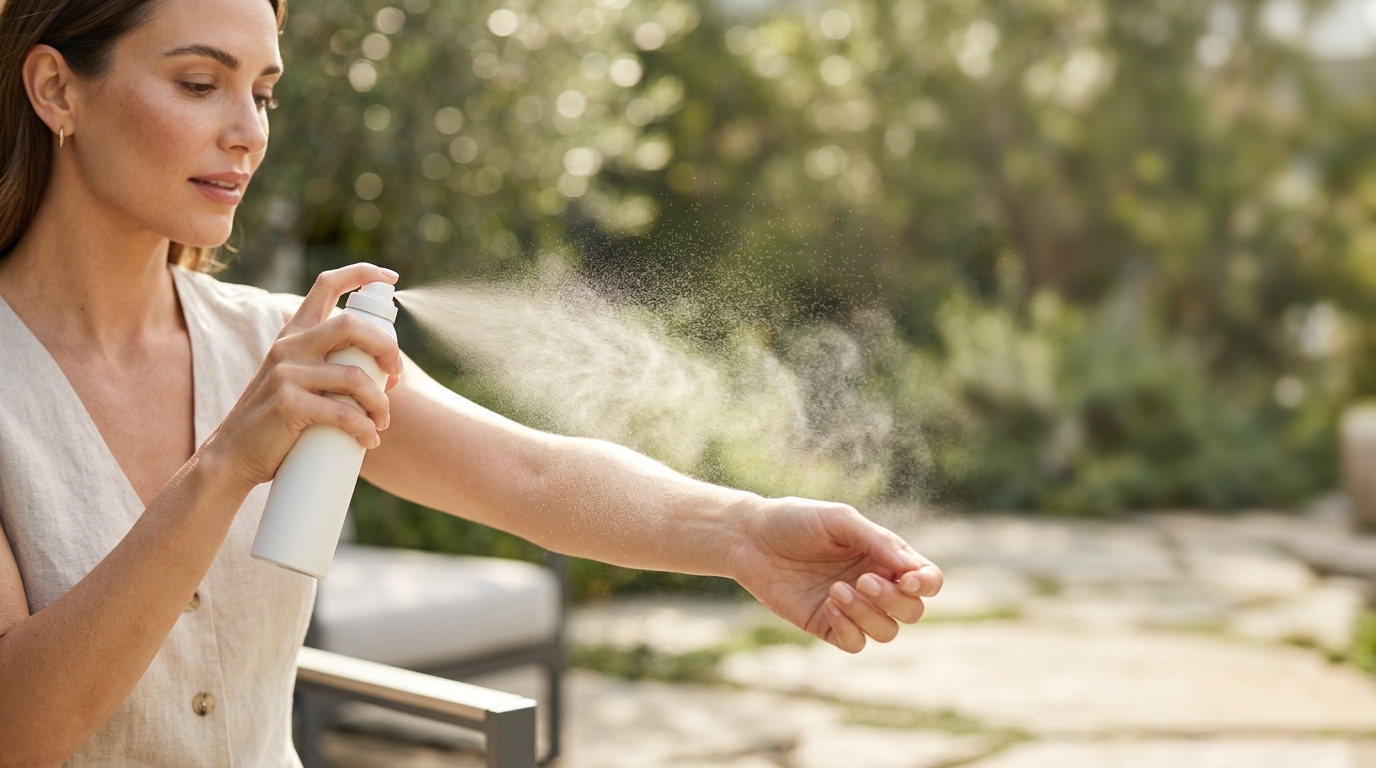
You see people misting sunscreen over their arms at the beach like they are spraying room freshener, then walking straight into the sun. It looks easy. Maybe too easy. The real question is not simply whether spray sunscreen works. The better question is whether you are applying enough of it, evenly enough, to actually get the SPF written on the bottle.
So, is spray sunscreen effective for everyday sun protection? In this comprehensive guide, we will break down how spray sunscreen works, whether it is as good as lotion, how to apply it correctly, and the mistakes that quietly reduce your protection without you even noticing.
Is Spray Sunscreen Effective or Is It Just Convenient?
Yes, spray sunscreen can be effective when it contains appropriate broad-spectrum protection and is applied properly. The spray format itself does not automatically make sunscreen weak or useless.
SPF testing is performed on the sunscreen product, not on whether you squeezed it from a bottle or sprayed it from a can. The U.S. Food and Drug Administration explains that SPF testing measures protection against sunburn, while broad-spectrum testing relates to protection against both UVA and UVB radiation.
But here is the part people skip over: the tested SPF assumes enough sunscreen is applied evenly.
That tiny sentence is basically the whole drama.
When you use lotion, you can see the product on your skin and rub it across the area. With spray sunscreen, a lot can drift away, land unevenly, or simply never reach your skin in a sufficient amount. So yes, spray sunscreen is effective, but poor application can make an effective product perform like a disappointing one.
How Does Spray Sunscreen Work?
Spray sunscreen uses UV-filtering ingredients to help reduce the amount of ultraviolet radiation reaching your skin. Depending on the formula, those filters may be chemical, mineral, or a combination of both.
The product is dispersed as a fine spray over the skin. Once enough product forms an even layer, it can provide the protection stated on the label. The key phrase here is an even layer. Not three random dots on your forearm and a hopeful little prayer.
SPF mainly relates to protection against sunburn-causing UVB radiation. Broad-spectrum sunscreen is designed to protect against both UVA and UVB, which is why checking for “broad spectrum” matters when choosing sunscreen. The FDA describes the broad-spectrum test as a measure of protection against UVA and UVB radiation.
Does Spray Sunscreen Have the Same SPF as Lotion?
It can, yes. A spray labelled SPF 50 is not automatically less effective than an SPF 50 lotion simply because it is sprayed.
However, the real-world result can be different if you apply the spray too lightly.
Think of it this way: the SPF number is like a recipe that has been tested using a certain amount of ingredients. If you use half the ingredients, you can’t expect the cake to taste exactly the same. Sunscreen is a bit like that, just with considerably less delicious consequences.
Why Spray Sunscreen Often Feels Less Effective
The biggest issue is not usually the spray formula itself. It is under-application.
People tend to spray quickly. They hold the can too far away. Wind carries the product. They miss the backs of their legs. Then they assume the sunscreen failed.
The American Academy of Dermatology has long stressed the importance of applying enough sunscreen and covering all exposed skin. The FDA also advises generous application and says an average adult needs about one ounce of sunscreen to cover the body.
Here are the common reasons spray sunscreen may seem ineffective:
- You apply too little product.
- You spray from too far away.
- You miss small areas of skin.
- You do not rub the spray in when the label recommends it.
- You forget to reapply after sweating or swimming.
- You use a face spray directly around your eyes or nose.
- You assume one quick application lasts all day.
That last one is particularly popular. And particularly wrong.
How to Apply Spray Sunscreen Correctly for Better Protection
If you want to know how to use spray sunscreen effectively, the application technique matters more than the satisfying little pssst sound.
1. Choose a Broad-Spectrum SPF 30 or Higher
For regular outdoor exposure, look for broad-spectrum protection. The CDC recommends broad-spectrum sunscreen as part of sun protection when the UV Index is 3 or higher, alongside shade, protective clothing, and other measures.
SPF 30 or higher is a practical choice for many people, especially when you know you will be outdoors. If you are very sun-sensitive or spending long periods in intense sun, a higher SPF may be worth considering.
2. Spray Generously
Do not do one quick pass and call it done.
Hold the container according to the product instructions and apply enough product to cover the skin thoroughly. The exact technique can vary by product, so read the label rather than treating every spray sunscreen like it behaves the same.
If the product instructions tell you to rub it in, rub it in. It feels almost annoyingly obvious, but this step can help improve coverage.
3. Spray in a Well-Ventilated Area
The FDA advises using spray sunscreen in a well-ventilated area and avoiding inhalation. For your face, the FDA recommends spraying the product onto your hands first and then applying it to the face.
Please do not spray it directly into your face while your eyes are closed and hope for the best. Your face is not a target at a fairground.
4. Cover Easy-to-Miss Areas
Your ears, neck, shoulders, tops of feet, and backs of hands often get ignored.
And honestly, the backs of the legs are where sunscreen seems to disappear from everyone’s memory.
A simple trick is to apply sunscreen in sections: arms, chest and stomach, legs, back, then neck and ears. This makes it much harder to accidentally skip an entire patch.
5. Reapply When Needed
The FDA says sunscreen should be reapplied at least every two hours for products that do not meet water-resistance testing requirements. Water-resistant sunscreens have specific directions for reapplication after swimming, sweating, and towel drying.
So, does spray sunscreen need to be reapplied? Absolutely, when the label directions and your activity call for it.
Swimming, sweating, towel drying, and long outdoor exposure can all affect how much sunscreen remains on your skin.
Spray Sunscreen vs Lotion: Which One Is Better?
There is no universal winner here. The best sunscreen is the one you will apply in enough quantity and use consistently.
| Feature | Spray Sunscreen | Lotion Sunscreen |
|---|---|---|
| Application speed | Very quick | Slower |
| Coverage visibility | Harder to see | Easier to see |
| Large body areas | Convenient | Takes more time |
| Risk of missed spots | Higher | Usually easier to notice |
| Reapplication | Convenient | More hands-on |
| Face application | Needs extra care | Usually easier to control |
Spray sunscreen is brilliant for people who hate the sticky feeling of lotion or need to cover large areas quickly. Lotion can be better when you want to carefully see and control where the product goes.
In plain English, spray sunscreen is not automatically better or worse. Your application habits decide a lot of the outcome.
Is Spray Sunscreen Effective for Your Face?
It can be, but you should be careful.
The FDA specifically advises spraying sunscreen onto your hands before applying it to your face, rather than spraying directly onto the face.
This helps reduce the chance of inhaling the spray and gives you more control around your eyes, nose, and mouth.
If your skin is sensitive, pay attention to how your face reacts. Some spray formulas contain alcohol or fragrance, and certain people may find those ingredients irritating. If a sunscreen causes persistent burning, swelling, or a rash, stop using it and consider speaking with a healthcare professional.
Can You Use Spray Sunscreen on Children?
Extra care is needed with children, especially because they may inhale the spray or move around while you are applying it.
The FDA says children under 6 months should be discussed with a doctor regarding sunscreen use.
For older children, avoid spraying directly near the face. Apply the product carefully according to the label and make sure children are not near an open flame when using a spray sunscreen.
This matters because many spray sunscreens contain flammable ingredients, such as alcohol. The FDA warns that spray sunscreen should not be used near open flames, and some products carry specific flammability warnings.
Yes, even the barbecue you forgot was still lit counts.
The Biggest Spray Sunscreen Mistakes to Avoid
If your spray sunscreen seems useless, check these mistakes first:
Spraying too quickly: A five-second mist may feel like application, but it may not be enough product.
Holding the can too far away: Wind can carry away part of the sunscreen before it reaches your skin.
Skipping rubbing: If the label says to rub in the product, follow that instruction.
Using it near flames: Never ignore a flammability warning.
Spraying directly on your face: Spray onto your hands first.
Forgetting reapplication: Sunscreen is not an all-day invisible shield.
Ignoring cloudy weather: UV exposure does not suddenly vanish because the sky looks grey. The CDC recommends UV protection based on UV exposure and the UV Index, not just how bright the day feels.
So, Is Spray Sunscreen Effective? The Honest Answer
Yes, spray sunscreen is effective when it is applied generously, evenly, and according to the product directions.
The problem is that spray sunscreen makes under-application very easy. You may think you covered your skin when, in reality, you gave it a light dusting. Thats why some people swear spray sunscreen works perfectly while others say it did absolutely nothing for them.
The formula matters. The SPF matters. Broad-spectrum protection matters. But your application technique is the quiet factor sitting behind all of it.
If you like spray sunscreen, you do not need to abandon it. Just slow down a little, cover every exposed area, avoid inhaling the product, keep it away from flames, and reapply when necessary. Sometimes better sun protection is not about finding a magical sunscreen. It is about using the one already in your hand properly, which is slightly less exciting but much more useful.
Is spray sunscreen as effective as lotion sunscreen?
Yes, spray sunscreen can offer comparable protection when applied generously and evenly. However, missed spots and under-application can reduce real-world effectiveness.
How often should you reapply spray sunscreen?
Reapply at least every two hours during ongoing sun exposure, and follow the label after swimming, sweating, or towel drying.
Can I spray sunscreen directly on my face?
No, spray it onto your hands first and then apply it to your face to help avoid inhalation and improve control.
Is spray sunscreen safe for children?
It can be used according to the label, but avoid spraying near a child’s face and supervise application carefully to reduce inhalation risks.
Why did I still tan after using spray sunscreen?
You may have applied too little, missed areas, or delayed reapplication. Sunscreen reduces UV exposure but does not create a perfect sun barrier.