

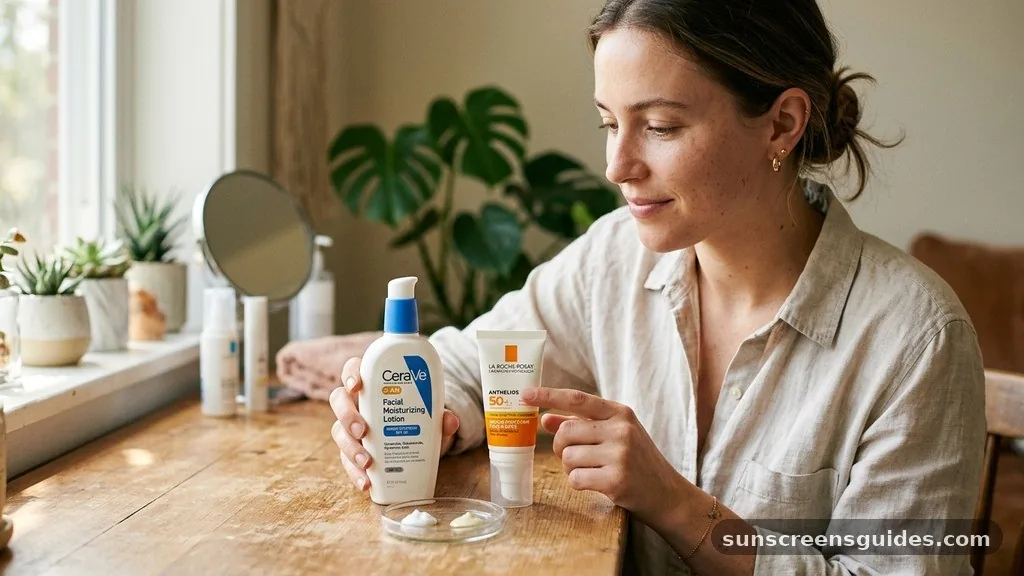
Deciding whether you can use sunscreen as a moisturizer depends largely on the specific formulation of the product sitting on your bathroom counter. While many modern lotions provide dual-action benefits, assuming every bottle offers the same level of hydration as a dedicated cream often leads to skin dryness.
You might find that streamlining your morning routine saves precious time, but it’s essential to understand the chemistry behind these products to ensure your complexion stays healthy. If you’re looking to simplify, knowing when a hybrid product suffices—and when you truly need two separate steps—will keep your face protected and hydrated throughout the day.
Understanding the Difference Between Sunscreen and Moisturizer
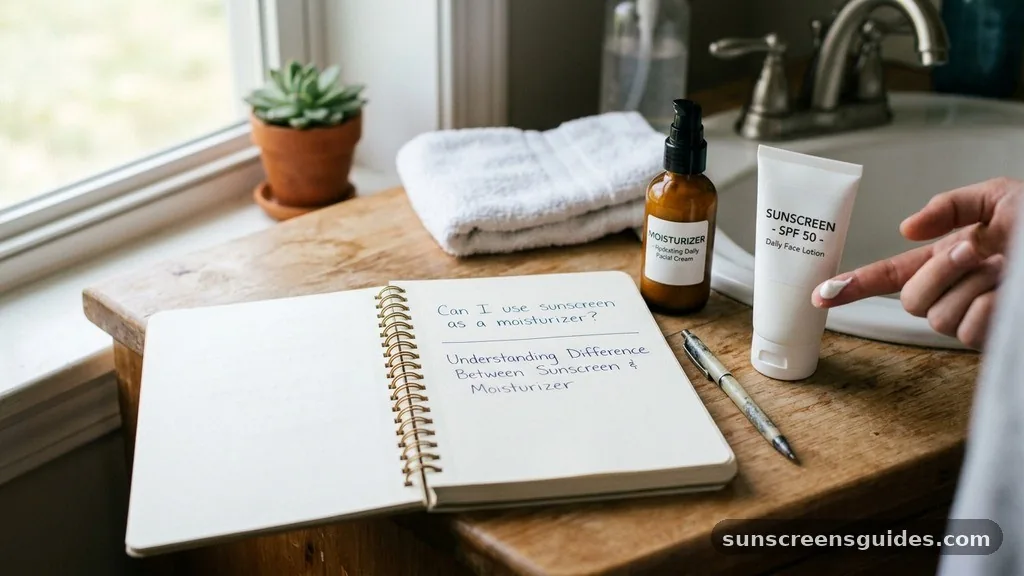
At their core, these two products serve fundamentally different functions. A moisturizer is engineered to support skin barrier health by preventing transepidermal water loss.
It achieves this through a specific blend of humectants, emollients, and occlusives. These ingredients work together to attract water to the skin, soften the surface, and seal that moisture in so it doesn’t evaporate into the air.
Sunscreen, conversely, is classified as an active drug by many regulatory bodies because its primary job is photoprotection. Whether it utilizes chemical vs mineral filters, its main purpose is to absorb or reflect ultraviolet radiation to prevent DNA damage and premature aging.
While some formulas are indeed moisturizing, their base chemistry is prioritized toward film-forming agents that ensure the UV protection stays uniform across your face. If you rely solely on a standard sunscreen that lacks specific hydrating agents, you may notice your skin feeling tight or flaky by midday.
When a Hybrid Product Is Sufficient
Many people successfully use a single product to handle both tasks, especially during warmer months or if they have naturally oily skin. Modern advancements in skincare formulation mean that many brands now include high-quality ingredients like hyaluronic acid or ceramides directly into their sun protection lines. When a product is marketed as a “moisturizing sunscreen,” it usually contains enough emollients to satisfy the needs of most skin types for a standard work day.
If your chosen product feels comfortable, absorbs well, and leaves your skin looking supple rather than dry, it is likely doing a sufficient job. However, the catch is the application amount. To get the stated SPF rating on the bottle, you must apply a generous amount—typically a nickel-sized dollop for the face and neck.
If the product is too heavy, applying that much might feel greasy, which leads some users to under-apply. If you find yourself using less product to avoid a heavy feel, you aren’t getting the full broad-spectrum protection promised.
The Role of Skincare Layering
For those with dry or dehydrated skin, layering is almost always the safer bet. Skincare layering allows you to address specific concerns in a strategic order, starting with the thinnest textures and moving to the thickest. You should apply your moisturizer first to ensure the skin is adequately hydrated at the cellular level. Once that layer has settled for a minute or two, you follow up with a dedicated sunscreen.
This layering technique creates a “sandwich” effect. Your moisturizer manages the water content in your skin, while the sunscreen sits on top as a protective shield.
This order of operations prevents the sunscreen from being diluted by other products, ensuring the protective film remains intact. If you try to mix your sunscreen into your moisturizer before application, you risk breaking the chemical stability of the filter, which might render your sun protection less effective.
Identifying Your Skin Type Needs
Your individual skin type is the biggest variable when determining if you can skip a dedicated moisturizer. Oily and acne-prone skin types often find that a lightweight sunscreen is more than enough to keep their skin comfortable. In these cases, looking for a non-comedogenic formula is much more important than finding a heavy cream.
| Skin Type | Moisturizing Needs | Strategy |
|---|---|---|
| Oily | Low | Use a light, non-comedogenic SPF alone. |
| Combination | Moderate | Apply light moisturizer only to dry zones, then SPF. |
| Dry | High | Layer a rich moisturizer under a broad-spectrum SPF. |
| Sensitive | Variable | Use mineral-based SPF with ceramides. |
If you struggle with dehydration, your skin lacks water rather than oil. Even if your skin feels oily, it can still be dehydrated.
In these instances, using an SPF without a humectant-rich moisturizer underneath will likely lead to tightness, and your skin might compensate by producing even more oil. Always listen to how your skin feels after an hour of wear, rather than just how it feels immediately upon application.
Addressing Common Topical Gaps

A frequent point of confusion is whether the SPF number in a moisturizer is as effective as a dedicated sunscreen. The truth is that dermatologist recommendations almost always emphasize the quantity of application over the specific label. Whether it is a moisturizer with SPF or a dedicated sunscreen, the protection depends on the film that forms on your face.
Another gap is the issue of reapplication. If you use a moisturizing sunscreen as your only base, you must reapply it throughout the day. Many people assume that their morning application lasts 24 hours, but physical activity, sweat, and natural oils break down the protective barrier.
If you are reapplying a thick, moisturizing product every two hours, you might find your skin becomes congested or breaks out. Having a separate, lighter sunscreen for touch-ups during the day is often the better approach for maintaining both hydration and protection.
Key Ingredients to Look For
When shopping for a hybrid product, keep an eye on the ingredient list. You want to see substances that actively support the skin barrier while also providing the sun protection you need.
* Hyaluronic Acid: A powerful humectant that pulls moisture into the skin to prevent dryness.
* Ceramides: Essential lipids that repair and maintain the moisture barrier, preventing water loss.
* Glycerin: A classic ingredient that attracts water and keeps the surface feeling soft and pliable.
* Niacinamide: Helps regulate oil production and calms inflammation, which is great for acne-prone skin.
* Squalane: A lightweight emollient that mimics natural sebum to keep skin hydrated without clogging pores.
Choosing a product that features these ingredients ensures that even if you choose to simplify your routine, you aren’t sacrificing the health of your skin barrier.
When to Keep Your Routine Separate
Despite the convenience of multi-tasking products, there are specific scenarios where keeping your moisturizer and sunscreen separate is non-negotiable. If you are using prescription retinoids or aggressive acne treatments, your skin requires significant support to handle the increased cell turnover. A simple sunscreen, even one with moisturizing properties, may not provide the level of repair needed to counteract the peeling and irritation caused by these actives.
Furthermore, if you are outdoors for extended periods, you need a high-performance sunscreen that is formulated for durability and water resistance. These formulas are often less “cosmetically elegant” and may not function as a pleasant moisturizer for daily use. In these cases, focus on a high-protection, sweat-resistant SPF, and save your deeply nourishing, restorative moisturizer for the evening routine.
Refining Your Morning Routine
To optimize your morning, start by evaluating your environment. If you live in a humid climate, you might find that you don’t need a heavy cream under your sunscreen. If you work in an air-conditioned office, the dry air will likely pull moisture from your skin, making a dedicated moisturizer a vital step.
You should also consider the finish of your products. Some sunscreens leave a white cast or a tacky residue that doesn’t play well with makeup. If your moisturizer is too thick, it can cause “pilling,” where the products ball up on your skin.
Experiment with your combination of products on a weekend to see which pairing works best for your specific complexion. There is no one-size-fits-all answer, but by paying attention to how your skin reacts, you can build a routine that is both effective and efficient.
Frequently Asked Questions
Can I skip moisturizer and just use sunscreen?
You can, provided your sunscreen contains enough hydrating ingredients to prevent your skin from feeling tight or dry.
Does sunscreen count as a moisturizer?
Not always; only products specifically formulated with humectants and emollients provide the dual benefits of moisture and protection.
Which goes first, sunscreen or moisturizer?
Always apply your moisturizer first to lock in hydration, then layer your sunscreen on top as the final step.
Is it bad to use a moisturizer with SPF every day?
It is perfectly fine, provided you apply a sufficient amount to ensure you receive the full SPF rating promised.
How do I know if my sunscreen is moisturizing enough?
If your skin feels comfortable and hydrated throughout the day without tightness, your current product is likely sufficient.
Should I use a separate moisturizer if I have oily skin?
Likely no; many people with oily skin find a lightweight, non-comedogenic sunscreen provides all the hydration they require.
Can mixing moisturizer and sunscreen dilute the protection?
Yes, mixing products can destabilize the UV filters, so it is safer to apply them as distinct, separate layers.
Final Thoughts on Daily Sun Protection
Choosing to use sunscreen as a moisturizer is a personal decision that hinges on your unique skin needs and the quality of the products in your kit. While many people find success with hybrid formulas, those with dry or sensitive skin often benefit from the added nourishment provided by a dedicated moisturizer. By focusing on skin barrier health and ensuring you apply enough product to achieve full broad-spectrum protection, you can create a routine that keeps your complexion healthy and resilient.
Remember that consistency remains the most important factor in any skincare regimen. If you ever feel unsure about your current approach, experimenting with different textures or consulting a professional can provide clarity. Feel free to adjust your routine as the seasons change and your skin’s needs evolve over time.



